Small pet wooden chew toy set sounds simple, but most people buy the wrong “variety pack” for one reason: the mix looks cute, yet it doesn’t match their pet’s species, chewing style, or cage setup.
If you’re shopping for a wooden chew bundle for a rabbit, guinea pig, chinchilla, hamster, or rat, variety can be a real advantage, you get rotation, enrichment, and fewer “I’m bored so I’ll chew the bars” moments. The catch is that wood toys also bring safety questions: coatings, glue, splinters, and pieces that are too small.
This guide breaks down what “variety” should actually mean, how to judge a set fast, and how to introduce new chews without turning your cage into a hazard zone.
Why a variety set often works better than one “perfect” chew
Many small pets don’t chew the same way every day. Even within one species you’ll see different preferences, some go for soft bark, others like dense wood, others only engage if there’s a shape to grab.
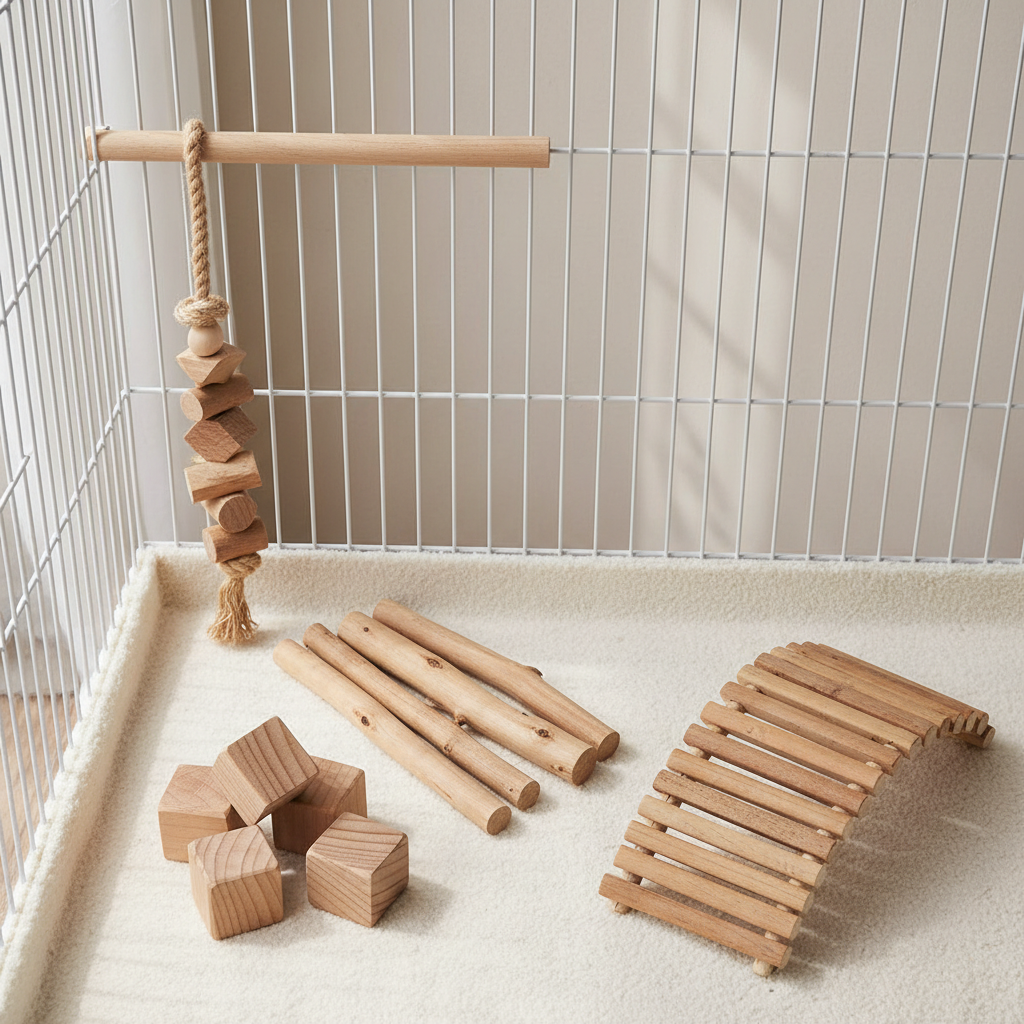
A well-built set gives you options without you buying five separate products that don’t get used. In real cages, variety helps in a few practical ways:
- Rotation fights boredom, swapping 1–2 items weekly often keeps interest higher than leaving everything out.
- Different textures support natural behavior, shredding, gnawing, tossing, or carrying.
- You can “match the day”, some pets chew more during hormonal phases, after a cage change, or when routines shift.
- Backup matters, once a favorite gets worn down, you already have a safe replacement.
Common reasons pets ignore wooden chews (and what that tells you)
If your pet sniffs a new chew and walks away, it’s usually not stubbornness. It’s information. The toy might be “safe,” but not appealing or not usable for that animal.
- Too hard or too soft: very dense blocks can be a miss for small mouths, while soft wood can get destroyed into risky chunks for aggressive chewers.
- No grip: smooth cylinders look nice, but many pets want edges, holes, or a shape to brace.
- Wrong placement: a chew buried under bedding or stuck in a corner is easy to ignore, put one near the hideout entrance or favorite nap zone.
- Competing enrichment: if they’re obsessed with a hay rack or a cardboard box, wood may not “win” unless rotated in thoughtfully.
- Stress or health changes: reduced chewing can happen when an animal feels off, in those cases it’s smarter to watch appetite and droppings and consider a vet.
According to the AVMA (American Veterinary Medical Association), chewing and other normal behaviors are part of animal welfare, and behavior changes can be an early sign something isn’t right, so it’s worth paying attention rather than forcing interest.
Quick checklist: how to judge a small pet wooden chew toy set
When you’re comparing options online, you rarely get perfect material details. Still, you can filter out a lot of risky sets quickly.
- Material transparency: listings that clearly name the wood type and avoid vague “premium wood” language tend to be more trustworthy.
- No strong dyes or glossy finishes: color is not automatically bad, but heavy paint smell or shiny coatings are a pass for many owners.
- Size variety: you want pieces that fit the animal’s mouth and body size, not just “many tiny items.”
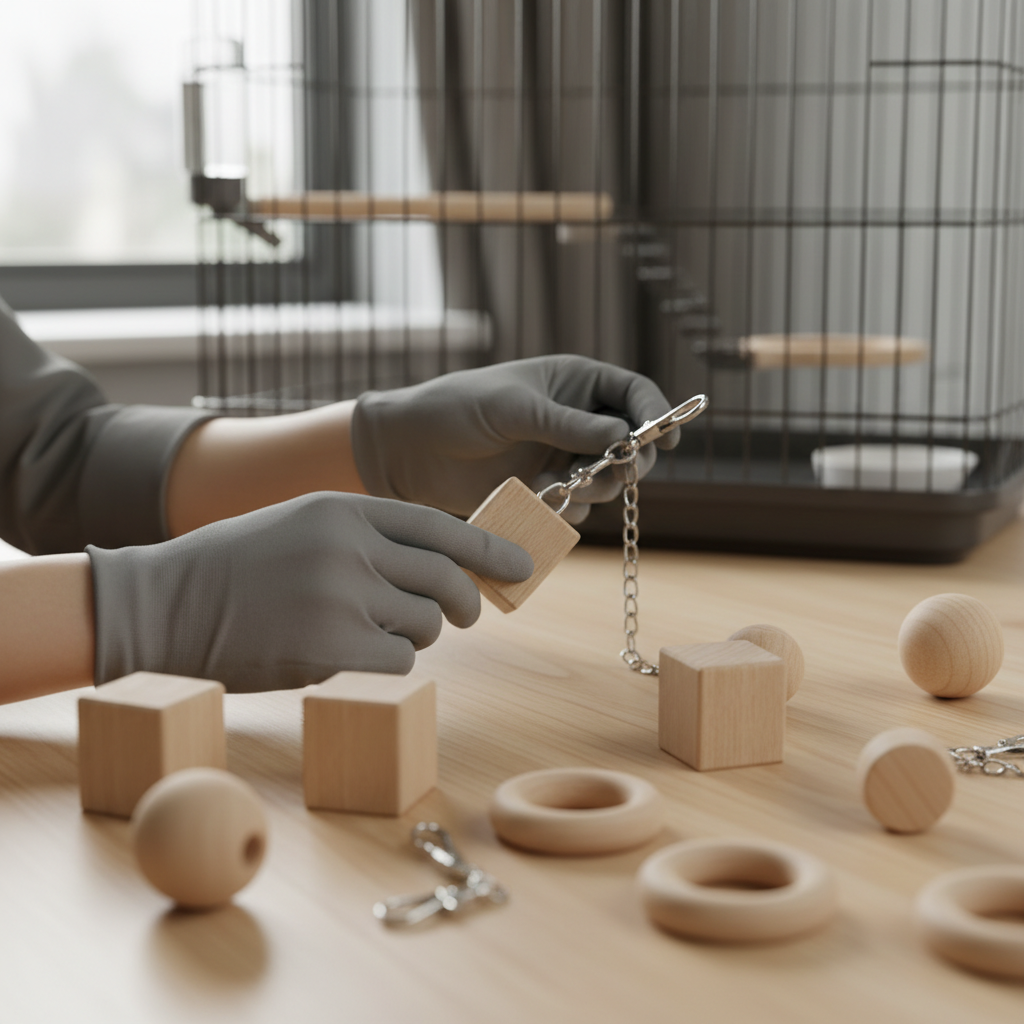
- Hardware check: hanging toys should use pet-safe clips and avoid sharp wire ends.
- Low glue footprint: multiple laminated layers can mean more adhesive; simple solid pieces are easier to evaluate.
- Practical count: more pieces can be helpful, but only if you can rotate without overcrowding the enclosure.
Which wood toys fit which pet? A practical match guide
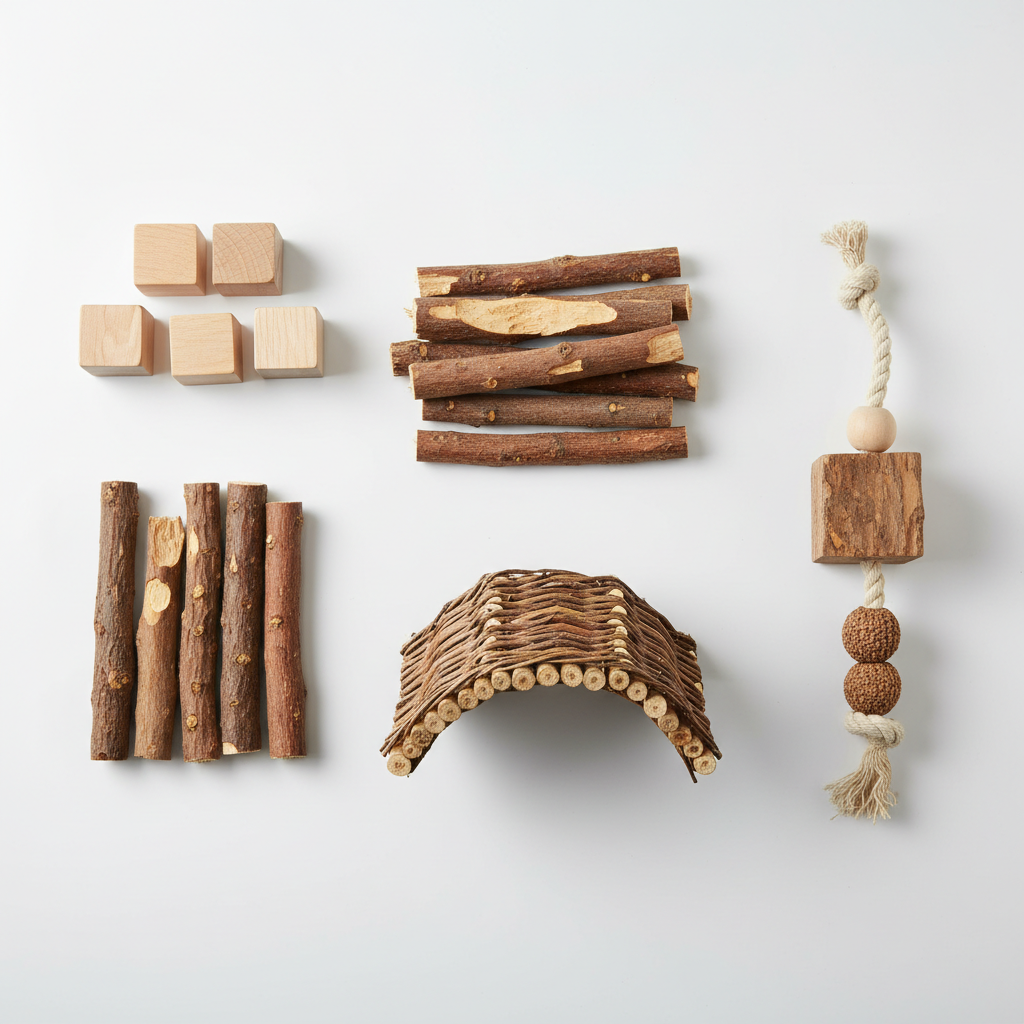
Species matters, but so does the individual. Use this table as a starting point, then adjust based on how your pet actually chews.
| Pet type | Usually does well with | Watch out for |
|---|---|---|
| Rabbit | Thicker sticks, wooden rings, chew blocks paired with hay | Small parts they can swallow quickly; toys with heavy glue joints |
| Guinea pig | Medium-soft chew sticks, light blocks, simple hanging chews | Very hard wood that never gets used; sharp splinters from brittle pieces |
| Chinchilla | Dense, clean wood pieces; hanging options for active chewers | Sticky residue, scented coatings; small fragments left in the cage |
| Hamster | Small blocks, mini logs, chew shapes they can carry | Oversized pieces that take space; tiny beads or loose parts |
| Rat | Harder blocks, chewable wooden ladders, multi-piece rotation | Metal parts they can bend; ropes that fray into long threads |
According to the ASPCA, enriched environments that allow species-typical behavior help support welfare, and chewing is one of those “normal” outlets for many small mammals.
How to introduce a new chew set without wasting it
A small pet wooden chew toy set works best when you treat it like a rotation system, not a one-time dump into the cage. Many cages get cluttered fast, and clutter makes toys less interesting.
A simple 7-day rollout
- Day 1–2: put in one easy piece near a favorite spot, remove one old item so the cage still feels open.
- Day 3–4: add a different texture or shape, keep the first item if they’re using it.
- Day 5–7: rotate out what they ignore, keep what they engage with, and note preferences for your next refill order.
Make it “worth chewing”
- Tuck a chew near the hay area, many animals naturally chew more when foraging.
- Use a hanging chew to change posture and access angle, it can trigger curiosity.
- Pair wood with a cardboard tube or paper forage, wood sometimes becomes the “side dish” that turns into a habit.
Safety notes and common mistakes (where most issues come from)
Wood chews are typically low-risk compared with many plastics, but “natural” isn’t the same as “always safe.” A few missteps cause most headaches.
- Leaving broken pieces too long: once a chew turns into sharp shards or tiny chunks, remove it and replace.
- Overloading the enclosure: more toys can raise stress and reduce movement, keep open lanes and a clear resting spot.
- Ignoring odor: strong chemical smell suggests finish or contamination; in many cases it’s not worth the gamble.
- Assuming one set fits all: the right mix for a hamster can be a choking risk for a rabbit, and vice versa.
If you’re ever unsure about a coating, wood species, or how your pet is using a toy, it’s reasonable to bring the product page or photos to a veterinarian who sees small mammals. This is especially important if your pet has dental issues, appetite changes, or GI concerns, since chewing behavior can shift for health reasons.
Key takeaways and a buying “short list” you can actually use
Before you click buy, aim for a variety pack that gives real rotation, not random tiny pieces. If you want a quick short list, this usually lands well for many households:
- 2–3 core chews that are solid wood blocks or thicker sticks
- 1 hanging chew with safe, sturdy hardware
- 1 “activity” piece like a small bridge or ladder that can be chewed and climbed
- Clear material labeling and no strong dye or chemical odor
When the set matches your pet and you rotate it with intention, you typically see steadier chewing and less cage-destructive behavior. If the set doesn’t get used, it’s often a sizing or texture mismatch, not a failure on your part.
Conclusion: choose variety with purpose, then rotate like a pro
A small pet wooden chew toy set is worth it when it gives your animal a few different “right options” rather than a pile of questionable extras. Pick clean materials, prioritize usable shapes, and introduce pieces gradually so you learn what your pet likes.
If you want one action step today, remove one worn chew and add one new piece in a high-traffic cage spot, then watch what happens over the next two days. That small feedback loop beats guessing.
FAQ
What makes a small pet wooden chew toy set “safe”?
Clear material labeling, minimal coatings, sturdy hardware, and pieces sized for your animal. If it smells strongly of chemicals or sheds sharp shards fast, many owners skip it.
How many wooden chews should I keep in the cage at once?
In many setups, 2–4 chew items is enough, depending on enclosure size. Too many pieces can crowd walking lanes and reduce interest because nothing feels “new.”
My rabbit only chews hay and ignores wood, is that a problem?
Not always. Hay chewing is valuable. Still, offering a couple wood options can help, and if chewing drops sharply along with appetite or droppings, a vet check is a safer move.
Are colored wooden chews okay for guinea pigs and hamsters?
Sometimes, but it depends on the dye and finish. If the listing doesn’t explain what’s used or the color looks like thick paint, many people choose plain, unfinished wood instead.
How do I clean wooden chew toys?
Most chews aren’t meant for heavy washing. You can usually shake off debris and spot-clean lightly, but if a toy gets soaked with urine or grows mold, replacement is the safer option.
Why does my pet chew the cage bars instead of the wooden toys?
Bar chewing can be boredom, stress, or a habit. Rotating chews, adding foraging, and checking enclosure size and layout often help, but persistent bar chewing may justify a conversation with a small-animal vet.
Can I leave a chew toy in overnight?
Generally yes, but inspect pieces regularly and remove anything that breaks into small swallowable chunks. For aggressive chewers, shorter inspection intervals are smart.
If you’re trying to build a no-drama rotation and want a set that fits your species, cage size, and chewing intensity, it can help to make a quick checklist from this guide before ordering so you end up with pieces your pet actually uses.