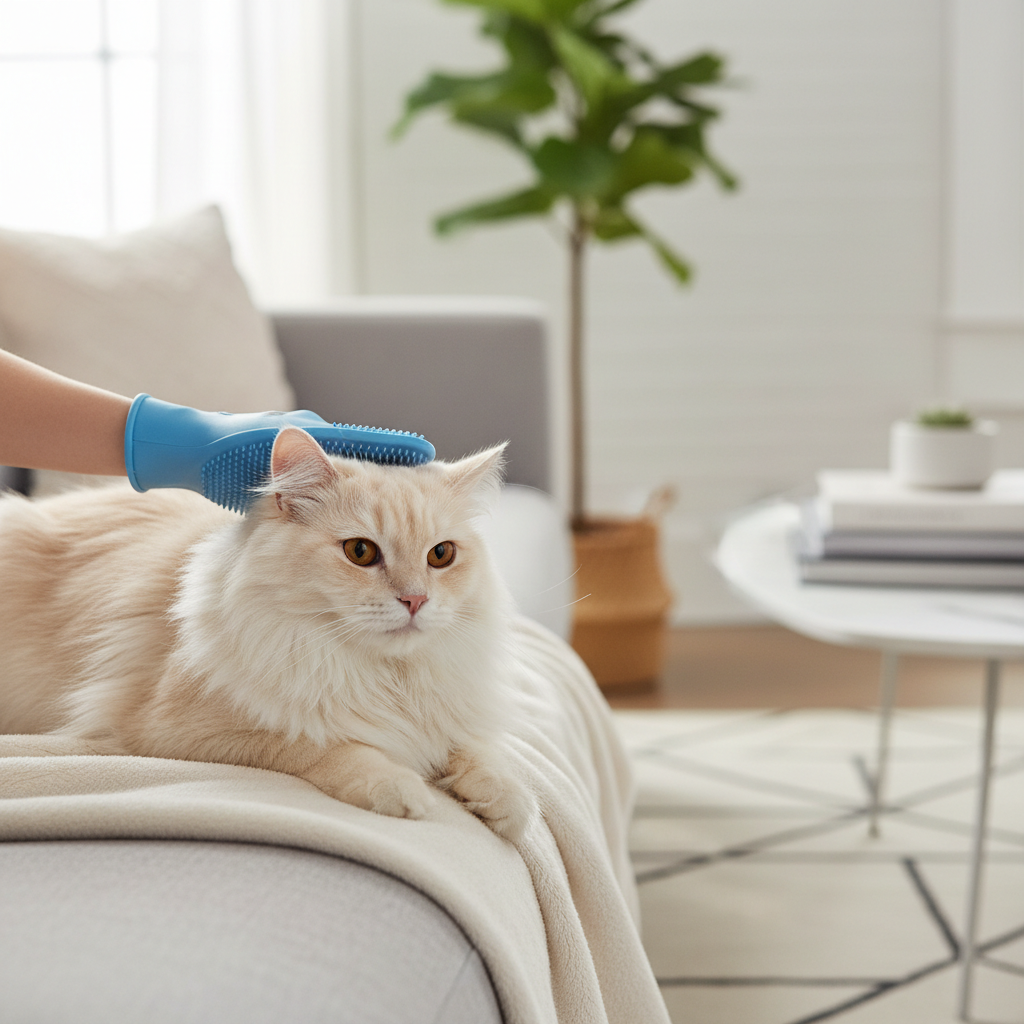
Cat grooming glove for long hair cats can be a surprisingly practical fix when brushing turns into a wrestling match, but only if you pick the right glove and use it in a way your cat can tolerate.
Long-haired coats trap loose undercoat, dander, and tiny tangles fast, so “skipping a few days” often turns into knots you can feel at the base of the fur. A glove won’t replace every tool, but it can help you remove loose hair more frequently, which is usually what prevents bigger problems later.
This guide breaks down what a grooming glove does well, where it falls short, how to choose one for a fluffy coat, and how to use it without irritating skin or creating more static. You’ll also get a quick comparison table and a simple routine you can actually stick with.
Why long-haired cats are harder to groom (and where gloves help)
Long coats don’t just “shed more,” they tend to hold onto shed hair. That trapped hair twists together and can turn into mats, especially behind the ears, under the collar area, armpits, belly, and near the base of the tail.
A grooming glove helps most in situations where your cat dislikes brushes or you need a quick pass that feels like petting. The rubber or silicone nubs create friction that lifts loose hair from the top layer and lightly from the undercoat.
- Great for: daily de-shedding, bonding sessions, light debris, cats who spook at combs
- Okay for: early tangles (only if you go slow and section the coat)
- Not great for: tight mats near skin, heavy undercoat blow, cats with very dense double coats
According to the American Society for the Prevention of Cruelty to Animals (ASPCA)... regular grooming can help reduce mats and hairballs, and it’s also a chance to notice skin issues early. A glove can make that “regular” part easier to maintain.
Choosing a cat grooming glove for long hair cats: what matters
Not all gloves work the same, and with long hair the small details matter. The common mistake is buying the cheapest glove with short, soft nubs and expecting it to pull undercoat like a rake.
Features worth prioritizing
- Longer, firmer silicone tips: better reach through topcoat without scraping skin
- Flexible backing: conforms to shoulders/hips so you don’t “skip” uneven areas
- Secure wrist strap: stops the glove from sliding, which can snag hair
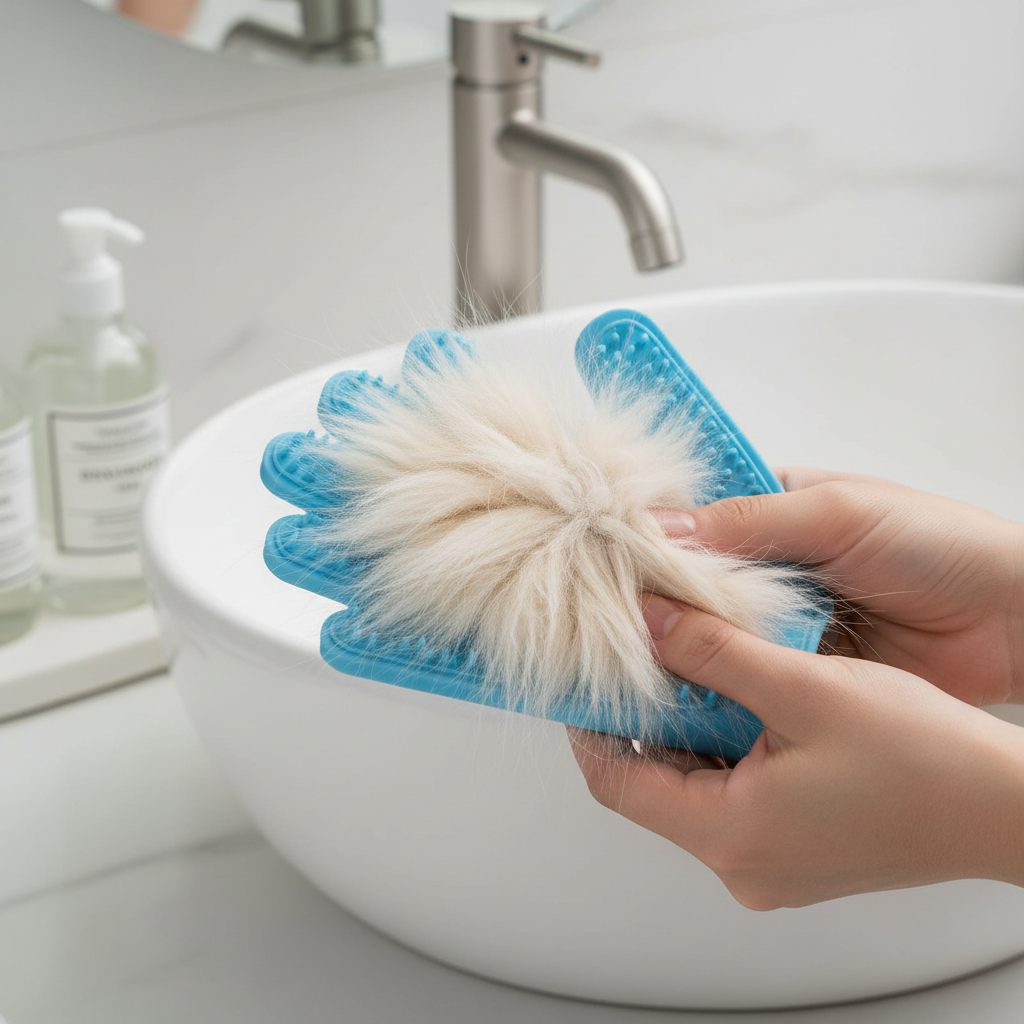
- Easy hair release: hair should peel off in a sheet, otherwise you’ll avoid using it
- Breathable mesh: your hand stays drier, which helps keep strokes consistent
Fit is not a minor detail
If the glove is too big, you’ll press harder without realizing it. Too small, and you’ll lose dexterity and tug at the coat. A “snug but not tight” fit usually reduces accidental pulling, especially on belly fluff.
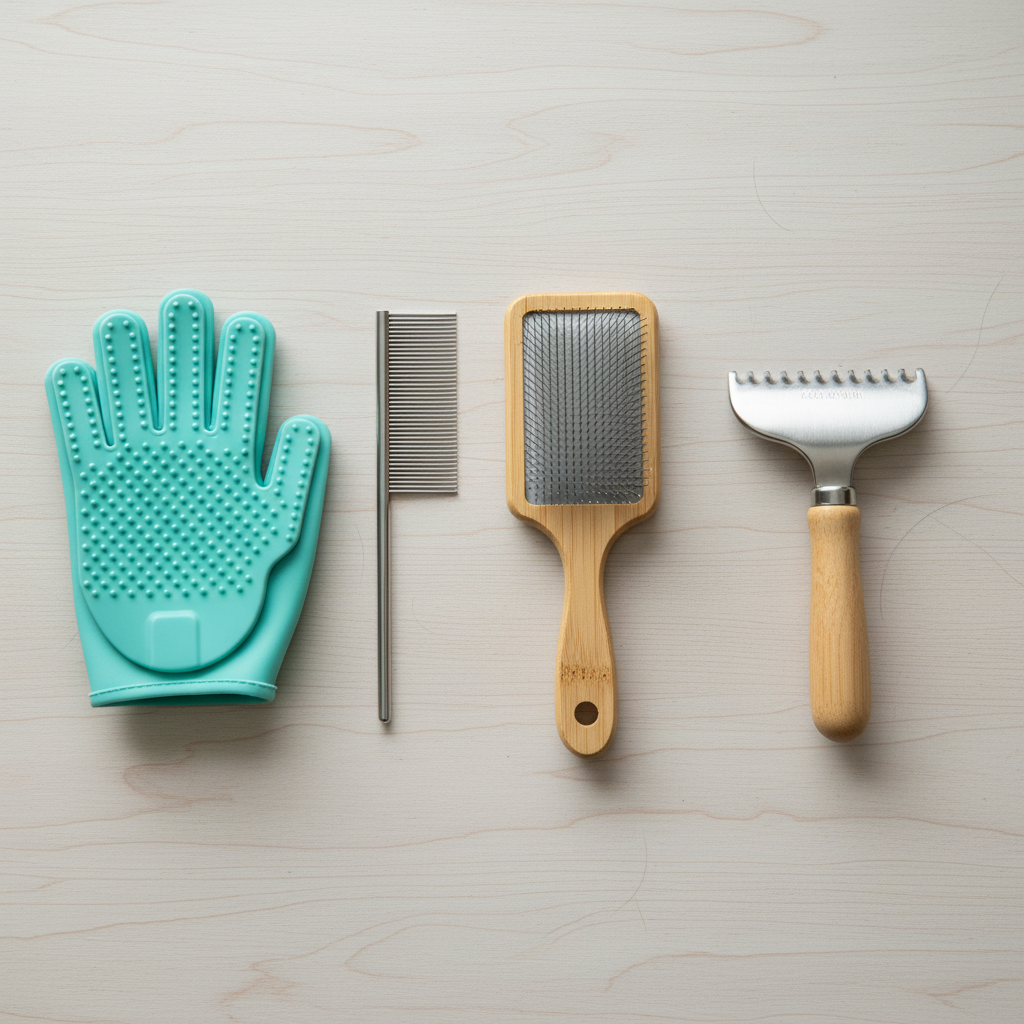
Glove vs brush vs comb: a quick comparison
If you’re deciding what to buy next, here’s the practical view. Many households end up using a glove plus one targeted tool for knots.
| Tool | Best for | Limitations on long hair | How often |
|---|---|---|---|
| Grooming glove | Light de-shedding, sensitive cats, quick sessions | May miss deep undercoat; can skim over early mats | Most days |
| Wide-tooth comb | Checking for tangles down to skin | Requires patience; cats may resist | 2–4x/week |
| Slicker brush | Loosening coat, light mat prevention | Can irritate if overused or pressed hard | 1–3x/week |
| Dematting tool | Breaking up small mats | Higher risk of pulling/cutting skin if misused | As needed |
Quick self-check: is a grooming glove enough for your cat right now?
Before you commit to a glove-only routine, do a fast assessment. You’ll save time and avoid making mats worse.
- You can stick with a glove if you feel only light “grit” of loose coat, no tight clumps near skin, and your cat tolerates longer petting.
- You need a comb too if your fingers catch behind ears, underarms, or along the belly, even if the top looks smooth.
- You may need a groomer or vet advice if mats feel hard, sit close to skin, smell musty, or your cat reacts as if it hurts.
According to the American Veterinary Medical Association (AVMA)... grooming is also a chance to notice parasites, wounds, or skin infections early. If you spot redness, scabs, or thinning patches, it’s worth being cautious.
How to use a grooming glove on long hair without causing tangles
The technique matters more than people expect. With long coats, fast rubbing can create friction and static, and that’s when hair starts clumping.
A simple 6-minute routine
- Start where your cat already likes touch: cheeks, neck, shoulders, then move back.
- Use long strokes with light pressure: go with hair direction for 80% of passes.
- Switch to short, gentle strokes on “problem zones” like underarms and pants area.
- Do a quick part-line check: use your non-glove hand to separate fur and see if loose hair is building near skin.
- Stop before your cat gets annoyed: ending early beats pushing through and creating a grooming aversion.
- Finish with 30 seconds of combing in high-mat spots if your cat allows it.
Key point: a cat grooming glove for long hair cats works best as a frequent, low-stress habit, not a once-a-week “deep clean.”
Practical tips: shedding season, static, and cleaning the glove
When the coat is blowing, you’ll notice the glove fills up fast but the cat still sheds after. That’s normal; the glove usually pulls what’s already loose, not what’s still anchored.
- For heavy shedding: do shorter daily sessions, then add a comb day every 2–3 days.
- For static: groom in a more humid room when possible, and avoid rapid back-and-forth scrubbing.
- For hair release: let hair accumulate into a “sheet,” then peel it off, don’t pick at it in tiny bits.
- For hygiene: rinse and air-dry the glove, especially if your cat has dandruff or oily coat.
According to the Centers for Disease Control and Prevention (CDC)... basic handwashing after handling pets helps reduce spread of germs. If you groom daily, it’s a small habit that’s easy to skip, but worth keeping.
Common mistakes (and what to do instead)
Most grooming “fails” aren’t about the cat being difficult, they’re about pushing the wrong tool too hard.
- Mistake: pressing down to “reach the undercoat.”
Try: lighten pressure, increase stroke count, and follow with a comb check. - Mistake: grooming against the grain for long stretches.
Try: occasional reverse strokes only on sturdy areas like the back, then smooth back down. - Mistake: using the glove on a developing mat and rubbing it.
Try: isolate the tangle with fingers, gently tease with a wide-tooth comb, stop if it tightens. - Mistake: long sessions that end with a stressed cat.
Try: stop on a calm note, same chair, same time, quick reward.
If your cat has very sensitive skin, is older, or has arthritis, even light pressure can feel like too much. In that case, shorter sessions and a softer glove often work better, and you can ask your veterinarian what’s appropriate.
When to seek professional help
Some coat issues are beyond what a glove can safely fix at home. If mats sit close to skin, trying to cut them out yourself can nick skin easily, especially because cat skin can be thin and mobile.
- Multiple tight mats, especially on belly, armpits, or near the tail base
- Skin looks red, moist, smells off, or has visible sores under the coat
- Your cat vocalizes, swats, or flinches when you touch a specific area
- Sudden coat change, excessive dandruff, or hair loss patches
In those situations, a professional groomer or veterinarian can recommend the safest approach, and in some cases sedation may be discussed for humane mat removal. That decision is medical, so it should go through a clinic.
Conclusion: the most realistic way to use a grooming glove
A grooming glove won’t magically replace every grooming tool, but it can make consistent coat care feel like normal petting, which is often the difference between “sometimes groomed” and “actually maintained.” If you want fewer hair tumbleweeds and fewer surprise tangles, lean on frequency, gentle pressure, and quick comb checks.
If you try one thing this week, do two short glove sessions on calm days and add a 30-second comb check behind the ears and underarms. That small routine catches problems early, before they turn into a stressful project.
FAQ
Is a cat grooming glove for long hair cats better than a brush?
It depends on what you’re solving. Gloves are great for tolerance and daily loose-hair removal, but a comb or slicker usually does more for deeper coat and early tangles.
Can grooming gloves remove mats from long-haired cats?
They might help with very early tangles, but they often skim over tight mats. If a mat feels close to skin or hard, it’s safer to switch tools and consider professional help.
How often should I use a grooming glove on a long-haired cat?
Many cats do well with short sessions most days, especially during shedding seasons. If your cat starts showing irritation or avoidance, reduce frequency and pressure.
Why does my cat get static and clumps after glove grooming?
Fast rubbing creates friction, and dry indoor air can make static worse. Slower strokes, grooming with the coat direction, and avoiding overworking one area usually helps.
Do grooming gloves help reduce hairballs?
They can help indirectly by removing loose hair before your cat swallows it during self-grooming. Hairballs also relate to diet, hydration, and health, so ask a vet if hairballs become frequent.
What if my cat bites the glove?
That’s common with playful or overstimulated cats. Pause, switch to shorter sessions, and avoid waving the glove like a toy; you want grooming to feel calm and predictable.
Are grooming gloves safe for cats with skin conditions?
Sometimes, but it’s easy to irritate inflamed skin. If you see redness, scabs, or hair loss, it’s smart to stop and consult a veterinarian for guidance.
If you’re trying to keep a long coat comfortable without turning grooming into a weekly battle, a glove can be the “good enough” tool that makes consistency realistic, and pairing it with a basic comb for quick checks often keeps the routine simple.