
best cat grass kits indoor options can look identical online, then you get the box and realize the tray is flimsy, the seeds are dusty, or the grass turns fuzzy with mold by day four.
If you keep an indoor cat, cat grass is one of those small upgrades that can make daily life easier, fewer bored nibbles on houseplants, a little enrichment by the window, and sometimes better hairball management, depending on the cat.
This guide focuses on what actually separates a “good” kit from a frustrating one, how to match the kit to your space and your cat’s habits, and how to avoid the most common failure points like soggy soil, poor drainage, and low sprout rates.
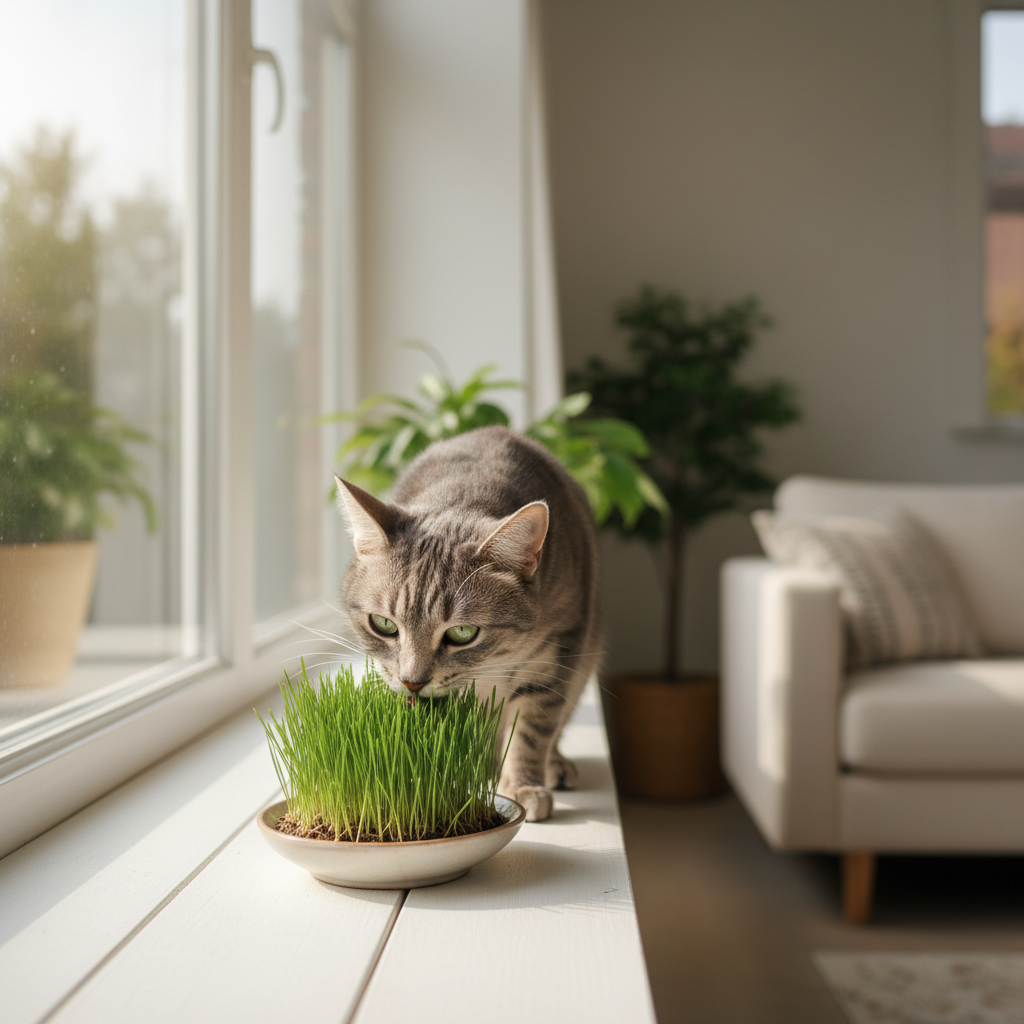
What “cat grass” kits usually include (and what the grass actually is)
Most kits are some combo of seeds + growing medium + container. The “grass” is typically wheatgrass, oat grass, barley, or a blend. Your cat isn’t getting a magical species, it’s more about freshness, texture, and how cleanly the kit grows.
Where people get tripped up is assuming every kit is low-effort. In reality, the container design and drainage matter almost as much as the seeds.
- Wheatgrass: common, fast sprouting, tends to grow dense.
- Oat grass: often softer blades, some cats prefer it.
- Barley: sturdy growth, can handle a bit more “enthusiastic” chewing.
According to the ASPCA, many common household plants can be toxic to cats, so offering a safe “chew target” like cat grass may help redirect curiosity away from riskier greenery, though it’s not a guarantee.
How to choose the best indoor cat grass kit for your home
When you’re shopping for the best cat grass kits indoor, the label rarely tells you what you need. I’d prioritize these practical checks before brand names.
1) Container and drainage (the mold prevention lever)
Indoor kits fail most often from trapped moisture. Look for a tray that either drains, has a breathable insert, or at least isn’t a deep “bowl” that keeps soil wet for days.
- Best for beginners: rigid tray + drainage holes + optional catch tray.
- Okay if you’re attentive: shallow tray without holes, but you must water lightly.
- Risky: deep, non-draining containers that encourage soggy soil.
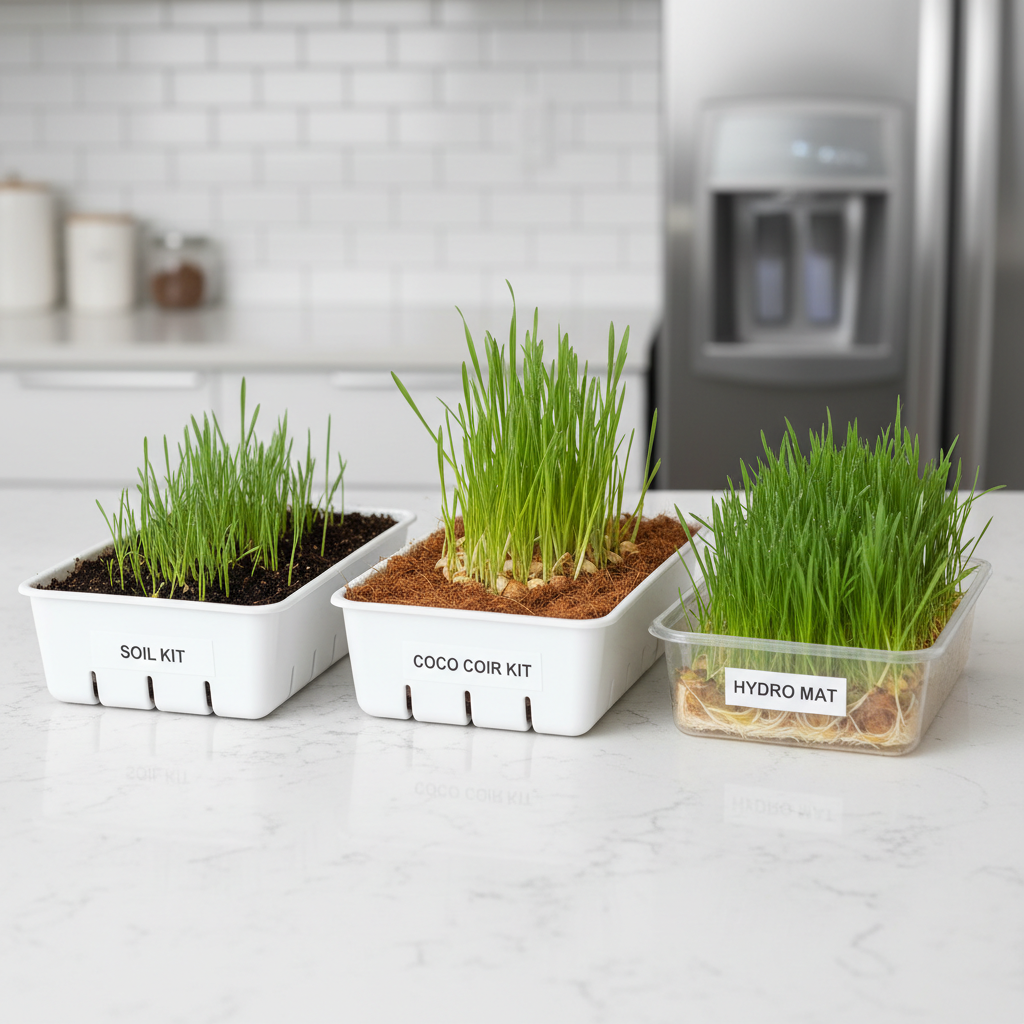
2) Growing medium: soil vs. coco coir vs. hydro mats
Soil can grow great grass, but it can also stay wet. Coco coir is cleaner and often less messy. Hydro mats feel convenient, but if airflow is poor they can get funky quickly.
- Soil: strong growth, more mess potential.
- Coco coir: cleaner handling, decent moisture balance.
- Hydro mats: quick setup, watch moisture and smell.
3) Seed quality and dust
Dusty seeds tend to mean more debris in your sink and sometimes more mold-prone residue. A good kit usually notes “pre-cleaned” or includes rinsing instructions that actually make sense.
Quick comparison table: kit types and who they fit best
This isn’t about “one winner.” Different indoor setups need different tradeoffs, especially if you’re juggling pets, kids, and limited counter space.
| Kit type | Best for | Upsides | Watch-outs |
|---|---|---|---|
| Drainage tray + soil/coir | Most homes | Reliable growth, easier moisture control | Needs a catch tray, occasional cleanup |
| Self-watering style reservoir | Busy schedules | Less daily attention | Can over-hydrate, mold risk if airflow poor |
| Hydro mat kit | Minimal mess preference | No loose soil, fast setup | Smell/mold if too wet, can dry unevenly |
| Refillable planter + bulk seed | Multi-cat homes, long-term use | Lower cost over time, less packaging | More DIY, you manage seed storage |
Self-check: which indoor cat grass setup will actually work for you?
Before you buy another kit, take 30 seconds and be honest about your constraints. This is usually where people save money.
- If you forget daily care: choose a draining tray kit over a sealed bowl, and set a calendar reminder for light watering.
- If your cat uproots everything: pick a heavier container, or a wider tray that won’t tip easily.
- If you hate mess: lean toward coco coir or a hydro mat, and keep it on a washable mat.
- If you had mold before: prioritize airflow, shallow medium, and bright indirect light.
- If you’re budget-focused: consider a refillable planter and buy seeds in bulk from a reputable pet or garden seller.
Also, if your cat obsessively eats grass and then vomits frequently, that can be “cat being a cat,” but it can also be a sign you should check in with a veterinarian, especially if appetite or energy changes.
Step-by-step: how to grow cat grass indoors without the usual problems
You can follow most kit instructions, but these small adjustments tend to improve the result in many homes.
1) Rinse seeds (if the kit suggests it, do it)
Rinsing reduces dust and can improve sprouting consistency. If the kit has no guidance, a gentle rinse in a fine mesh strainer is often enough.
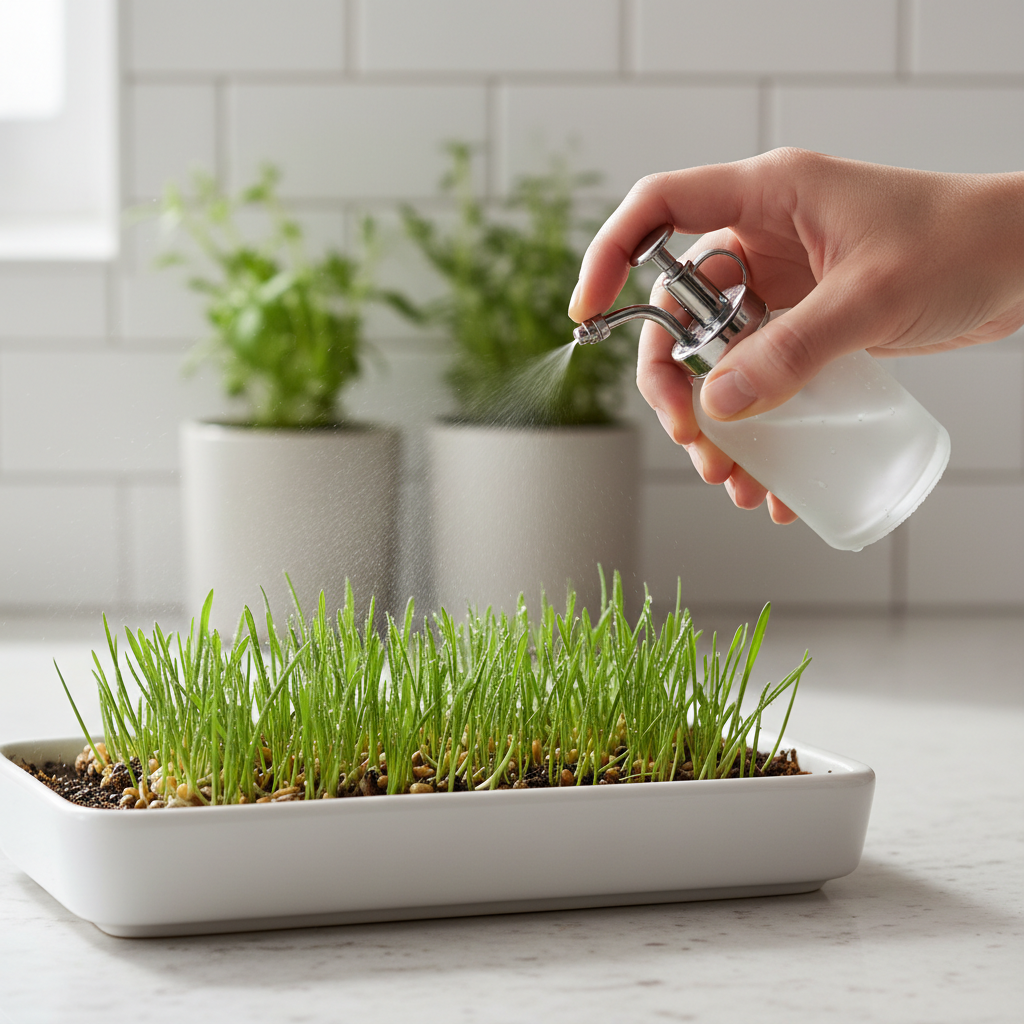
2) Use less water than you think
Most indoor failures come from kindness, people keep watering “just in case.” Aim for evenly damp, not wet. If you can squeeze water out of the medium, it’s too much.
3) Give it bright, indirect light
Low light tends to make grass leggy and weak. Direct hot sun can cook seedlings in a shallow tray. A bright window with filtered light is usually the sweet spot.
4) Rotate and trim
Rotating the tray helps it grow upright. Light trimming keeps the blades tender and reduces flop-over, which can trap moisture near the base.
- Typical readiness: many kits are chew-ready around 5–10 days, depending on seed type and temperature.
- Replace cycle: when it yellows, smells “off,” or looks slimy at the base, it’s time to compost and restart.
Safety notes and common misconceptions
Cat grass is generally considered a safe enrichment option, but “safe” still depends on how you grow and use it.
- Mold isn’t “normal.” A little white fuzz can be root hair, but a musty smell, slime, or spreading patches are a stop sign.
- Grass doesn’t replace nutrition. It’s a supplement-style enrichment, not a vegetable serving.
- Don’t use lawn grass. Outdoor grass may carry pesticides, fertilizers, or parasites, and it’s not worth the gamble.
- Skip essential oils nearby. Some essential oils can be harmful to cats, and strong scents may irritate sensitive pets.
According to the FDA, sprouts for human consumption have special food-safety considerations due to bacterial growth risk, which is a useful reminder: warm, wet environments grow things quickly. Keep your kit clean, and if anything smells wrong, toss it.
What to buy in 2026: a practical “best picks” framework (without brand hype)
I’m not going to pretend one list fits everyone, but if you’re shopping the best cat grass kits indoor category in 2026, these are the configurations that tend to make people happiest.
Pick A: The “no-drama” drainage tray kit
- Look for: rigid tray, drainage holes, a separate catch tray, coco coir or light soil.
- Why it works: easier moisture control, fewer mold complaints in many households.
Pick B: The refillable planter + bulk seed route
- Look for: a durable planter you can rinse, plus sealed seed storage.
- Why it works: lower ongoing cost, you can adjust density and watering based on your home.
Pick C: Hydro mat kit for tidy countertops
- Look for: thicker mat, clear instructions on watering volume, and airflow-friendly tray design.
- Why it works: minimal mess, quick setup, good for apartments if you stay conservative with water.
Key point: if your home runs humid, lean away from sealed self-watering reservoirs unless reviews specifically mention mold resistance and you can place it somewhere with airflow.
Closing thoughts: make it easy on yourself (and your cat)
The right kit is the one you can keep alive on your real schedule, in your real light, with your cat doing whatever weird thing your cat does. If you want the simplest path, choose a sturdy draining tray setup, water lightly, and restart the batch before it gets tired and yellow.
If you’re comparing options tonight, pick one kit style, run it for two cycles, and adjust one variable at a time, usually watering amount. That’s how you end up with a setup you can repeat, not just a one-time win.
Key takeaways
- Drainage and airflow matter more than fancy packaging.
- Overwatering is the most common reason indoor grass fails.
- If your cat vomits often after eating grass, check with a veterinarian to rule out other issues.
FAQ
What is the best cat grass for indoor cats, wheat or oat?
Many cats do well with either. Wheatgrass often grows dense and fast, while oat grass can feel softer. If your cat is picky, a blend kit is an easy way to see what they prefer.
How long do indoor cat grass kits usually last?
In many homes, a tray stays appealing for about 1–3 weeks after sprouting, depending on light, watering, and how hard your cat chews. Yellowing, odor, or slimy bases are signs to replace.
Why does my cat grass kit get moldy?
Most mold issues come from too much water, poor drainage, and low airflow. Using a shallower medium, watering less, and placing the kit in brighter indirect light often helps.
Can cat grass help with hairballs?
Some owners feel it helps, but results vary. If hairballs are frequent or severe, it’s smarter to talk with a veterinarian about diet, grooming, and possible digestive issues rather than relying on grass alone.
Are the best cat grass kits indoor safe for kittens?
Usually, but kittens may chew more aggressively and make more mess. It’s wise to supervise at first, keep the tray stable, and ask your veterinarian if your kitten has a sensitive stomach.
Do I need to rinse cat grass seeds before planting?
If the kit recommends it, yes. Rinsing can reduce dust and improve sprouting consistency. If instructions say not to soak or rinse, follow that guidance because some kits assume a specific moisture level.
What if my cat eats a lot of cat grass at once?
Some cats overdo it and may vomit. Offer short sessions, remove the tray between nibbles, and monitor. If vomiting is frequent, or you see lethargy or appetite changes, consult a veterinarian.
If you’re trying to find a setup that stays clean on a countertop and still grows reliably, start by narrowing to a drainage-tray kit or a refillable planter plus bulk seed, then adjust watering until it fits your home’s humidity and your cat’s chewing style.