
Best dog food for sensitive stomach shopping usually starts after one too many nights of soft stool, grass-eating, gurgling belly sounds, or random vomiting that never quite turns into a clear diagnosis.
The hard part is that “sensitive stomach” is not one thing, it can be food intolerance, stress, too-rich treats, sudden diet changes, or a medical issue that needs a vet, and the wrong bag can keep the cycle going.
This guide walks through what typically causes digestive upset, what to look for on a label in 2026, a practical comparison table, and a step-by-step switching plan you can actually follow without overthinking every ingredient.

Why dogs get a “sensitive stomach” in the first place
If your dog reacts to “everything,” it often means there is one consistent trigger hiding in plain sight, or the gut simply needs a calmer routine. These are the patterns vets and nutrition folks usually look at first.
- Too many diet changes: rotating brands, flavors, and toppers fast can overwhelm some dogs, even when each product seems “high quality.”
- Food intolerance: not a true allergy in many cases, more like poor tolerance to certain proteins, high fat, dairy, rich treats, or specific additives.
- High fat or overly rich formulas: fat can be harder to digest, and for some dogs it can trigger flare-ups quickly.
- Fiber mismatch: too little fiber can mean loose stool, too much can mean gas, frequent bowel movements, or urgency.
- Gut microbiome disruption: antibiotics, parasites, stress boarding, or major life changes can throw digestion off.
- Medical causes: pancreatitis, inflammatory bowel disease, exocrine pancreatic insufficiency, parasites, or chronic infections can look like “sensitive stomach.”
According to the American Veterinary Medical Association (AVMA), persistent vomiting or diarrhea warrants veterinary attention, especially when it is recurring, severe, or paired with lethargy or dehydration.
Quick self-check: what type of sensitive stomach are you dealing with?
Before you buy another bag, try to place your dog in a “most likely” lane. You do not need perfection here, you just want a smarter first pick.
Signs it might be the food (or treats)
- Symptoms start within a day or two of a new food, chew, dental treat, or table scraps
- Loose stool but normal energy and appetite most days
- Gas and gurgling after meals, especially richer meals
- Improves when you simplify to one diet and cut extras
Signs it might be more than food sensitivity
- Repeated vomiting, not just occasional spit-up
- Blood or black/tarry stool
- Weight loss, poor coat, or ravenous appetite with weight dropping
- Abdominal pain, hunched posture, “praying position”
- Diarrhea lasting more than a couple days, or frequent relapses
If you see the second list, a vet visit often saves time and money because you stop guessing. Many clinics can run a fecal test, basic bloodwork, and sometimes recommend a therapeutic diet trial.
What to look for in the best dog food for sensitive stomach (2026 label checklist)
Marketing terms are noisy, so focus on what tends to matter for digestion: simplicity, digestibility, and consistency. If your dog does well on a formula, staying steady often beats chasing “fancier.”
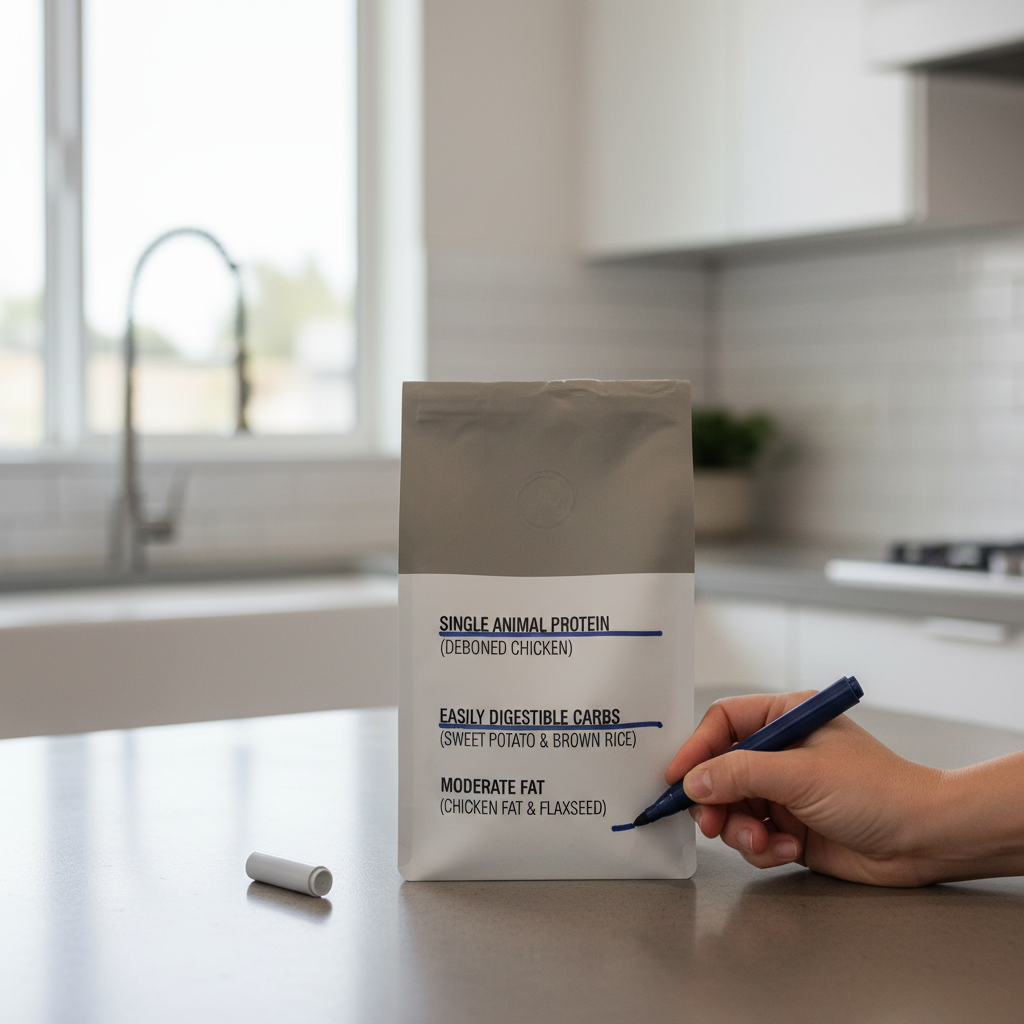
- Limited ingredient approach: fewer moving parts can make it easier to identify triggers, though it is not automatically “better” for every dog.
- Novel or single animal protein: duck, venison, rabbit, lamb, or fish can help when chicken or beef seems to cause issues.
- Moderate fat: many sensitive dogs do better when fat is not the star of the show; your vet can guide targets if pancreatitis is a concern.
- Highly digestible carbs: rice, oats, potato, or sweet potato are common options, but individual tolerance varies.
- Prebiotics: ingredients such as beet pulp, chicory root, or inulin can support stool quality, but too much can backfire in gassy dogs.
- Probiotics: helpful for some dogs, but strain and dose vary, so treat it as a “nice-to-have,” not a guarantee.
- AAFCO statement: look for “complete and balanced” for your dog’s life stage, unless a vet prescribes a therapeutic diet.
Comparison table: common “sensitive stomach” formula types
There is no single winner for every dog, but certain formula styles fit certain patterns. Use this as a shortcut when narrowing options.
| Formula type | Best for | What to watch | Typical examples on labels |
|---|---|---|---|
| Limited ingredient diet (LID) | Suspected intolerance, repeated mild diarrhea, ingredient detective work | Still can include triggers, “limited” varies by brand | “Single protein,” “limited ingredient,” short ingredient list |
| Hydrolyzed protein (vet therapeutic) | True food allergy suspicion, chronic GI issues under vet care | Needs vet guidance, not all dogs need it | “Hydrolyzed,” prescription veterinary diet |
| Gastrointestinal support (vet therapeutic) | Chronic soft stool, recurring vomiting, post-GI upset recovery | Cost, availability, follow vet plan | “Gastrointestinal,” “digestive care,” prescription diet |
| Fresh / gently cooked | Picky eaters, dogs sensitive to heavy kibble, owners wanting simpler recipes | Needs balanced formulation, storage and transition matter | “Fresh cooked,” “gently cooked,” “complete and balanced” |
| High-fiber digestive formulas | Inconsistent stools, anal gland issues linked to soft stool | Too much fiber can increase gas or urgency | “High fiber,” “prebiotic fiber,” “beet pulp” |
How to choose a food by symptom pattern (not by hype)
When people search best dog food for sensitive stomach, they usually want a clear pick. In reality, your best pick is the one that matches your dog’s pattern and stays consistent for long enough to judge.
If loose stool is the main issue
- Try a moderate-fat, highly digestible formula with steady fiber, avoid “rich” toppers.
- Pick one protein source and stick with it for at least 3–4 weeks unless symptoms worsen.
- Keep treats boring: single-ingredient options, small amounts.
If vomiting happens more than “rarely”
- Consider smaller, more frequent meals and a lower-fat diet while you talk with your vet.
- Skip sudden switches and avoid fatty chews and table scraps.
- Ask about parasites, pancreatitis risk, and whether a GI therapeutic diet makes sense.
If gas and loud stomach sounds are constant
- Look for simpler recipes, and be cautious with heavy legumes and very high fiber.
- Slow feeders can help if your dog gulps meals, swallowed air is real.
- Probiotics may help some dogs, but introduce slowly and stop if gas spikes.
If itching + stomach issues show up together
- That combo can point toward food allergy or environmental allergy, so a structured elimination diet with a professional often beats guesswork.
- Hydrolyzed or novel-protein therapeutic diets are commonly used during vet-guided trials.
Practical transition plan (the part most people rush)
A lot of “this food didn’t work” stories are actually “the switch was too fast” stories. If your dog tends to flare up, take the slower path.
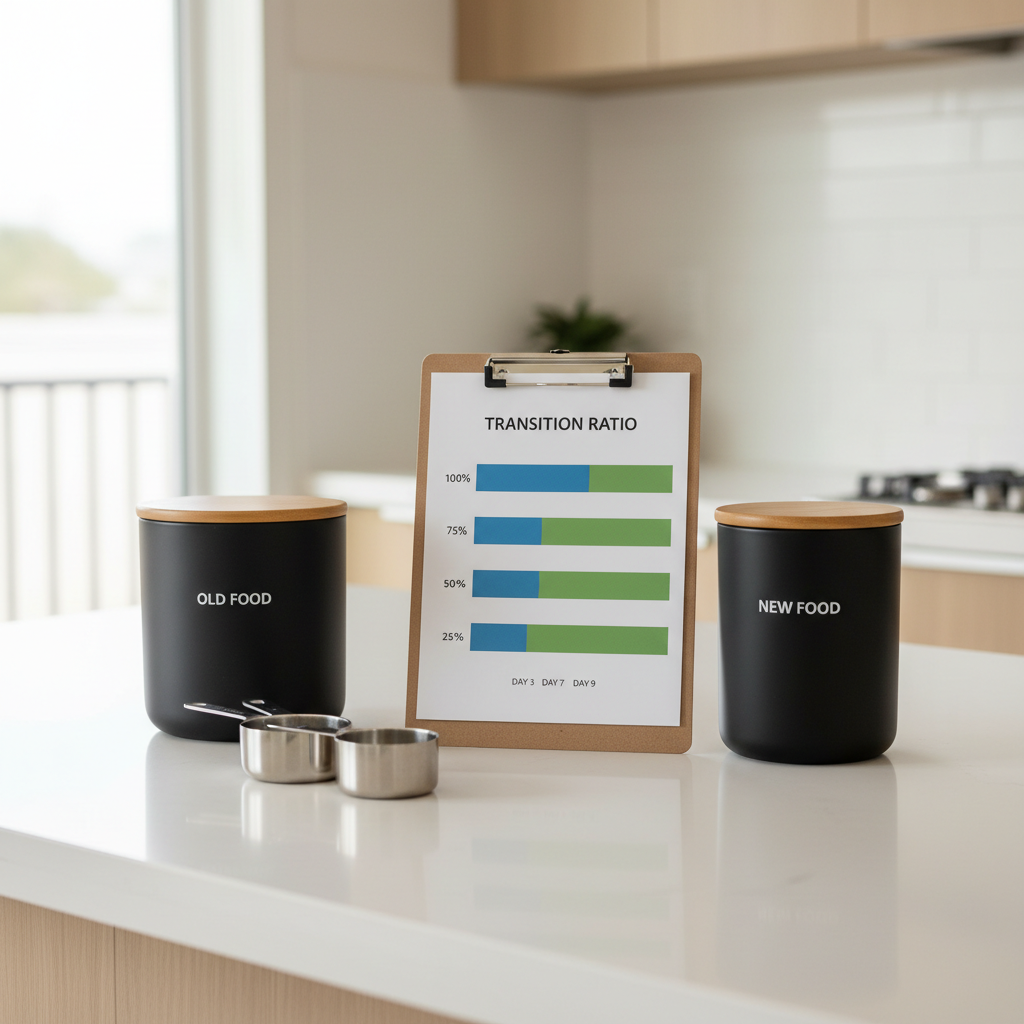
- Days 1–3: 75% old food, 25% new food
- Days 4–6: 50% old, 50% new
- Days 7–9: 25% old, 75% new
- Day 10+: 100% new food
Keep everything else stable during the trial: same treats, same chews, same meal times, no new supplements. If diarrhea hits, it may help to pause at the current ratio for a few days rather than pushing forward.
Common mistakes that keep sensitive stomachs stuck
Most owners are trying hard, they just get pulled into tiny decisions that add up to nonstop GI noise.
- Changing too many variables: new food plus new treats plus new supplement, then nobody knows what helped or hurt.
- Overusing rich “functional” toppers: bone broth, oils, and high-fat mixers can be rough on sensitive dogs.
- Assuming grain-free equals gentler: some dogs do fine grain-free, others do better with rice or oats, so go by response, not trends.
- Judging in 48 hours: stool often needs time to stabilize; unless your dog worsens, give a reasonable trial window.
- Ignoring calories and portions: overfeeding can look like intolerance, especially in smaller dogs.
According to the U.S. Food and Drug Administration (FDA), pet food labels and ingredient lists should be used alongside professional guidance when health issues persist, since multiple factors can contribute to digestive signs.
When to involve your veterinarian (and what to ask)
If symptoms are frequent, escalating, or paired with weight loss or pain, bringing a vet in is not “overreacting,” it is efficient. Many GI problems are manageable, but they are easier when you catch them early.
- Ask whether your dog needs a fecal test, bloodwork, or a pancreatitis check based on history.
- Ask if a therapeutic GI diet or hydrolyzed protein trial fits your dog’s symptoms.
- Bring a short log: food brand/flavor, treats, stool notes, vomiting timing, any meds.
If your dog is lethargic, cannot keep water down, shows blood in vomit or stool, or seems painful, seek urgent veterinary care.
Key takeaways (so you can pick one path and stick to it)
- The best dog food for sensitive stomach is usually the one that is simple, consistent, and matched to your dog’s symptom pattern.
- Moderate fat, digestible ingredients, and a slow transition solve more issues than most people expect.
- If problems keep returning, stop “shopping” and start a structured vet-guided plan, it is often cheaper long-term.
If you want one immediate next step, pick a sensible sensitive-stomach formula, cut treat variety for two weeks, and transition slowly, then reassess with clearer information.
FAQ
- How long should I try a new sensitive stomach dog food before switching again?
Many dogs need a few weeks to stabilize stools, especially after repeated switches. If your dog is not worsening, a 3–4 week trial is often more informative than a 3-day trial. - Is chicken bad for dogs with sensitive stomachs?
Not universally. Chicken is a common protein, so it is a common suspected trigger, but plenty of sensitive dogs tolerate it. If you suspect it, a single-protein alternative can be a clean test. - What ingredients commonly upset a sensitive stomach?
High fat, rich dairy, frequent table scraps, sudden treat changes, and certain high-fiber or heavy-legume formulas can be rough for some dogs. Individual tolerance matters more than internet lists. - Are probiotics worth it for digestive issues?
Sometimes. Some dogs get firmer stools, others get more gas. If you try one, introduce slowly, use a reputable product, and stop if symptoms worsen, your vet can recommend options. - Should I choose wet food or dry food for a sensitive stomach?
Either can work. Wet food can be easier for some dogs to digest and may increase water intake, while kibble is convenient and consistent. The specific formula and transition pace usually matter more than the format. - Can I mix multiple “sensitive stomach” brands together?
For many sensitive dogs, mixing can make outcomes harder to read and can increase GI variability. If your goal is troubleshooting, pick one formula and keep it steady. - When is a prescription hydrolyzed diet necessary?
It is typically used when food allergy is strongly suspected or when chronic GI signs do not respond to over-the-counter options. A veterinarian should guide that decision.
If you are stuck in the loop of trying bag after bag, it may help to treat this like a short experiment: choose one direction, keep variables calm, track stool and vomiting for a couple weeks, and if the pattern still looks off, bring that log to your vet so the next step is targeted instead of guessy.