Snake hide cave dark setups fail for one simple reason: the hide looks “nice” to us, but it doesn’t feel safe to the snake. When a hide feels too open, too bright, or too big, many snakes stop using it, pace the glass, or stay buried all day.
This matters more than most people expect because a usable hide supports normal feeding, calmer handling, and more stable day-to-day behavior. A stressed snake may skip meals or act defensive, and owners often blame humidity, heat, or “attitude” before checking the hide itself.
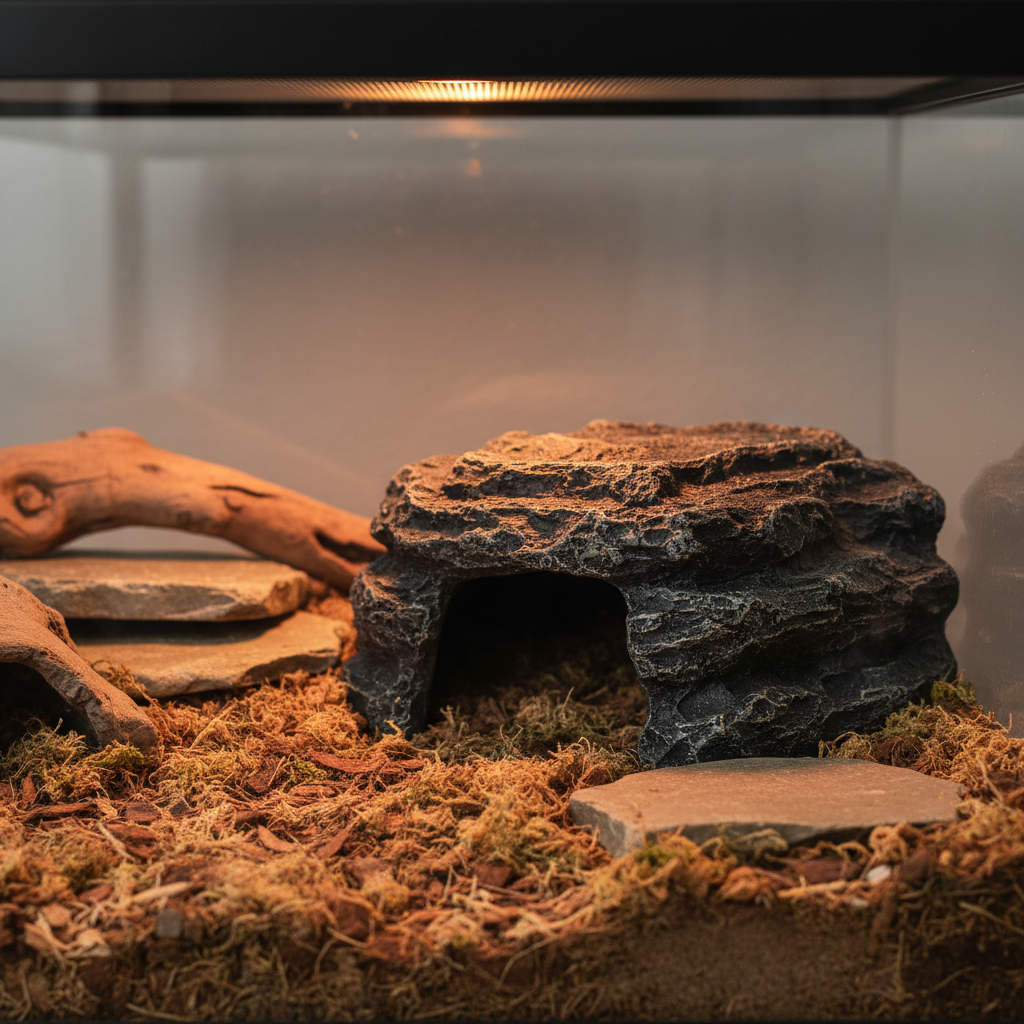
In this guide, you’ll get a practical way to judge whether your hide is actually “dark and secure,” a sizing checklist, placement tips for warm/cool sides, and quick fixes that don’t require rebuilding your whole enclosure.
What “dark and secure” really means (from a snake’s point of view)
Owners usually picture a hide as a little cave. Snakes often judge it more like a panic room: tight, enclosed, and predictable. A hide can be marketed as “cave” and still be too exposed for many individuals.
A usable snake hide cave dark feel usually comes from four traits:
- Low light: the interior stays dim even when room lights are on.
- Contact on the body: the snake can press its sides and back against surfaces.
- One clear entrance: fewer openings often equals more security.
- Stable position: it doesn’t rock or shift when the snake pushes.
According to the RSPCA (Royal Society for the Prevention of Cruelty to Animals), providing appropriate shelter/hiding places is a basic welfare need for reptiles, and lack of cover can contribute to stress-related behavior. The exact hide “style” varies by species, but the security principle stays consistent.
Why snakes avoid a hide: the most common causes
If your snake ignores the hide, it’s rarely random. In real enclosures, a few patterns show up again and again.
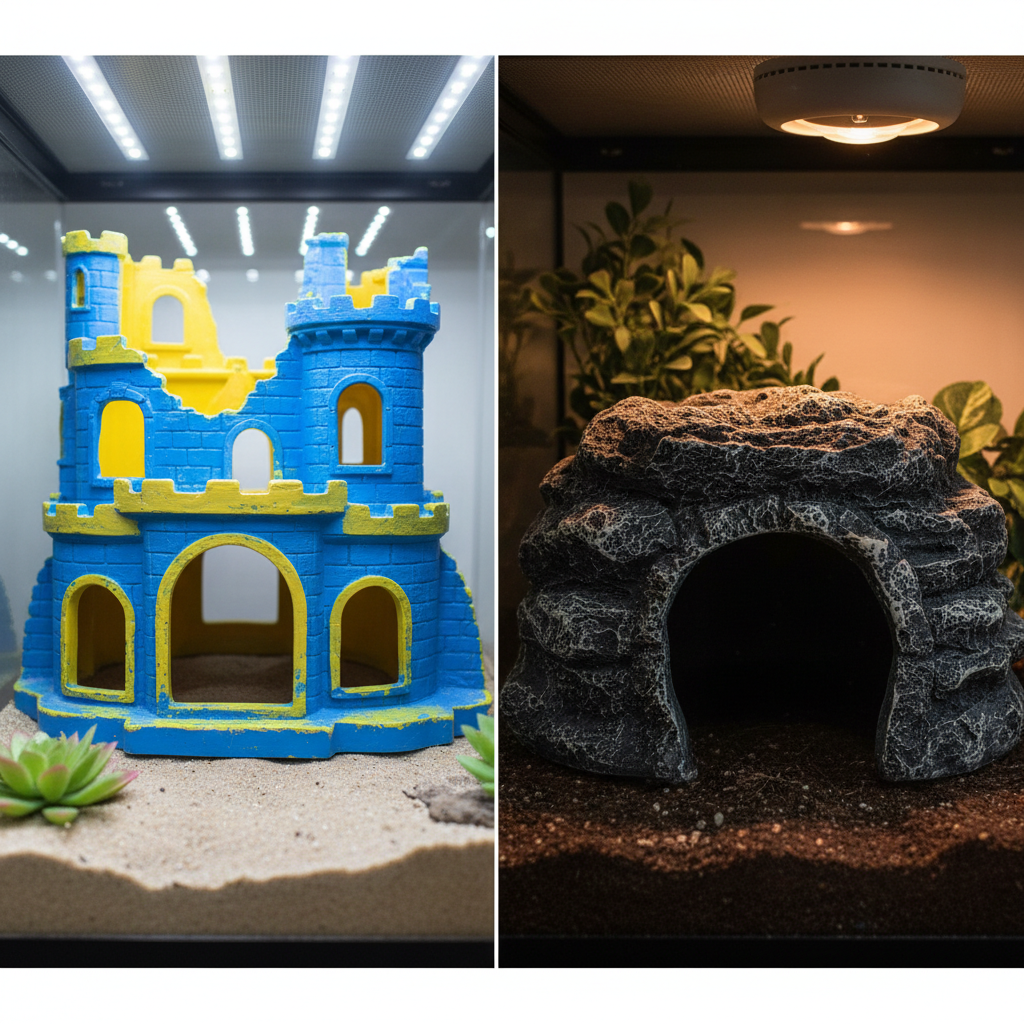
- It’s too large inside: big interior space can feel exposed, especially for juveniles.
- Too much light leakage: thin plastic, wide doors, or a top opening let light in.
- Wrong location on the gradient: a hide placed in a temperature spot the snake doesn’t like becomes “decor.”
- Unstable or slippery base: a rocking hide or smooth surface can feel unsafe.
- Humidity mismatch: some species seek a moist hide at times (not always), others avoid excess moisture.
- Too much traffic: if the hide sits right at the front glass where people pass by, some snakes choose a quieter corner.
One more thing people miss: some snakes “choose” security by burrowing instead. If your substrate is deep and holds tunnels, the snake may prefer that over a cave hide, which isn’t automatically a problem unless other stress signs show up.
Quick self-check: is your hide the right size?
Forget brand labels like small/medium/large. Use the snake as the measuring tool.
A good hide size usually looks like this
- When coiled, the snake fits fully inside without body parts sticking out.
- The snake can touch the walls on multiple sides; it shouldn’t look “lost” inside.
- The entrance is just big enough to pass through, not a wide doorway.
Fast test you can do tonight
- If you shine a room light and can clearly see the snake inside, it may not be dark enough.
- If the snake only uses the hide when it’s shedding, the usual “everyday security” may be missing.
- If the snake wedges behind the hide instead of inside it, the hide might be too open or too roomy.
Placement matters: warm side, cool side, and “the third option”
Many keepers buy one hide and put it where it looks balanced. Snakes don’t care about symmetry. They care about choosing comfort without sacrificing safety.
- Warm-side hide: supports digestion and basking after feeding. If it’s the only secure hide, some snakes will overstay warm temps to feel safe.
- Cool-side hide: lets the snake thermoregulate without feeling exposed.
- Humid hide (optional): helpful for many species during shed cycles; it’s not a universal daily requirement and can be overdone in already-humid enclosures.
According to the AVMA (American Veterinary Medical Association), reptiles rely on their environment for thermoregulation. In practice, that means your hide plan should support movement across a temperature gradient, not trap the snake into one “safe” zone.
Choosing materials and styles: what tends to work (and what to avoid)
There’s no single perfect product, but there are predictable pros and cons. Here’s a practical comparison you can use when shopping or DIYing.
| Hide type | Why it works | Common downside | Best for |
|---|---|---|---|
| Resin “rock cave” with one entrance | Heavy, stable, usually darker inside | Interior can be too large if oversized | Most beginner setups |
| Plastic hide box | Easy to clean, cheap, consistent shape | Can leak light; may slide on glass | Quarantine tubs, simple enclosures |
| Half-log / open-bottom bark-style | Looks natural, good enrichment | Often too open to be a true secure hide | “Extra cover,” not the only hide |
| DIY opaque container with a cut doorway | Can be perfectly sized and very dark | Edges must be sanded; aesthetics vary | Budget-friendly custom fit |
If your goal is snake hide cave dark comfort, prioritize opacity and a snug interior over realism. “Naturalistic” is great, but only after the snake actually uses it.
Practical fixes: make your current hide darker and more secure
You don’t always need a new product. Small tweaks often change how the snake uses the space within a day or two.
- Reduce interior volume: add a safe, smooth “filler” object outside the snake’s pathway (for example, a smaller second hide nested nearby) so the space feels tighter.
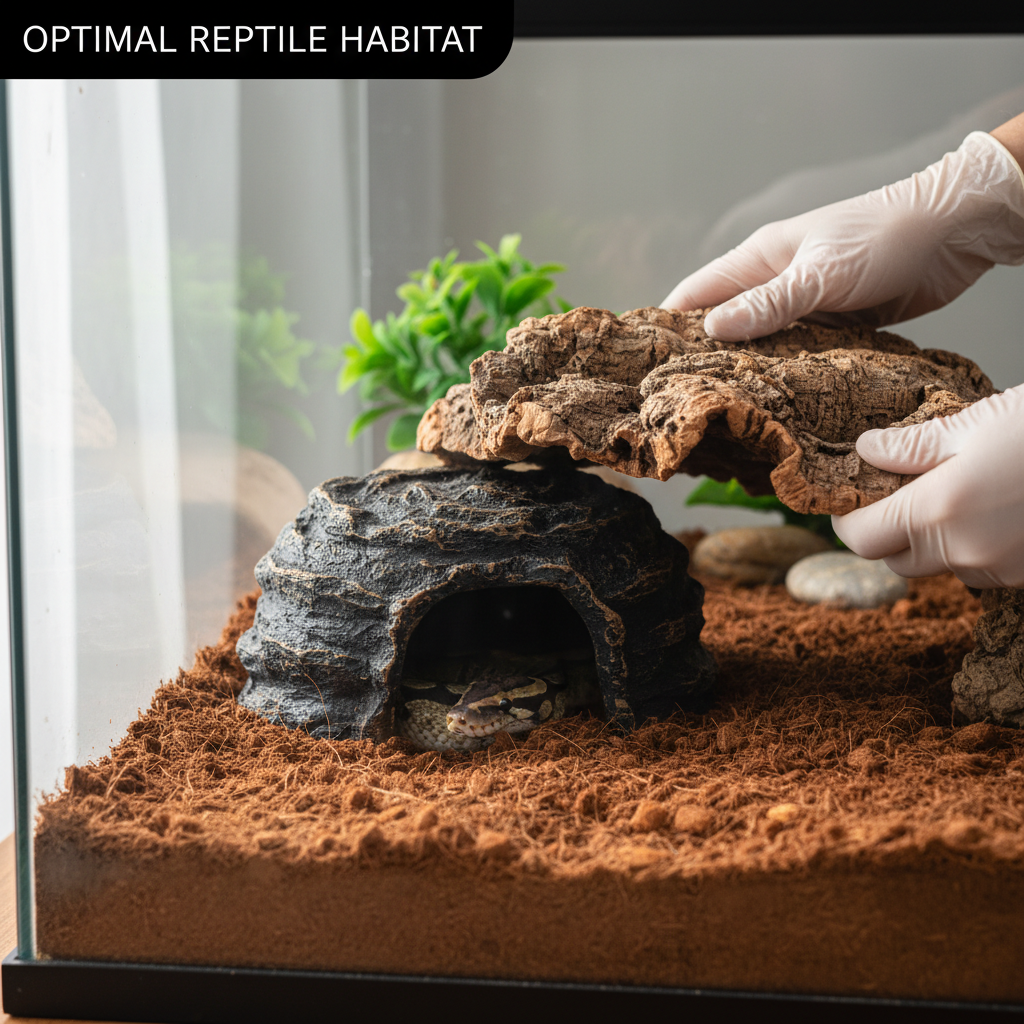
- Block light: angle the entrance away from the brightest side, or add cover above the hide using a piece of cork bark or decor that doesn’t trap heat unsafely.
- Stabilize it: set the hide on a flat area, press it into substrate, or use a non-toxic method recommended by the hide manufacturer if it shifts.
- Add visual cover: fake plants, branches, or background cover can reduce “exposure” even if the hide stays the same.
- Duplicate the favorite: if your snake strongly prefers one hide style, put the same model on both warm and cool sides.
If you switch hides and the snake suddenly uses it, that’s useful information, not just a “win.” It suggests security, not temperature, was the missing piece.
Safety notes and common mistakes (where people get stuck)
Hide improvements should never create a new risk. A few mistakes are easy to make when you’re trying to get things “perfect.”
- Sharp edges on DIY hides: sand cut plastic thoroughly; rough edges can cause mouth/nose abrasions.
- Over-humid hides in already damp setups: constant wet substrate can contribute to skin issues in some situations, so adjust based on species and enclosure readings.
- Overheating a hide: a dark, tight hide under intense heat can run warmer than you expect; confirm with an accurate thermometer and placement checks.
- One hide only: it forces a choice between security and temperature, which often shows up as hiding 24/7 or constant roaming.
According to the ASPCA, reptiles have specialized environmental needs, including appropriate heat and habitat features. When hide changes are paired with temperature or humidity shifts, go slowly and verify with proper tools rather than guessing.
Key takeaways (so you can act fast)
- Dark and secure beats decorative: a snug, opaque hide with one entrance usually gets used more.
- Two hides support choice: warm side plus cool side reduces stress and improves routine behavior.
- Size is the dealbreaker: too-big hides often become “ignored hides.”
- Small tweaks can work: block light, stabilize, and add cover before replacing everything.
Conclusion: what to do next
A snake hide cave dark setup should let your snake rest without feeling watched, while still letting it pick the temperature it wants. If you only change one thing this week, make the hide smaller-feeling and darker, then add a matching hide on the other side of the gradient.
If your snake still refuses hides and also shows ongoing appetite loss, repeated defensive behavior, or unusual posture, it’s worth discussing husbandry details with an experienced exotics veterinarian or a qualified reptile professional, because the hide may be just one part of a bigger comfort issue.
FAQ
How dark should a snake hide be?
Dark enough that the snake can sit inside without being clearly visible in normal room lighting. If you can easily see the whole coil, many snakes won’t treat it as fully secure.
Is it okay if my snake hides all day?
Often yes, especially for crepuscular or nocturnal species. The concern starts when hiding pairs with other changes, like refusing food for longer than typical for that species, frequent pacing, or sudden defensiveness.
Do I really need two hides?
In many setups, yes. Two hides (warm and cool) reduce the “security vs. temperature” tradeoff. Some snakes cope with one hide, but it commonly limits natural thermoregulation choices.
Why does my snake stay behind the hide instead of inside it?
That usually means the hide interior feels too open, too bright, or too slippery, while the gap behind it feels tighter and safer. Making the hide darker and more snug often fixes this behavior.
Can I use a cardboard box as a hide?
Temporarily, sometimes, especially in quarantine, but cardboard absorbs moisture and can get dirty fast. For long-term use, an easily disinfected, opaque hide is usually more practical.
What entrance size is best for a secure cave hide?
Big enough for the thickest part of the snake to pass without scraping, but not so large that it feels like an open doorway. If in doubt, slightly smaller typically works better than oversized.
Should I add a humid hide even if humidity is already high?
Not always. A humid hide can help during sheds for many snakes, but in consistently high-humidity enclosures it may be unnecessary or even counterproductive. Match the approach to species needs and your actual readings.
If you’re trying to dial in a calmer enclosure and want a more dependable setup, focus on a snug, opaque hide pair and verify temps with accurate tools, it’s a simpler path than constantly chasing new decor.