Safe pet toys matter most when your dog treats every new purchase like a snack, because the real risk usually comes from what a toy is made of, and how it breaks down after chewing, washing, and time in the sun. If you feel stuck staring at labels like “non-toxic,” “BPA-free,” or “natural,” you’re not alone, a lot of packaging sounds reassuring without giving you the details you actually need.
This guide focuses on practical choices you can make in the U.S. market, what to look for in materials, which red flags tend to show up in cheap toys, and how to match a toy to your dog’s chewing style and life stage. I’ll also call out where “safe” has limits, because no chew toy stays safe once it starts coming apart.
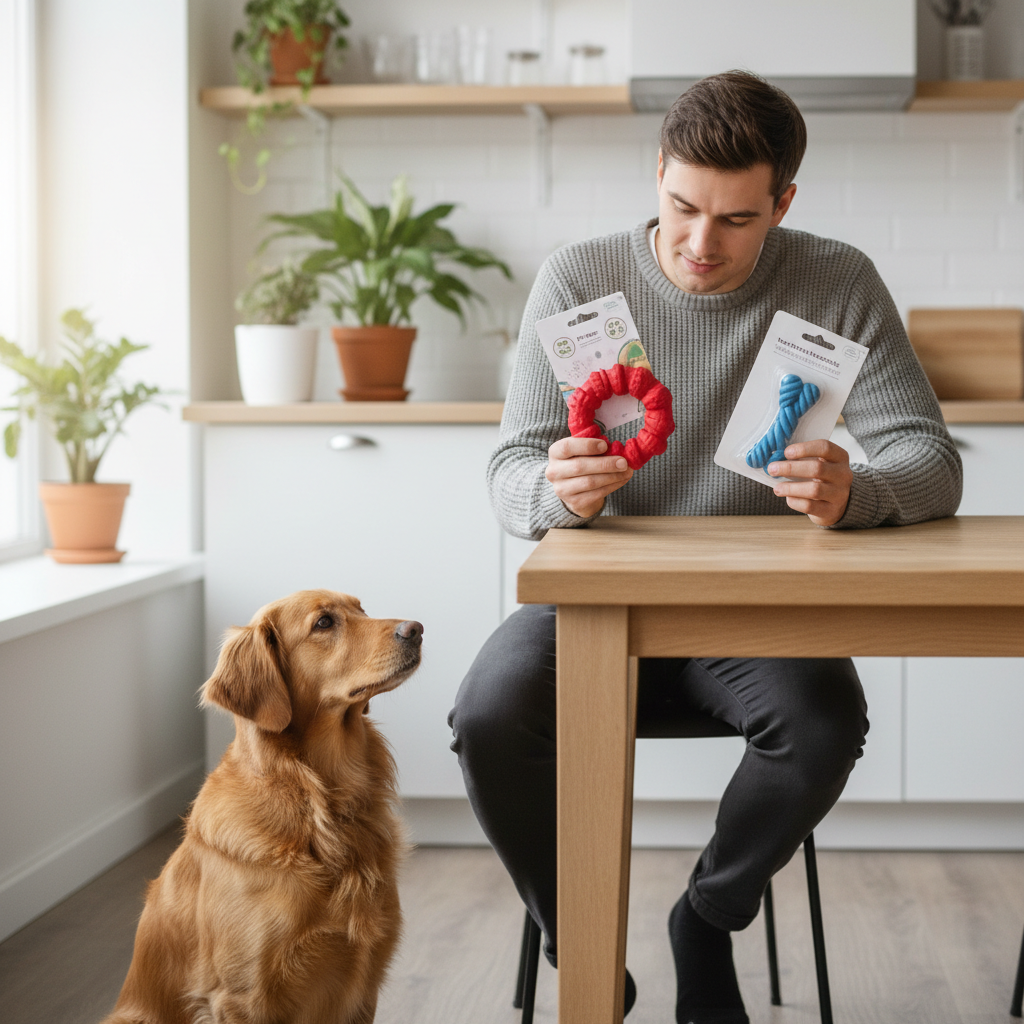
One quick expectation check: “non-toxic dog toys” does not mean “edible” or “risk-free.” It usually means the material should not contain certain harmful substances at typical exposure levels, but your dog’s chewing intensity, swallowing habits, and allergies can change the equation, and your vet may be the best tie-breaker when you’re unsure.
What “non-toxic” really means in pet toys
In plain terms, “non-toxic” is about chemical exposure risk, while “safe” also includes physical hazards like choking, cracked teeth, and intestinal blockage. Many people shop for one and forget the other, then feel blindsided when the toy fails in a totally different way.
When brands say “non-toxic,” they often point to what the toy doesn’t contain, for example phthalate-free pet toys or lead-free dog toys, or they highlight a resin choice like BPA-free pet chew toys. That’s useful, but only if the claim is specific and backed by transparent testing or compliance language.
According to the FDA, BPA is used in some plastics and food-contact materials, and exposure concerns have driven many manufacturers to move toward BPA-free options. For pet toys, BPA-free can be a reasonable baseline, but it’s not the only chemical topic that matters.
- Chemical safety: avoiding heavy metals (like lead), certain plasticizers (like phthalates), and questionable dyes or coatings.
- Mechanical safety: choosing a toy that won’t shed chunks, split into sharp edges, or create a swallowable piece.
- Hygiene: toys that trap saliva and food residue can grow grime fast, dishwasher-safe pet toys or easy-wash designs help.
Common risk factors: materials, coatings, and how toys fail
Most toy “safety problems” aren’t dramatic, they’re slow and boring: a seam starts fraying, a squeaker pops out, a rubber piece hardens and cracks, or a cheap coating starts peeling. That’s why the best approach is to buy with failure in mind, not with the hope that your dog will be gentle this time.
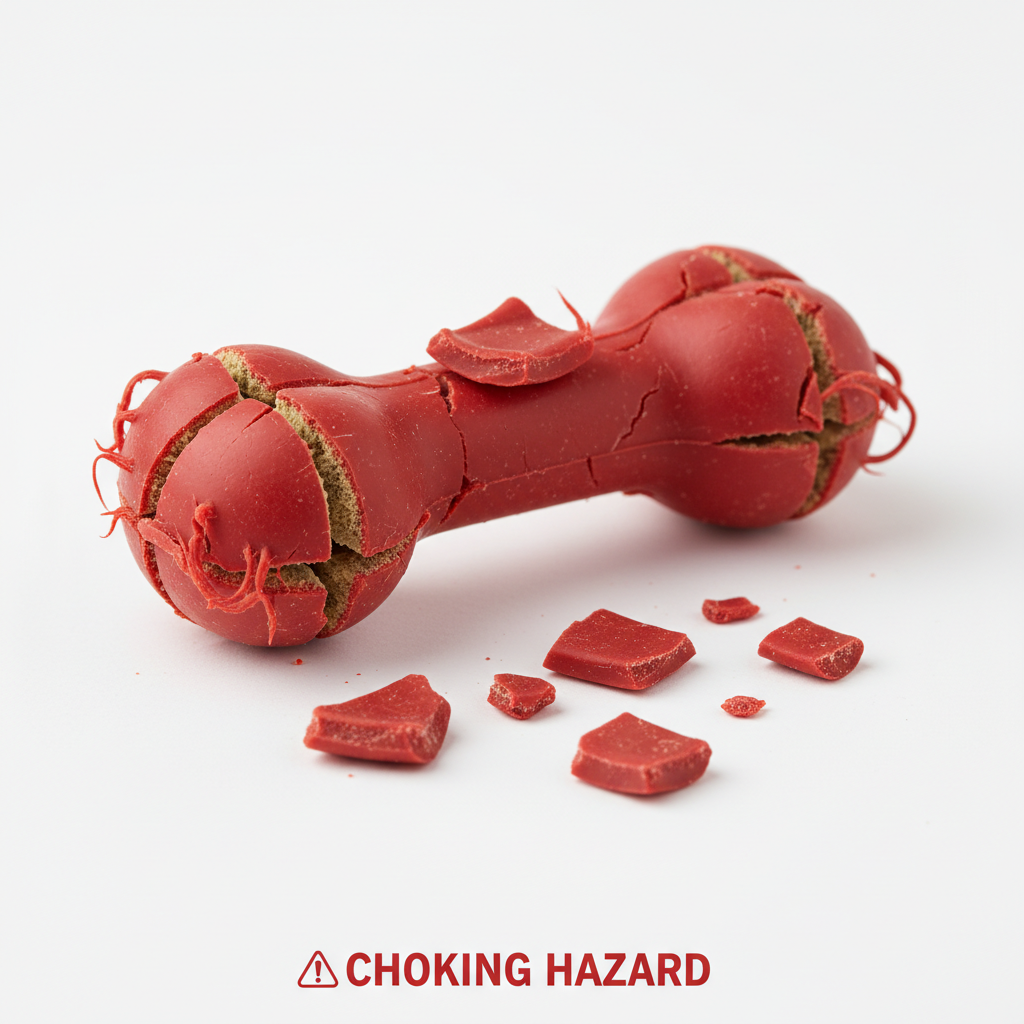
Here are the failure patterns that tend to create trouble, especially for determined chewers:
- Soft plastics that shred: can create stringy pieces that get swallowed, and you may not notice until there’s vomiting or constipation.
- Hard, brittle materials: can chip teeth or break into sharp shards if your dog bites with molars and doesn’t “gnaw.”
- Painted or coated surfaces: coatings can wear off, and even when the base material is fine, you still end up with flakes in the mouth.
- Weak seams and glued parts: plush toys often fail at the stitching, then stuffing or squeakers become the hazard.
If your dog is an intense chewer, “durable chew toys for aggressive chewers” should be your search phrase, but durability should never replace supervision. Durable usually means “lasts longer,” not “can’t be destroyed.”
A quick checklist to judge safe pet toys before you buy
If you only have one minute in the aisle, use this short list. It’s not perfect, but it catches most avoidable mistakes.
- Material is clearly stated: natural rubber, silicone, nylon, or specific fabrics, not vague “plastic.”
- Clear safety claims: look for phthalate-free and lead-free language, not just “eco” or “green.”
- Size matches your dog: too small is a swallowing risk, too large can frustrate a small mouth and increase aggressive tearing.
- No easily removable parts: glued eyes, loose ribbons, or weak squeaker pockets are common failure points.
- Cleaning instructions exist: if the brand can’t tell you how to wash it, hygiene often was not a priority.
According to the ASPCA Animal Poison Control Center, pets can be exposed to toxins through chewing and ingesting non-food items, and prompt action matters if ingestion is suspected. That’s a good reminder to think about both chemical exposure and the very practical “will my dog swallow this” problem.
Best material options by chewing style and life stage
Material choice is where most “safe” decisions get made. Below is a practical guide, not a guarantee, because individual dogs chew differently even within the same breed or size.
Natural rubber dog toys
Natural rubber dog toys are often a solid middle ground: enough give to be gentler on teeth, but usually tougher than many soft plastics. They also work well for treat-stuffing toys, which can slow down frantic chewers by turning chewing into a problem-solving task.
- Good for: many adult dogs, moderate to heavy chewers, food-motivated dogs
- Watch for: deep cracks, sticky surfaces, or pieces tearing off
Nylon and hard chews (use judgment)
Nylon-style chews can be long-lasting for some dogs, but the “right” hardness depends on bite force and chewing habits. If your dog tends to clamp down hard, you may want to ask your vet what hardness is appropriate, tooth fractures are expensive and painful.
- Good for: persistent gnawers, some aggressive chewers
- Watch for: sharp edges, splintering, very hard surfaces
Safe puppy teething toys
Puppies need softer, more forgiving textures. Safe puppy teething toys usually mean rubbery or flexible materials, easy to grip, and sized so the puppy can’t choke. Cooling options can help, but follow the brand’s instructions so you don’t create a too-hard frozen brick.
- Good for: teething comfort, redirecting nipping
- Watch for: small detachable nubs, thin fins that tear quickly
Small dog toys for safe chewing
Small dogs often get “cute” toys that are flimsy, then owners wonder why they shred so fast. Prioritize simple shapes, fewer parts, and the right diameter so the toy sits safely in the mouth without sliding toward the throat.
- Good for: compact rubber chews, small treat-dispensers
- Watch for: mini squeakers, loose strings, thin latex
Vet-approved pet toys: what that label can and can’t tell you
“Vet-approved pet toys” can be helpful as a signal that someone with animal health training reviewed a product, but the phrase isn’t always standardized, and it may reflect a partnership or a general endorsement rather than a universal safety certification.
What’s more useful is when a brand explains why a toy is recommended, for example softer material for teething, fewer detachable parts, or sizing guidance by weight. If your dog has dental disease, is prone to swallowing objects, or has allergies, it’s worth asking your veterinarian for toy rules that fit your dog, not an average dog.
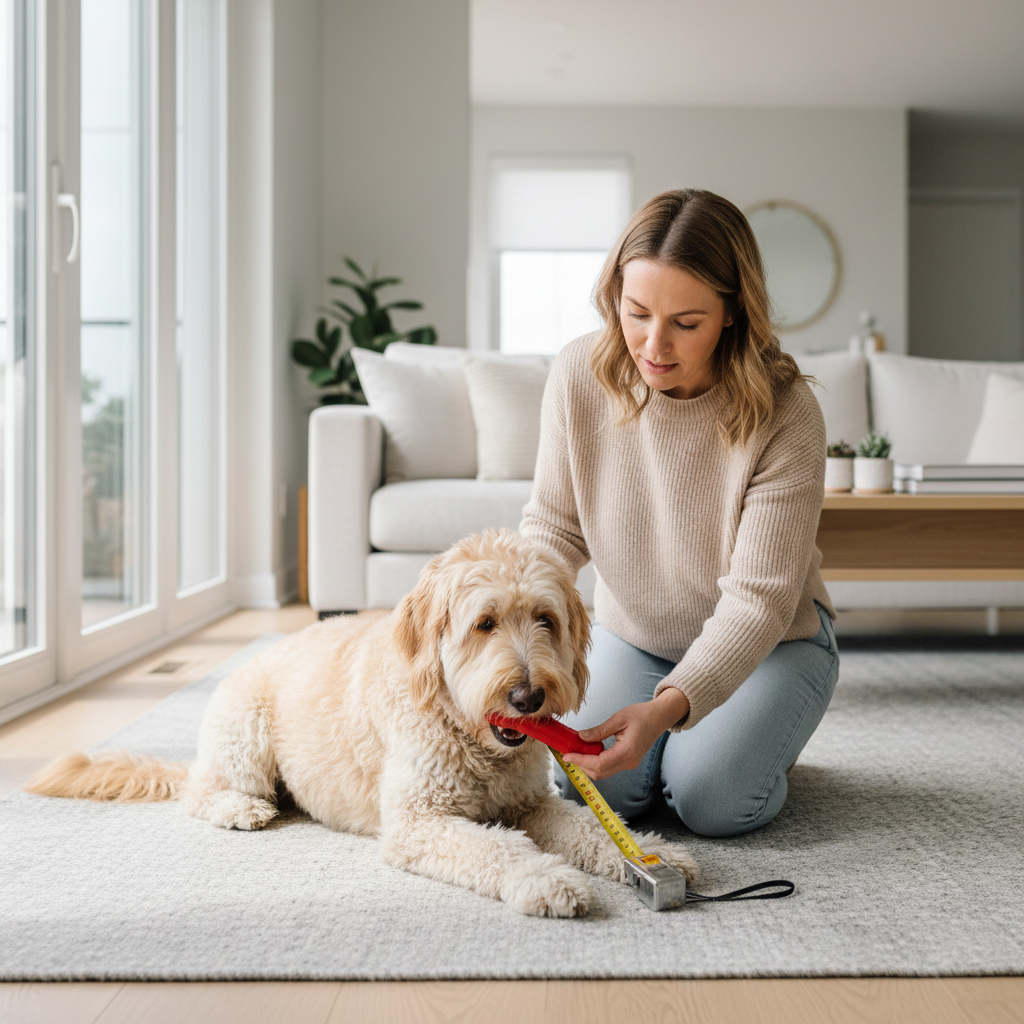
According to the AVMA, preventive care and safety choices at home can reduce avoidable injuries, and when it comes to chews and toys, supervision is part of that equation. Even the “right” toy becomes unsafe if it’s damaged.
Practical buying guide (with a comparison table)
If you’re trying to decide quickly, this table is a decent starting point. Treat it like a filter, then apply your dog’s habits and your household reality, especially if you need easy cleanup or you’re managing multiple dogs.
| Need | What to look for | Good fit for | Red flags |
|---|---|---|---|
| Non-toxic materials | Clear material listing, phthalate-free, lead-free claims | Mouthy chewers, multi-toy homes | Vague “plastic,” strong chemical odor |
| Heavy chewing | Thick natural rubber, minimal parts, tested “power chewer” lines | Durable chew toys for aggressive chewers | Thin edges, glued parts, hollow toys that collapse and tear |
| Puppy teething | Softer flexible rubber, easy grip shapes | Safe puppy teething toys | Hard brittle chews, small detachable nubs |
| Easy cleaning | Dishwasher-safe pet toys, smooth surfaces, fewer crevices | Food-stuffable toys, drooly dogs | No cleaning guidance, fabric that stays damp |
| Small mouths | Right diameter and length, simple shape | Small dog toys for safe chewing | “Mini” toys with squeakers that pop out fast |
How to use and maintain toys so they stay safer longer
Buying well helps, but daily use is where safety usually holds or falls. A few habits make a big difference, especially if your dog rotates between toys and chews fast.
- Do a weekly 20-second check: look for cracks, tears, sharp edges, loose seams, and missing chunks.
- Retire toys early: when a piece becomes swallowable, it’s done, even if the rest looks fine.
- Match toy to context: use plush for supervised play, not for solo “busy time.”
- Wash on a schedule: dishwasher-safe pet toys can simplify this, otherwise use hot soapy water and rinse thoroughly.
- Separate dogs when needed: competition increases frantic chewing and accidental swallowing.
Key takeaway: the safest toy is the one your dog can’t break into swallowable pieces, and that you’re willing to throw out before it becomes a problem.
Common mistakes (and what to do instead)
Most mistakes come from optimistic assumptions, like thinking “my dog loves it, so it must be safe,” or thinking one label covers every risk. A few course corrections usually save money and worry.
- Mistake: buying by “non-toxic” alone. Do instead: also check size, seams, and how the toy fails when torn.
- Mistake: giving a power chewer a plush squeaky toy unsupervised. Do instead: keep plush as interactive play, store it afterward.
- Mistake: ignoring smell or sticky residue. Do instead: skip toys with strong chemical odor, it’s often a sign of lower-quality materials.
- Mistake: “one size fits all” for multi-dog homes. Do instead: buy the right size per dog, and supervise group play.
When to stop and ask a professional
If your dog repeatedly destroys toys within minutes, swallows non-food items, or has a history of GI blockages, you’ll want advice tailored to your dog’s risk profile. The same goes for dogs with dental issues, oral pain, or frequent broken teeth, hardness choices matter and online advice can’t see your dog’s mouth.
If you suspect your dog swallowed part of a toy, call your veterinarian or an emergency clinic right away, and keep the toy packaging if available. According to the ASPCA Animal Poison Control Center, time can matter in ingestion cases, and getting guidance quickly is often safer than waiting to “see what happens.”
Conclusion: a simple way to choose safer toys
Safe pet toys come down to three decisions you can make without overthinking: choose a material with clear safety claims, pick a size that cannot be swallowed, then retire the toy before it starts shedding parts. If you want one easy upgrade, switch your everyday chews toward simple, thick rubber designs, and keep plush or squeaky toys for supervised sessions.
If you’re shopping today, make a short list with your dog’s size, chewing style, and whether you need dishwasher-safe cleanup, then buy one toy that fits those rules and test it under supervision. Your dog’s behavior in the first week will tell you more than any label.