How to train a dog not to chew starts with one honest idea, your dog is not “being bad,” they are meeting a need in the most available way, which just happens to be your chair leg.
If you’re dealing with shredded cushions or tooth marks on table corners, you’re not alone, and you don’t need a harsh approach to fix it. Chewing is normal dog behavior, but where it lands is something you can absolutely influence with training, management, and better daily outlets.
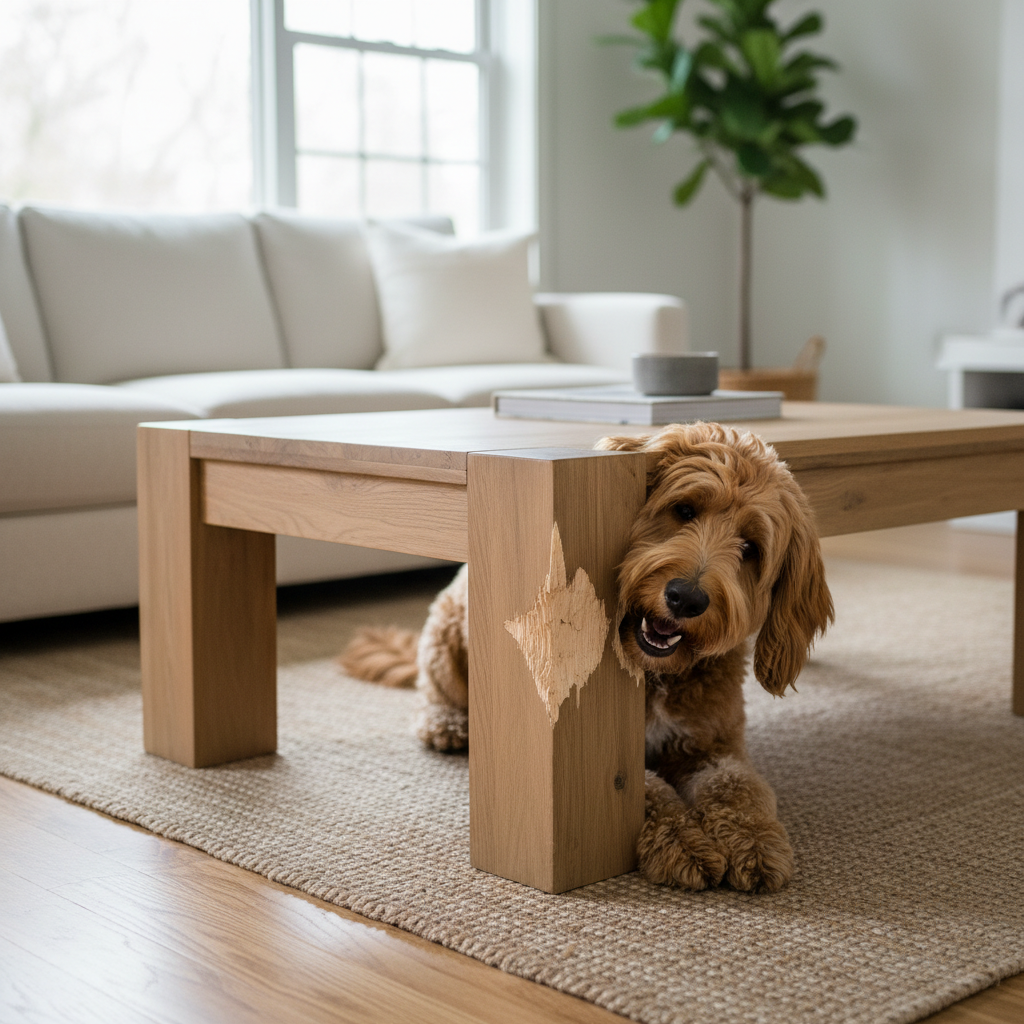
Most people get stuck because they try to correct chewing after it happens. The faster route is to prevent rehearsal, teach a clear alternative, and make the “right chew” more rewarding than furniture.
Key takeaway: your plan should cover three lanes at the same time, management (stop access), training (teach choices), and enrichment (meet the need to chew).
Why dogs chew furniture in the first place
Chewing usually comes from a few predictable buckets, and the bucket matters because the fix changes.
- Teething or oral discomfort: puppies often chew harder and more often, adult dogs may chew if something feels off, in those cases it can be worth a vet check.
- Boredom and under-stimulation: a dog with leftover energy will “make a job,” furniture is available and satisfying.
- Anxiety or separation stress: chewing ramps up when you leave, or when the house gets noisy, it’s often emotional, not rebellious.
- Opportunity and habit: if chewing happens repeatedly, it becomes self-rewarding, the texture, the sound, even your reaction can reinforce it.
- Hunger or dietary mismatch: less common, but some dogs scavenge/chew more when meals and enrichment don’t match needs, ask your vet if you’re unsure.
According to the American Veterinary Medical Association (AVMA), behavior issues like destructive chewing often improve most when you combine environmental management with training and, when needed, veterinary guidance.
Quick self-check: what kind of chewer do you have?
Before you buy more chew toys, take two minutes and answer these. Your answers point to the likely driver.
- Timing: Does it happen mostly when you’re gone, or even when you’re home?
- Target: Is it one specific item or lots of household objects?
- Intensity: Light nibbling, or heavy damage with frantic pacing?
- Age: Under 8 months, in that classic teething window?
- Daily outlets: How many minutes of sniffing walks, training games, and chew time happen daily?
Chewing pattern cheat sheet
| Pattern you notice | Most likely cause | What to prioritize |
|---|---|---|
| Chews right after you leave, especially near doors/windows | Separation stress (possible) | Management + gradual alone-time training, consider a pro |
| Chews in the evening “witching hour” | Under-stimulation | More enrichment, structured chew time, training games |
| Puppy chewing everything, drooling, seeking hard edges | Teething | Safe chew options, rotate toys, strict supervision |
| Chews only one piece of furniture | Habit + scent/texture reinforcement | Block access, cover/protect surface, teach replacement |
| Chews intensely, seems restless or sensitive to noise | Anxiety (possible) | Reduce triggers, calming routine, vet or behavior help |
Stop the damage today: management that actually works
If you want how to train a dog not to chew to stick, you need a short-term “no more practice” phase. Every successful furniture chew is a paycheck.
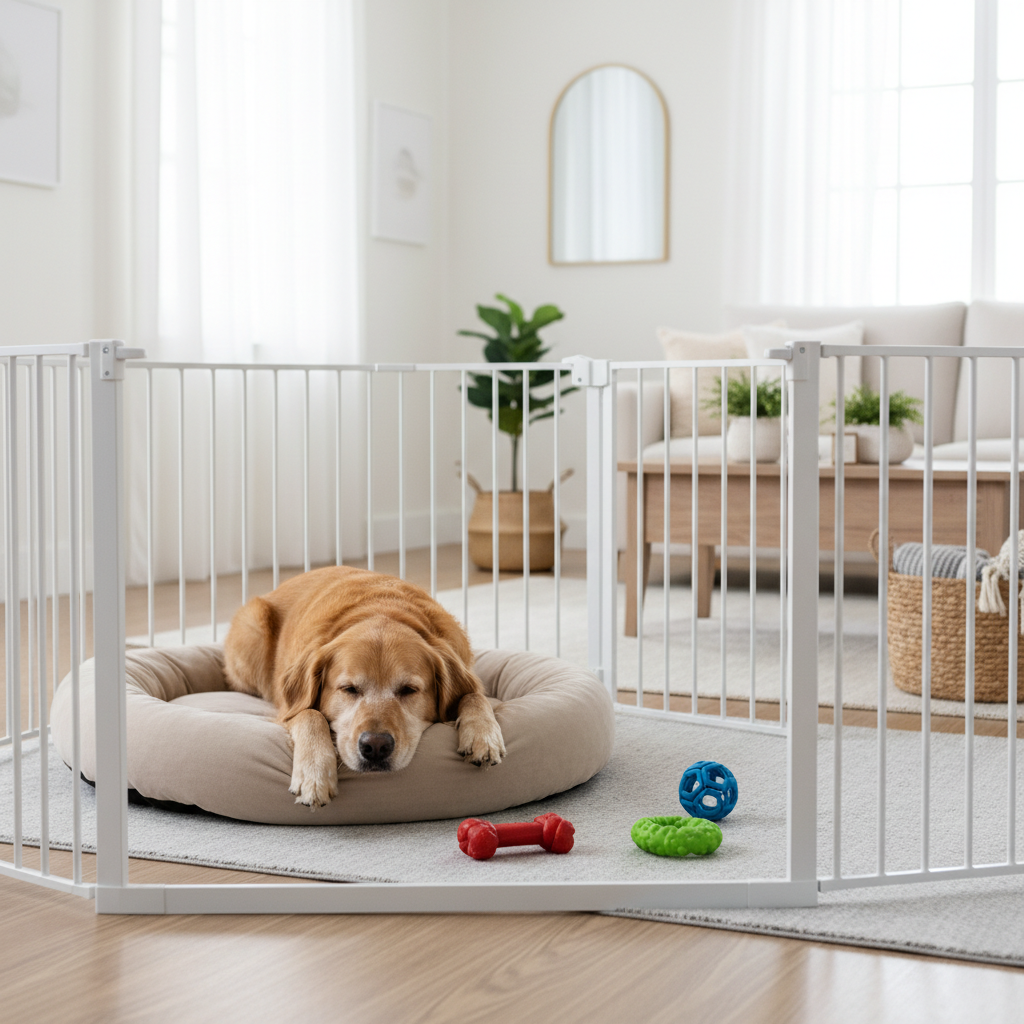
- Use gates, pens, or a crate (if crate-trained): create a safe zone when you can’t supervise. If your dog panics in confinement, don’t force it, get help with a plan.
- Leash-in-the-house for a week: sounds annoying, works fast. Clip a lightweight leash so you can interrupt early without chasing.
- Block and protect: move furniture, use slipcovers, or place temporary barriers around table legs.
- Pick up “starter items”: socks, kids’ toys, cardboard, anything that teaches “chewing random stuff pays.”
Reality check: bitter sprays can help in some homes, but many dogs either ignore them or learn to tolerate them. Treat them as a backup, not the strategy.
Teach “chew this, not that” (a simple training loop)
The core skill is not “stop chewing,” it’s choose the approved chew. You train it the same way you train any habit, make the right choice easy and rewarding.
Step 1: Stock the right chews (match the dog)
- Puppies: rubber chews, soft nylon, frozen wet washcloth twisted into a rope, supervised.
- Adult moderate chewers: durable rubber toys, stuffed and frozen (like food puzzles).
- Power chewers: ask your vet for safe options, avoid anything that can crack teeth. If you can’t dent it with a fingernail, it may be too hard for some dogs.
According to the American Kennel Club (AKC), chewing is a natural behavior, and redirecting to appropriate chew items plus supervision is often more effective than punishment.
Step 2: Capture the behavior you want
When your dog chooses a chew toy on their own, quietly pay them.
- Walk over, drop 2–3 treats by the toy, then walk away.
- Or give calm attention, a short scratch, then disengage.
This feels almost too simple, but it builds a pattern: “chew my toy, good things appear.”
Step 3: Interrupt early, then redirect
When your dog heads toward furniture, catch the first two seconds.
- Interrupt: a gentle “uh-oh” or kissy noise, not yelling.
- Redirect: immediately present an approved chew, move it to the spot where they were going to chew.
- Reinforce: once they mouth the chew, reward and give them space.
Important: if you only interrupt and never reinforce the replacement, you teach “humans ruin my fun,” not “I know what to do instead.”
Enrichment that reduces chewing pressure (without overcomplicating)
A lot of “furniture chewing” is really a daily budget problem, your dog has a big need to chew, sniff, and solve, and it’s overflowing onto your couch.
- Daily sniff walk: 15–30 minutes where your dog can sniff slowly, it’s more tiring than a straight-line power walk.
- Food through puzzles: use a stuffed rubber toy, snuffle mat, or scatter feeding, start easy so your dog wins.
- Scheduled chew time: one or two sessions per day where you hand your dog a chew, then let them settle.
- Mini training: 3–5 minutes of “sit,” “down,” “place,” “touch” sprinkled through the day.
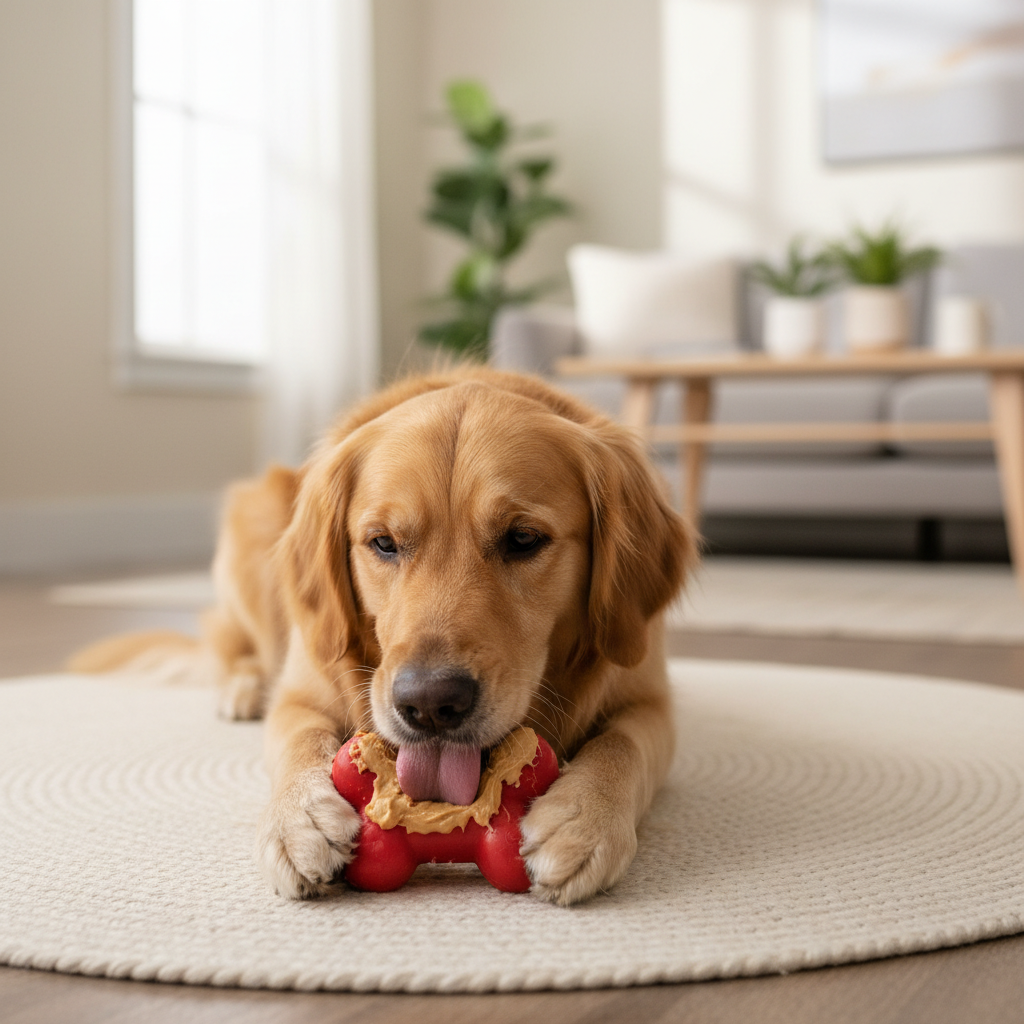
If you’re short on time, keep it boring but consistent. One sniff walk plus one frozen food toy per day often changes the vibe in the house within a week or two.
Room-by-room plan: preventing repeat chewing on specific furniture
If your dog has “a favorite chair,” treat it like a training station, not a mystery.
Living room (table legs, sofa corners)
- Block access when you can’t watch, even if it’s temporary and ugly.
- Place a chew basket in the room, so you can redirect in one step.
- Teach a “place” cue to a bed or mat, then reward calm settling.
Bedroom (nightstands, shoes)
- Close the door or use a gate, shoes are basically chew training aids.
- Give a bedtime chew in a crate or on a bed mat, build a nightly routine.
Home office (chair wheels, cables)
- Cover cables or route them out of reach, chewing cords is a safety risk.
- Use a tether or pen during calls, set your dog up to succeed.
Mistakes that keep the problem alive
These are the common “why is this not working” moments.
- Scolding after the fact: if you find damage later, your dog can’t connect it to the chewing, you mostly teach them to avoid you around messes.
- Giving chews only when you leave: some dogs learn that alone time predicts high-value chews, which can be fine, but if the chew runs out fast, the dog goes back to furniture.
- Chews that are too hard: cracked teeth happen, and dental pain can increase odd chewing. When in doubt, ask your vet what’s appropriate for your dog.
- No rotation: leaving the same toy out for weeks makes it background noise. Rotate 4–6 items and keep “special” chews for higher-risk times.
- Too much freedom too soon: if you remove gates after three good days, many dogs relapse. Keep management until the new habit looks boring.
When to talk to a vet or certified behavior professional
Sometimes how to train a dog not to chew needs support beyond DIY, especially when stress is part of the picture.
- Possible separation anxiety: drooling, frantic pacing, attempts to escape, chewing near exits when alone.
- Sudden change in chewing: a new intense chewing habit in an adult dog can signal pain, gastrointestinal upset, or stress, a vet visit helps rule out medical causes.
- Safety concerns: swallowing chunks, chewing electrical cords, or aggressive guarding of chews.
Look for credentials like a board-certified veterinary behaviorist or a certified professional dog trainer who uses reward-based methods. According to the American College of Veterinary Behaviorists (ACVB), many behavior problems improve with a structured plan, and some cases benefit from veterinary treatment alongside training.
Conclusion: a calm, repeatable plan beats constant correction
How to train a dog not to chew furniture is less about one magic product and more about consistency, you remove access, you teach the right chew, and you meet the underlying need so your dog isn’t “shopping” for table legs.
Pick two actions to start today: set up a safe zone for any unsupervised time, and schedule one daily enrichment chew that lasts 15–30 minutes. Once your dog rehearses the right habit for a few weeks, your furniture usually stops feeling like an option.