
cat teaser wand interactive play is one of the quickest ways to turn a bored indoor cat into a focused, happily tired hunter, but only if the toy fits your cat and you use it with a little strategy.
A lot of people buy a wand, wiggle it for 30 seconds, and call it “my cat isn’t into toys.” In reality, cats often need the right prey-like movement, the right distance, and a short routine that ends with a “win,” otherwise they lose interest or get overstimulated.
This guide breaks down what actually matters: what to look for in a wand, how to tell if you’re playing “wrong,” and a few simple game plans you can repeat on busy days without overthinking it.
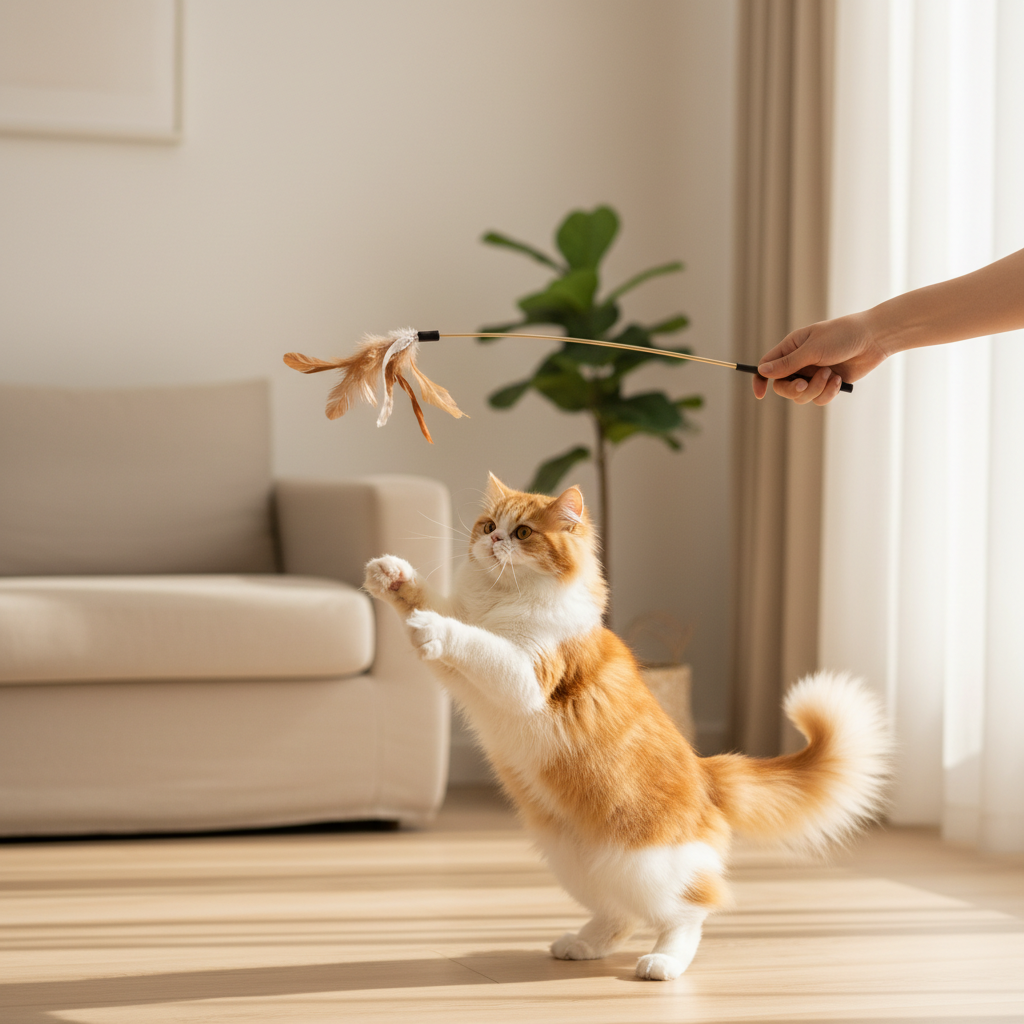
Why cats respond so well to teaser wand toys
Wand toys work because they let you mimic prey without putting your hands near teeth and claws. The motion can look like a bird fluttering, a mouse darting, or a bug skittering, and your cat’s brain tends to lock in fast.
According to the American Veterinary Medical Association (AVMA), play and enrichment can support animal welfare by reducing boredom and encouraging natural behaviors, and for cats that usually means hunting-style activity.
Common reasons your cat “ignores” a wand
- The lure moves like a metronome, same speed, same path, no pauses.
- You start too close, so your cat feels crowded, or they swat once and quit.
- The toy is too heavy or too loud, especially for timid cats.
- No catch at the end, so the chase never resolves and your cat walks off.
- Timing is off, many cats play better before meals or in the evening.
How to choose a cat teaser wand interactive toy (what matters, what doesn’t)
There’s a lot of marketing around “interactive” toys, but for a wand, the basics decide 90% of the experience: length, line, handle comfort, and lure variety.
Quick comparison table
| Feature | Best for | Watch-outs |
|---|---|---|
| Long wand (30–40 in) | Active cats, bigger rooms | Can hit lamps or shelves in tight spaces |
| Short wand (20–30 in) | Apartments, close-control play | You may need to crouch more, keep hands safe |
| Elastic line | Cats that love jumping | Can snap back, aim away from faces |
| Non-elastic line | Precise “mouse on the ground” movement | Less bounce, you supply all the action |
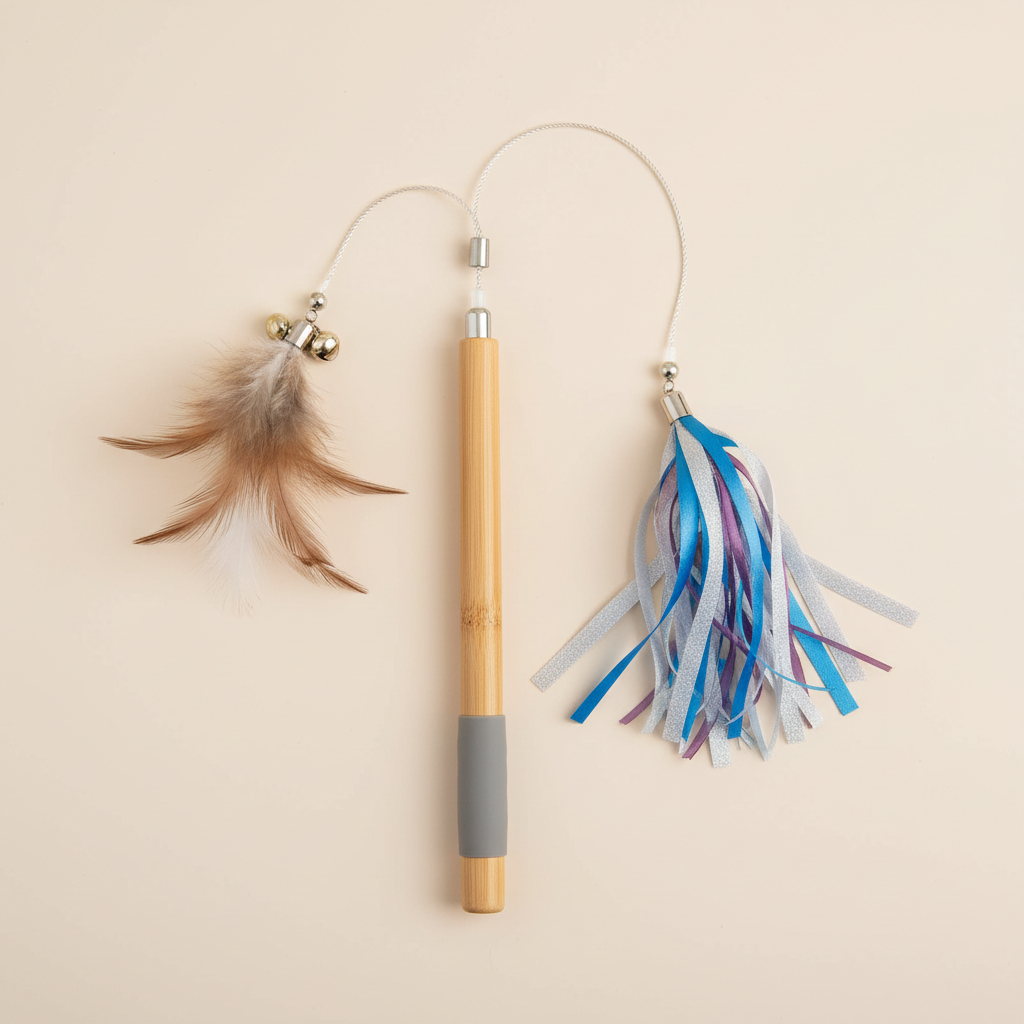
| Swappable lures | Cats that get bored fast | Small parts need safe storage |
My practical buying checklist
- Sturdy connection points (clip, swivel, or tied knot) that don’t loosen after a week.
- A handle you can grip without hand fatigue, especially for 10-minute sessions.
- At least two lure styles (feather + worm/ribbon, for example) so you can test preference.
- Low-shed materials, if feathers or fuzz break apart easily, many cats will chew and swallow bits.
Self-check: are you using the wand in a way your cat can “read”?
Before you buy another toy, check the basics. Most cats want a hunt sequence, not random flapping.
Fast self-assessment
- My cat watches but won’t chase: I probably need more pauses and smaller movements.
- My cat chases for 10 seconds then quits: the lure may be too easy, too hard, or there’s no payoff.
- My cat attacks my ankles after play: I might be ending sessions abruptly or not giving a “catch.”
- My cat gets wild and bites the wand/string: session might be too long, or my movements are too frantic.
- My cat only plays at 2 a.m.: I may need a scheduled evening session plus a small meal after.
If the toy looks interesting but your cat stays planted, try moving the lure behind furniture edges, like it’s hiding, cats often prefer “peek and dart” over open-floor circles.
How to play: simple routines that keep cats engaged
A good cat teaser wand interactive session usually feels like a tiny story: stalk, chase, pounce, catch. You’re basically directing a short nature documentary in your living room.
Routine 1: “Mouse under the rug” (great for beginners)
- Drag the lure along the floor, slow.
- Hide it behind a chair leg, pause 2–3 seconds.
- Let it “peek out,” then dart away.
- After 3–5 chases, let your cat catch it for a full 5–10 seconds.
Routine 2: “Bird takeoff” (for jumpers)
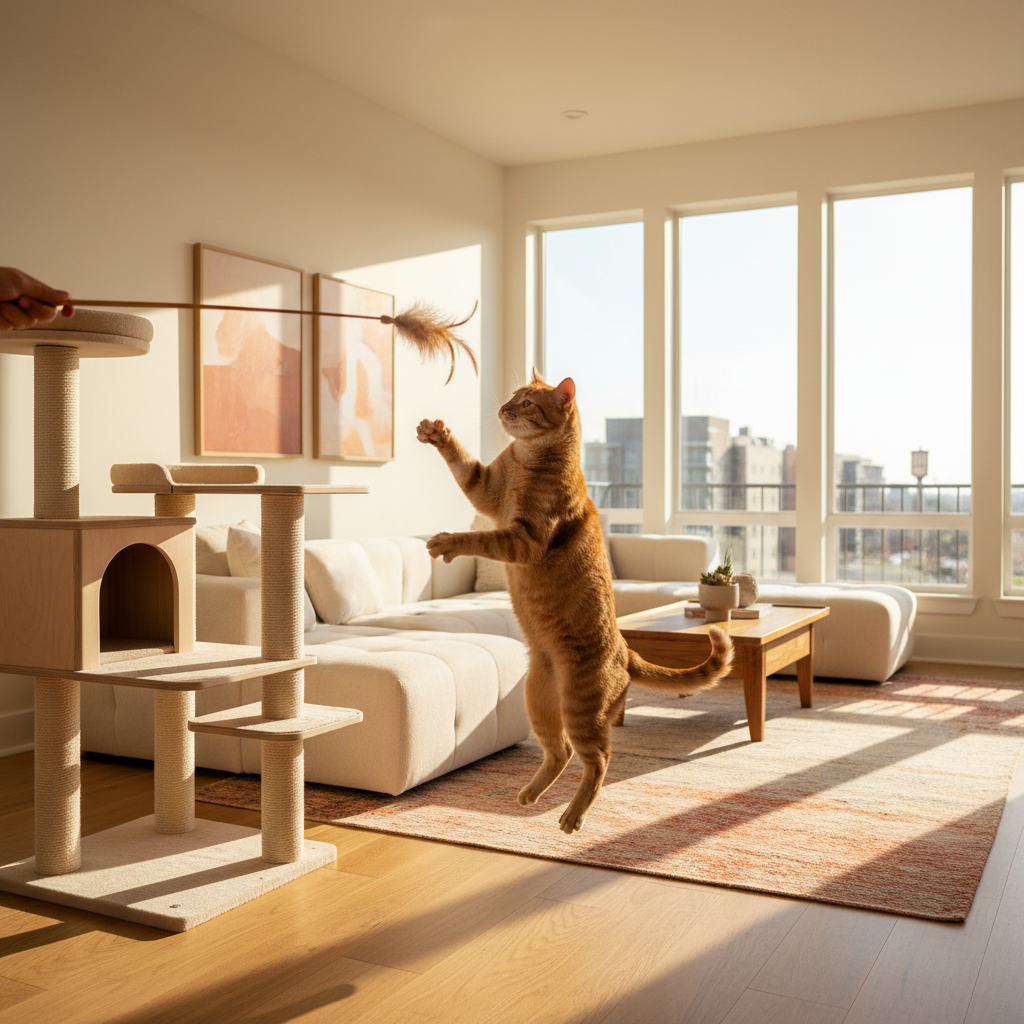
- Start low, then lift the lure in short hops, not constant hovering.
- Give a landing spot, couch edge or cat tree, so your cat can reset.
- End with a catch on a soft surface to reduce slipping.
Routine 3: “Two-minute reset” (when you’re busy)
- Set a timer for 2 minutes, keep it intense but controlled.
- One clean catch at the end, then put the toy away.
- If your cat stays excited, offer a small snack or part of dinner right after.
According to the American Association of Feline Practitioners (AAFP), enrichment and play are core parts of supporting a cat’s behavioral health, and short, consistent sessions often beat occasional marathon play.
Safety and handling: avoid the problems people don’t expect
Wand play is generally safe, but a few habits prevent avoidable injuries and stress. If your cat has arthritis, heart disease, or breathing issues, intense jumping games may not be a fit, and it’s smart to ask a veterinarian what intensity looks reasonable.
Key safety rules
- Don’t let cats chew string; ingestion can be serious, so store wand toys out of reach.
- Aim away from faces, elastic lines can rebound.
- Watch for slipping on hardwood; guide the catch toward a rug or mat.
- Keep sessions short if your cat pants, gets frantic, or starts biting hands.
- Retire broken lures that shed pieces, especially feathers and glittery fabric.
If your cat becomes aggressive during play, it may be overstimulation or redirected energy, in many cases, shorter sessions plus a predictable end cue helps.
Common mistakes that make interactive wand play less effective
Most “my cat doesn’t like this” moments come from a handful of patterns. Fixing them is usually easier than buying a new product.
- Always playing in the same spot, cats can habituate fast, rotate rooms or routes.
- Waving the lure in your cat’s face, it looks unnatural and can feel threatening.
- Never letting the cat win, frustration builds, interest drops.
- Letting the cat win immediately, also a problem, the hunt has no challenge.
- Playing right after a scary event (vacuum, guests), many cats need decompression first.
One small tweak that works surprisingly often: slow down. Many cats prefer half-speed movement with sharper pauses, rather than constant fast flicking.
Practical plan: a weekly schedule you can actually keep
Consistency matters more than perfection. If you want the benefits people expect from a cat teaser wand interactive toy, build a repeatable rhythm.
A simple “real life” schedule
- 5–10 minutes of wand play, once daily for most adult cats.
- Two shorter sessions for kittens or high-energy young cats, when your schedule allows.
- End with a catch, then offer a small meal or a few treats, it mirrors hunt-eat-groom-rest.
- Swap lures every few days to keep novelty without buying more toys.
Quick takeaways
- Prey-like movement beats fancy features.
- Pause and hide to trigger stalking, not just chasing.
- Let them catch, then close the session calmly.
- Store the wand to prevent unsafe chewing.
Conclusion: make the wand feel like a hunt, not a random wiggle
If your cat seems bored or restless, a cat teaser wand interactive routine can be a low-effort reset: pick a comfortable wand with a lure your cat likes, play in short “hunt” loops, and always finish with a clean win. If your cat shows pain, heavy panting, or sudden behavior changes around play, it’s worth checking in with a veterinarian or a qualified cat behavior professional for tailored guidance.
Tonight, try one 5-minute session before dinner, add a few pauses behind furniture, and end with a catch, that single change is often what makes wand play finally “click.”