
Cat laser pointer interactive play can be one of the fastest ways to get a cat moving, but it can also backfire when the “hunt” never has a catch and your cat ends the session keyed up or annoyed.
If you’ve ever watched your cat sprint, skid, then keep searching long after you put the pointer away, you’re not imagining things, the toy can leave some cats feeling unfinished. The good news is you can keep the fun and reduce the frustration with a few simple rules.
This guide breaks down what’s really happening during laser play, how to tell whether your cat enjoys it, and how to run a session that feels like a complete hunt. You’ll also get a quick gear checklist and a few easy game scripts you can reuse.
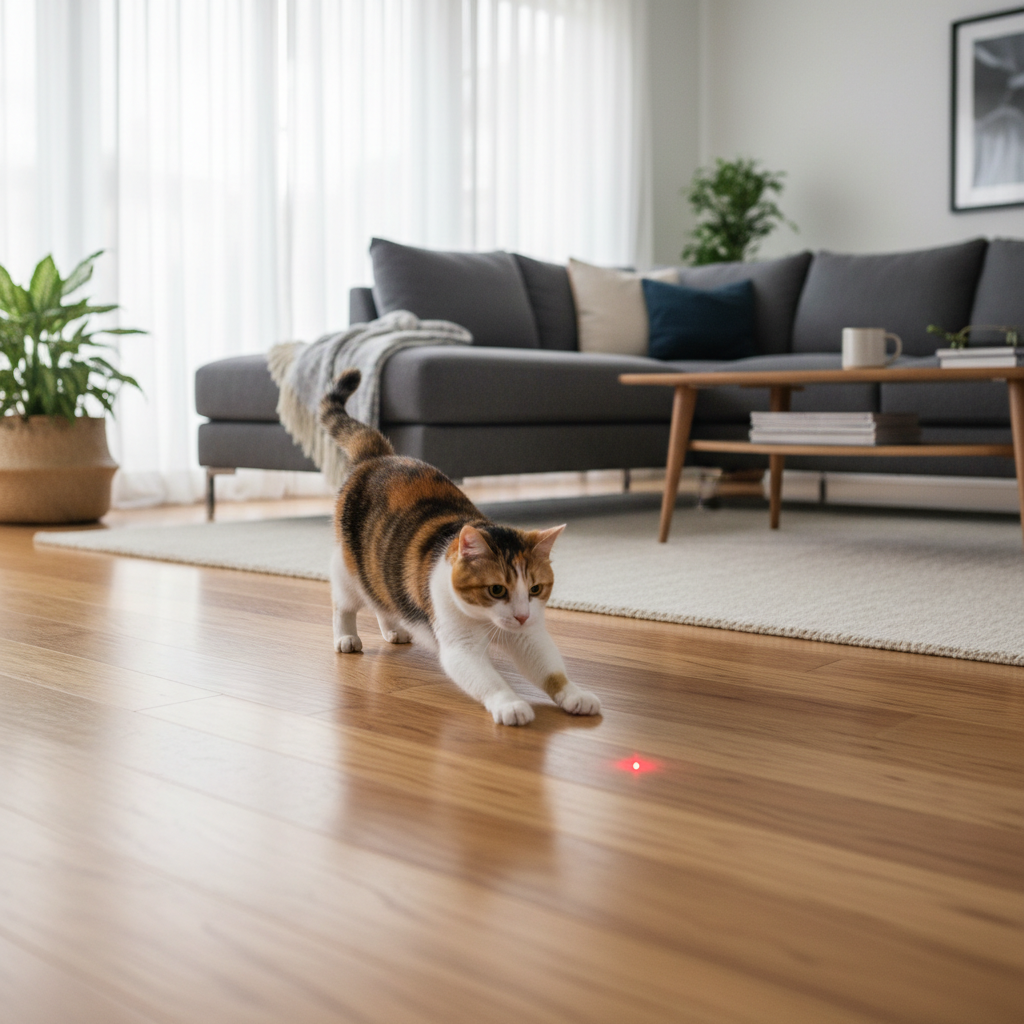
Why laser play works so well (and why it sometimes goes wrong)
Laser toys tap into prey drive, that hardwired “see it, stalk it, chase it” sequence. For many cats, it’s instant engagement, no warm-up required, which is why this style of cat laser pointer interactive play feels almost unfairly effective.
Where problems show up is the last step of the hunting cycle. Many cats expect some kind of “capture” and a payoff, even if it’s symbolic. Without that, some cats keep scanning the floor, vocalize, or redirect their energy into biting ankles or ambushing another pet.
According to the American Veterinary Medical Association (AVMA), toys are helpful for enrichment, but safety and supervision matter, especially when a toy can encourage intense chasing in a confined space. In real homes, that translates to managing speed, surfaces, and stopping the session cleanly.
Quick self-check: is laser play a good fit for your cat?
Some cats thrive with lasers, others tolerate them, and a smaller group gets noticeably stressed. You don’t need a diagnosis to make a practical call, you just need to observe patterns.
Signs your cat is enjoying it
- They engage quickly and pause naturally between bursts of chasing.
- After you stop, they relax within a minute or two, grooming, stretching, or wandering off.
- No aggressive “spillover” like stalking people’s feet right after.
Signs you should change your approach (or skip it)
- Obsessive searching when the dot disappears, especially repeated checking of corners or walls.
- Frustration behaviors: yowling, tail lashing, growling at the floor, biting the pointer.
- Over-arousal: they can’t settle, start swatting other pets, or attack hands during petting later.
If these patterns are frequent, it doesn’t mean you “ruined” your cat, it usually means the session needs a better ending, shorter intensity, or a different toy mix. If behavior changes feel sudden or extreme, consider checking in with a veterinarian or a qualified behavior professional.
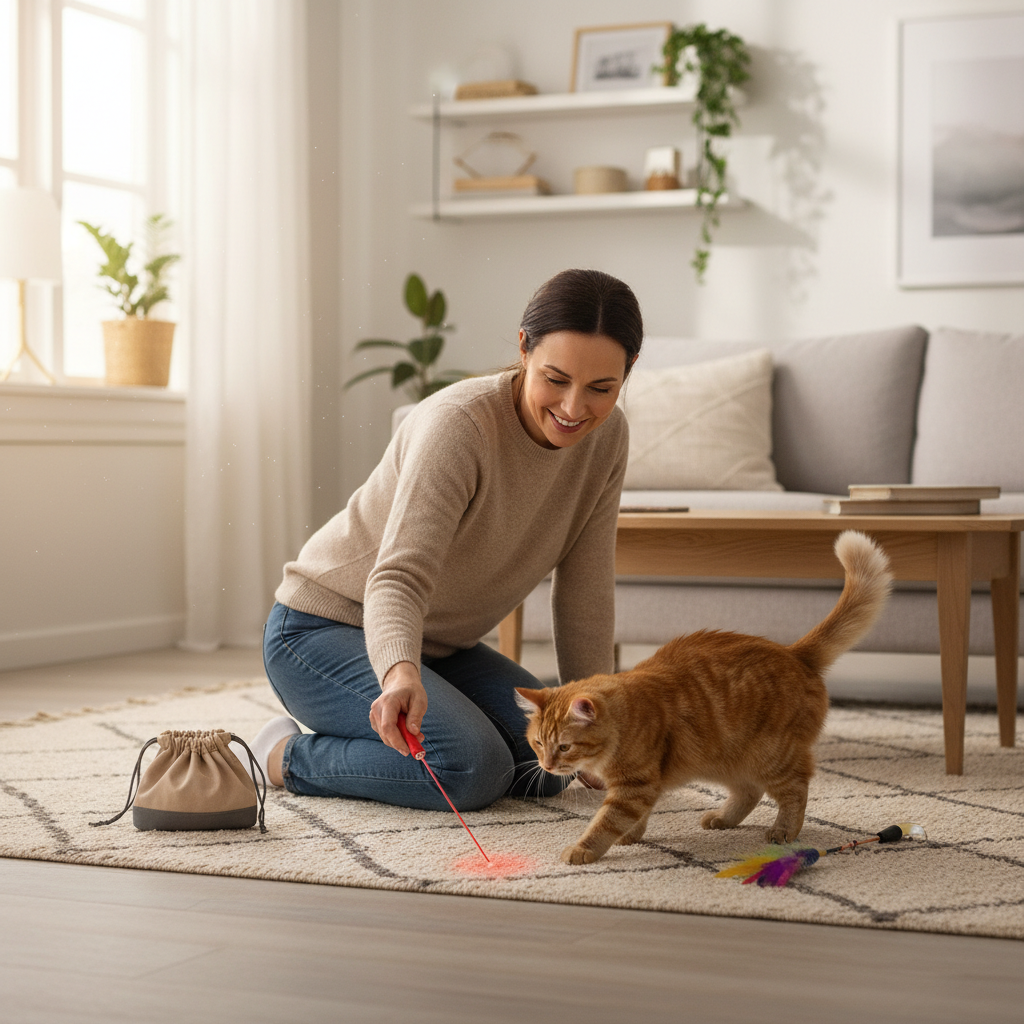
How to do cat laser pointer interactive play safely
Most “laser problems” come from two avoidable mistakes: shining it near eyes and running the chase like a nonstop sprint. Keep it safe, then keep it satisfying.
- Avoid the face, always. Keep the dot on the floor and lower walls, never at eye level. If your pointer has a higher-power beam, treat it with extra caution.
- Choose the right surface. Carpets and rugs give better traction than slick tile. On smooth floors, slow the pattern down to reduce wipeouts.
- Short sessions beat marathons. Many cats do best with 3–7 minutes, then a clear finish. You can do two short rounds later.
- Build in “stalk” moments. Make the dot pause behind chair legs or along the edge of a rug so your cat can crouch and plan, not only sprint.
- Watch breathing and intensity. If your cat is panting, slipping, or getting wild-eyed, end the round and offer a calm reset.
According to the American Association of Feline Practitioners (AAFP), enrichment should support natural behaviors while avoiding fear and frustration. For lasers, the practical interpretation is simple: simulate a hunt, then let the cat “win” something tangible.
The “catch” problem: how to end the game so your cat feels successful
Here’s the move that changes everything: finish with a real catch. You’re not trying to trick your cat, you’re completing the sequence so their brain can power down.
Use one of these endings, and stay consistent for a couple weeks so your cat learns the pattern.
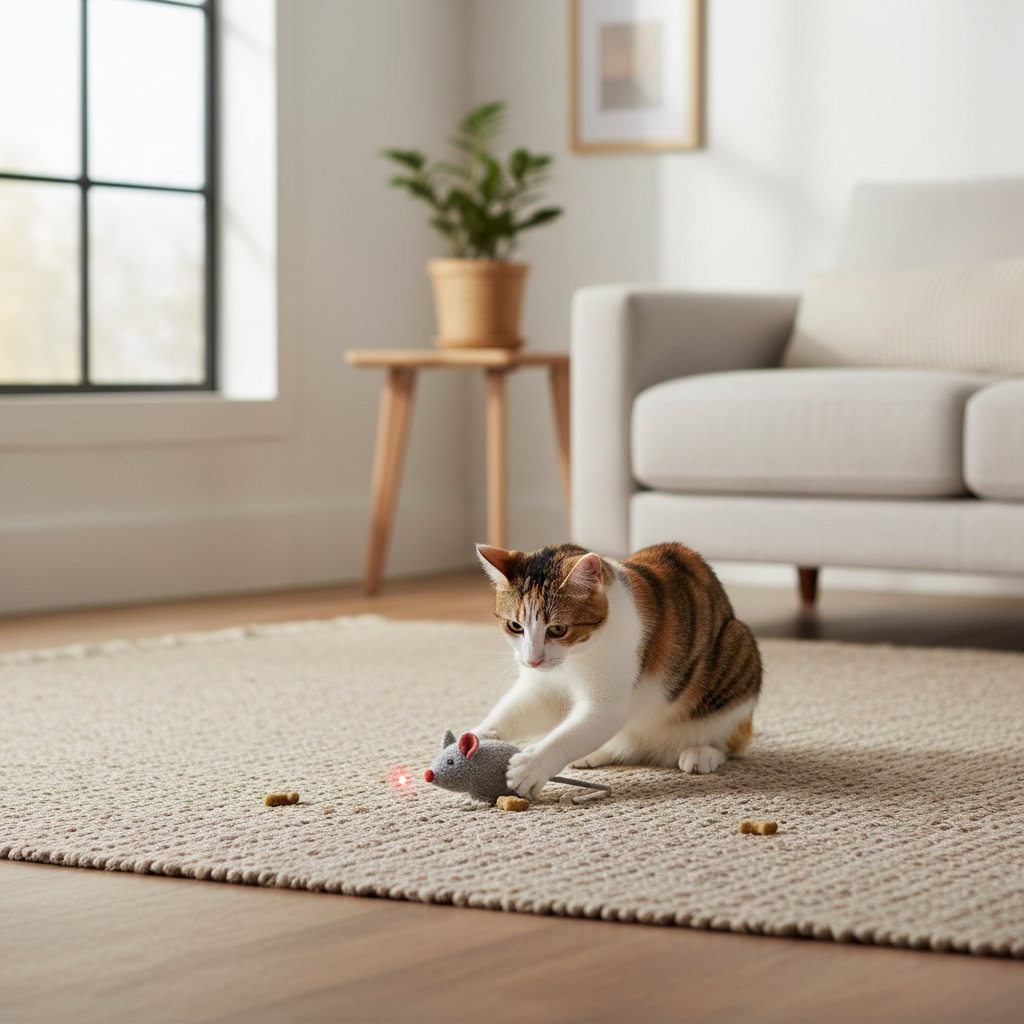
- Laser → physical toy swap: After a few chases, land the dot near a kicker toy or a plush mouse, then quietly put the laser away and wiggle the physical toy for 10–20 seconds.
- Laser → treat “capture”: Guide the dot onto a treat on the floor so your cat pounces where the reward is. This is often the fastest way to create closure.
- Laser → wand toy “finale”: Do 60–90 seconds with a feather wand, then let your cat grab it for a moment before ending.
After the “capture,” offer a small snack or part of a meal. Many households notice this reduces post-play prowling and makes the session feel calmer.
Choose the right setup: pointers, toys, and a simple routine
Not all lasers feel the same in use. Some are too bright, some have odd patterns that confuse cats, and some encourage you to move too fast without realizing it. If you want cat laser pointer interactive play to stay fun, the setup matters more than people think.
What to look for in a laser pointer
- A steady dot that’s easy to control, not an overly “sparkly” pattern that jumps around.
- A comfortable button you can hold without cramping, because jerky hand movements create chaotic dot movement.
- A clip or lanyard so you don’t leave it on a table and accidentally shine it.
A basic weekly routine that works for many cats
- 3–5 sessions per week, each 3–7 minutes.
- End every session with a catch + small food reward.
- On non-laser days, use a wand, food puzzle, or tossed soft toy to keep variety.
Laser vs other interactive toys: when to use what
Lasers are great for movement and quick engagement, but they’re not the only tool, and they’re not always the best tool for every mood. This quick table helps you pick without overthinking.
| Interactive option | What it’s best for | Possible downside | Simple fix |
|---|---|---|---|
| Laser pointer | Fast cardio, engaging shy cats from a distance | No physical “catch,” possible frustration | End with a toy/treat capture |
| Wand/feather toy | Full hunt sequence, pounce and grab | Some cats get too rough on strings | Supervise, put away after play |
| Kick toy (with catnip/silvervine) | Wrestling, bunny-kicking, stress release | Can trigger overstimulation in some cats | Offer after play, then remove if aggression rises |
| Treat puzzle / snuffle mat | Mental work, slows eating, calmer energy | Less cardio | Pair with short chase play earlier |
Common mistakes that make laser play less effective
A lot of people blame the toy when the real issue is how the session runs. If any of these sound familiar, tweak one thing at a time and reassess after a week.
- Too fast, too long: a frantic 20-minute chase often creates a wired cat, not a satisfied one.
- Ending abruptly: turning the dot off mid-chase is the classic trigger for “where did it go?” searching.
- Only using walls and furniture: repeated vertical jumps can be risky for some cats, especially seniors or cats with joint concerns.
- Playing near stairs or clutter: cats commit hard to the chase, set them up to succeed.
- Using laser as the only play: it’s a great tool, but variety prevents fixation and supports different instincts.
When to get extra help (vet or behavior pro)
If your cat shows intense fixation, persistent anxiety after sessions, or aggression that feels new, it’s worth taking seriously. Lasers don’t “cause” every behavior issue, but they can amplify arousal in cats that already struggle to self-regulate.
- If you see sudden behavior changes, a veterinary check is a good starting point, pain or medical issues can change play tolerance.
- If the main issue is stalking, biting, or household conflict after play, a certified cat behavior consultant can help tailor enrichment and decompression routines.
- If you have a senior cat, overweight cat, or a cat with known joint problems, ask your veterinarian what intensity and surfaces make sense.
Key takeaways for calmer, more satisfying laser sessions
- Keep it short and controlled, think “mini hunt,” not endless sprint.
- Always finish with a catch using a toy or a treat so your cat can settle.
- Watch your cat’s after-play behavior, that tells you more than the mid-chase excitement.
- Mix laser days with other enrichment like wand toys and food puzzles.
Cat laser pointer interactive play works best when you treat it like a structured game, not a random red dot. Try a 5-minute session tonight, end with a physical “win,” then see how quickly your cat relaxes, that one detail often tells you you’re on the right track.
FAQ
Is a laser pointer frustrating for cats?
It can be for some cats, especially if the session ends abruptly without a “catch.” Adding a toy or treat at the end often reduces the searching and agitation.
How long should a laser play session be?
Many cats do well with 3–7 minutes. If your cat gets overstimulated, go shorter and run a second mini-session later rather than extending one long chase.
Can laser pointers hurt a cat’s eyes?
Direct exposure to the eyes is a risk, so keep the beam on the floor and avoid face-level play. If you’re unsure about your device’s strength, choose a lower-power pointer and use extra caution.
What’s the best way to end laser play?
Guide the dot to a physical toy or onto a treat so your cat pounces and “wins.” That simple ending tends to make the game feel complete.
Why does my cat keep looking for the dot after I stop?
That’s often the unfinished hunt sequence. A consistent “final capture” routine and shorter sessions usually help, but if the behavior becomes intense or obsessive, consider discussing it with a professional.
Can I use a laser pointer with a kitten?
Usually yes, with supervision and very short sessions, since kittens can get overexcited fast. Focus on safe footing and always end with a toy they can grab.
Should I avoid laser toys for older cats?
Not always, but you may need a slower pattern, fewer jumps, and better traction. If your cat has arthritis or mobility concerns, a veterinarian can help you choose safer play options.
If you’re trying to build a more reliable play routine, not just a quick burst of chaos, it may help to rotate lasers with wand toys and simple food puzzles so your cat gets both movement and a real “catch” without you having to invent a new game every night.