
Snake tongs feeding can be safe and stress-minimized for both you and your snake, but the “safe” part depends less on bravery and more on tool choice, positioning, and consistency.
A lot of bite incidents happen in very normal moments, you reach in at the wrong angle, your snake is in a strong feeding response, or the prey gets presented too close to your hand. Good tongs buy distance, but they also change how the prey moves, which can trigger a harder strike if you’re sloppy.
This guide walks through what tong length actually does, how to set up your feeding routine, and a simple checklist to decide if you need longer tongs or just better mechanics. I’ll also call out the common “looks safe but isn’t” habits people pick up.

Why bites happen during tong-feeding (and why “longer” isn’t always the fix)
The uncomfortable truth is that many bites during tong use come from predictability and proximity, not just the absence of a tool. Tongs reduce direct hand exposure, but they don’t automatically reduce risk if the presentation is chaotic.
- Feeding response is real. Many species learn routines fast, enclosure opens equals food, so anything warm and moving near the door can get tagged.
- Bad prey control. If the feeder swings, bounces off décor, or drags across substrate, you can provoke a more intense strike or an awkward bite-and-hold.
- Hand follows the prey. People unintentionally “chase” the snake with the prey item, which keeps the strike zone near their wrist.
- Distance collapses at the last second. Even with long tongs, if you lean in and put your forearm over the opening, you’ve given distance right back.
Longer tongs can help, especially with fast or defensive snakes, but technique and enclosure setup usually matter just as much.
Picking the right tong length: a practical guide (with table)
When people ask for “safe long,” they’re usually asking for enough reach to stay outside the strike zone while still controlling the prey. For most keepers, the sweet spot is “long enough to keep your hand out of the enclosure plane.” Too short forces you close, too long can feel clumsy and cause shaky presentation.
Here’s a field-friendly way to think about it: choose length based on enclosure depth, snake speed, and how accurately you can place the prey.
| Tong length | Typical use case | Pros | Tradeoffs |
|---|---|---|---|
| 10–12 in | Very small enclosures, tiny juveniles, controlled setups | Good precision | Hand gets close fast, easy to outgrow |
| 16–18 in | Most common pet snakes and standard tubs | Balance of reach and control | May feel short for deep front-opening enclosures |
| 24 in | Large enclosures, fast feeders, strong feeding response | More buffer distance | Needs steadier hands, prey can wobble |
| 30–36 in | Large, reactive species, additional caution setups | Maximum distance | Can be awkward indoors, precision drops |
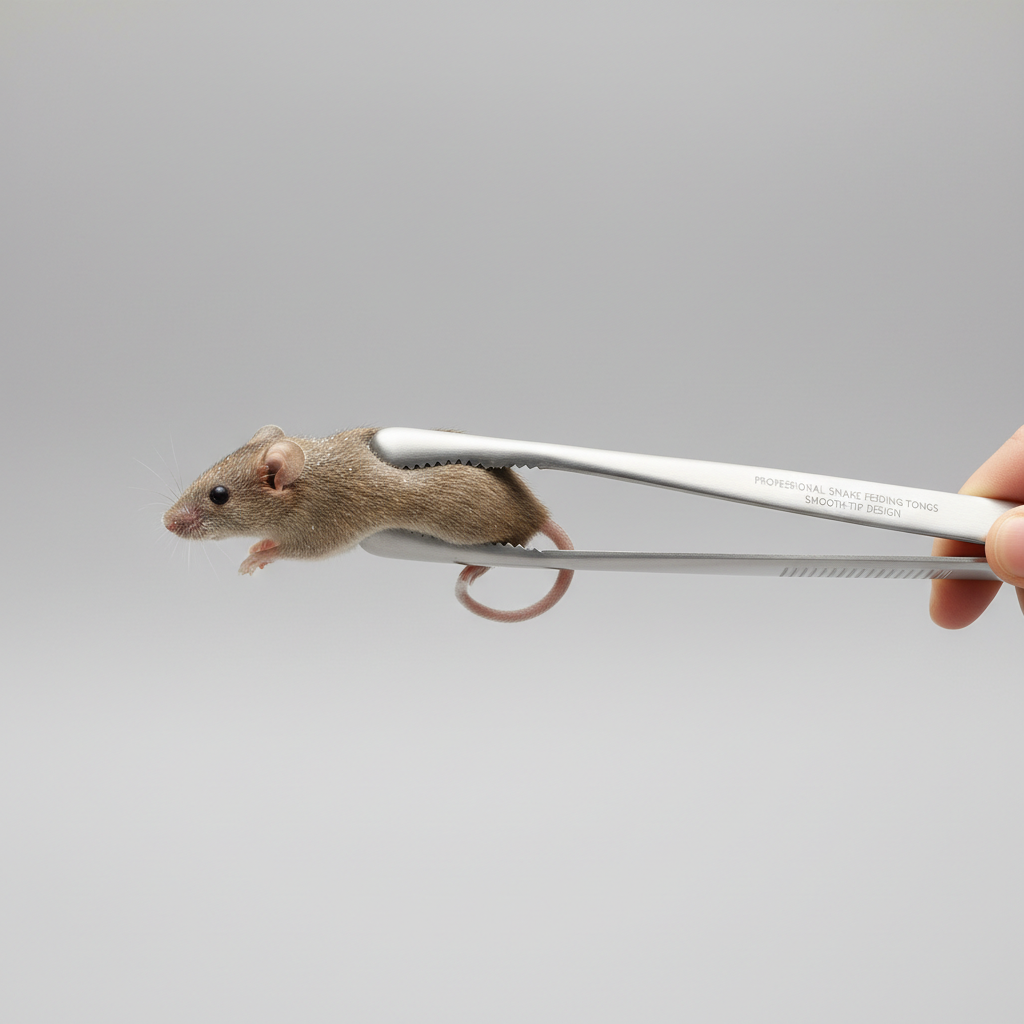
Material and tip shape matter too. Many keepers prefer stainless steel for control and easy cleaning. Rubber-coated tips can grip better, but can also tear prey if you clamp too hard.
Quick self-check: do you need longer tongs, or a better routine?
If you’re unsure where the real problem sits, use this quick diagnostic. Be honest, most issues show up here quickly.
- You routinely put your hand or wrist past the enclosure opening during feeding.
- The prey item swings like a pendulum while you present it.
- Your snake strikes toward the door the moment it opens, before it even “sees” the prey.
- You feel you have to “get closer” to make the snake commit to the strike.
- You’ve been tagged while removing leftovers or adjusting bedding after feeding.
If the first two happen, longer tongs may help, but you’ll get more mileage from presentation control. If the third happens, you may be dealing with enclosure-associated feeding response and should adjust your routine, not just your gear.
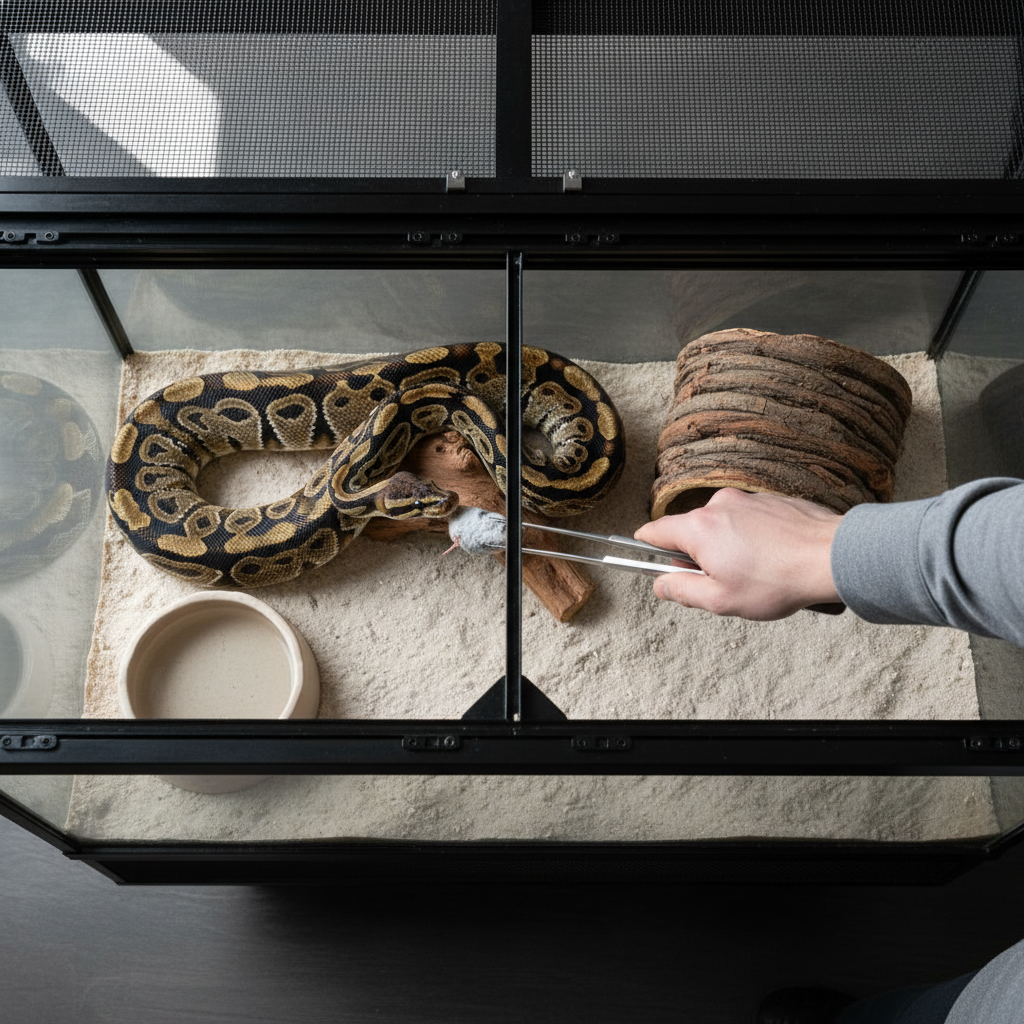
Step-by-step: a safer snake tongs feeding routine
This is the repeatable routine that tends to reduce both missed strikes and “oops” moments. It’s not fancy, it’s just consistent.
1) Set the scene before the door opens
- Have the prey item ready (thawed/warmed appropriately for your species and your vet or breeder guidance).
- Clear a landing zone inside the enclosure so the prey won’t smack décor and ricochet.
- Know your exit plan: where your hands go if the snake rockets forward.
2) Open slowly, keep your body out of the “line of fire”
- Stand slightly off-center rather than squared up with the opening.
- Keep forearms high and back, let the tongs do the reach.
3) Present prey like a target, not a toy
- Hold prey securely, not crushed, at the thickest point you can grip.
- Move with small, controlled motions, minimal waving.
- Offer it in front of the snake’s head, not over the top of it.
4) After the strike, don’t “tug-of-war”
- Once the snake latches, relax pressure and let go cleanly when safe to do so.
- If the prey is stuck in the tongs, open the tips gently rather than yanking.
5) Close the enclosure and give space
This is where a lot of people ruin the calm. Give your snake time to settle and start swallowing before you do anything else in the room.
Key points that actually reduce risk (not just “buy longer tongs”)
- Keep hands behind the threshold. Think of the enclosure opening as a boundary line you don’t cross during feeding.
- Control the prey path. No bouncing off branches, no dragging in bedding, no frantic waving.
- Reduce “door equals food.” If your snake is highly responsive, consider a consistent pre-feed cue and avoid opening the enclosure for random tasks right before feeding.
- Have a post-feed rule. No spot cleaning, rearranging, or handling right after meals, many snakes stay in feeding mode briefly.
According to the American Veterinary Medical Association (AVMA), safe animal handling focuses on minimizing stress and preventing injury to both people and animals, which fits feeding routines too, calmer setups usually lead to fewer sudden reactions.
Mistakes and misconceptions to avoid
Some habits look “experienced” but tend to backfire, especially with enthusiastic feeders.
- Using tongs as a hand extension for enclosure work. Tongs are for feeding, not for poking the snake to move it around.
- Feeding too close to the door every time. This can teach the snake to ambush at the entrance.
- Over-gripping prey. Crushing can cause scent and fluids to spread, and can make grip release harder after the strike.
- Free-hand “just this once.” Routine is safety, inconsistency is where accidents creep in.
If you’re dealing with repeated missed strikes, don’t automatically blame tong length, you may need to adjust how you warm the prey, reduce air currents, or simplify the strike lane.
When to get help (and what “help” looks like)
If your snake is striking defensively (not feeding) or you’re seeing repeated near-misses toward your hand even with careful presentation, it may be time to slow down and consult someone experienced. Many situations improve quickly with a small handling adjustment, but some cases involve husbandry, health, or stress factors.
- Behavior suddenly changes. A snake that used to feed calmly becomes reactive, consider a check-in with a qualified reptile veterinarian.
- You keep getting tagged. A local reptile shop, reputable breeder, or herp society can sometimes watch your technique and spot the issue fast.
- Large or medically significant species. If there’s meaningful risk, prioritize professional guidance and appropriate safety protocols.
According to the American Association of Zoo Veterinarians (AAZV), structured safety protocols and training reduce risk when working with potentially dangerous animals, pet keepers can borrow that mindset even on a smaller scale.
Practical recommendations: what to buy and how to set your setup
If you want one clear buying guideline, pick a length that keeps your hand fully outside the opening while still letting you place prey without wobble. For many common pet setups, 16–24 inches covers most needs.
- Front-opening enclosures: Often benefit from longer reach, since you naturally lean toward the opening.
- Top-opening tubs: Precision matters, mid-length tongs can feel more controlled.
- Fast, food-driven snakes: Prioritize reach plus a confident grip, avoid flimsy hinges.
- Young or tiny snakes: Smaller prey can slip, consider narrower tips for better control.
Mini checklist before you feed: stable stance, clear strike lane, hands stay back, prey controlled, enclosure closes smoothly after delivery.
Conclusion: safer feeding is mostly consistency
Snake tongs feeding works best when you treat it like a repeatable safety routine, not a one-off trick. Longer tools can add comfort and margin, but calm presentation, a clean strike lane, and keeping your hands out of the opening do most of the heavy lifting.
If you want a simple next step, measure your enclosure depth and buy a tong length that lets you stay behind the threshold, then practice presenting prey with minimal movement. Your confidence goes up, and most snakes settle into cleaner, less frantic feeds.
FAQ
What length tongs are “safe” for feeding a pet snake?
Often 16–24 inches works for common pet snakes, but “safe” depends on enclosure depth and how close your hand ends up to the opening. If your wrist crosses the threshold, you likely need more reach or a different stance.
Can longer tongs make a snake strike harder or miss more?
They can, especially if the extra length makes the prey wobble or swing. Many missed strikes come from presentation motion, so longer isn’t automatically better if control drops.
Is it okay to feed without tongs if my snake is calm?
Some keepers do, but it increases the chance of a mistake when the snake is extra food-driven. If you choose to free-hand, be realistic about your risk tolerance and consider professional guidance for your specific species.
My snake strikes at the door as soon as I open it, what should I do?
That pattern suggests a strong enclosure-associated feeding response. Try slowing the routine, avoiding opening the enclosure for non-feeding tasks right before meals, and keeping your body offset from the opening while presenting prey.
Should I wiggle the prey to get a better feeding response?
A little movement can help, but big waving often creates chaos and brings the strike zone closer to you. Small, controlled motions usually work better than “making it dance.”
What should I do if the prey gets stuck in the tongs after the strike?
Don’t yank. Ease your grip, open the tips gently, and let the snake take the prey. If it keeps happening, your tongs may have tips that pinch too aggressively or you’re gripping too hard.
Do I need different tongs for frozen-thawed vs live feeding?
Many keepers use the same tongs, but live feeding introduces additional safety and welfare concerns and may require different protocols. If you’re considering live prey, it’s worth consulting a reptile vet or experienced professional.
If you’re trying to make feeding calmer and safer, consider writing down your current routine and where your hands end up during delivery, then match tong length and enclosure setup to keep that boundary line consistent, it’s a surprisingly effective “small change.”