how to calm a anxious dog often comes down to two things, lowering the stress in the moment, and changing the routine so the anxiety has fewer chances to spike.
If you live with a dog who pants at night, trembles during storms, or melts down when you grab your keys, you already know how draining it can feel. The good news is that many cases respond to simple, consistent changes at home, without jumping straight to “strong” options.
This guide walks through practical, natural strategies you can actually test this week, plus a quick checklist to figure out what kind of anxiety you’re dealing with, and when it’s time to bring in your veterinarian or a qualified trainer.
What anxiety looks like, and why it matters
Not every nervous behavior equals “anxiety,” but patterns matter. Some dogs worry quietly, others escalate fast, and many bounce between the two depending on the trigger.
- Body signs: trembling, tucked tail, ears pinned back, lip licking, yawning when not tired, whale eye.
- Behavior signs: pacing, hiding, clinging, bolting, destructive chewing, barking/howling, house soiling.
- Recovery time: a dog who stays “stuck” for hours after a trigger usually needs more support than a dog who settles in minutes.
According to the American Veterinary Medical Association (AVMA), behavioral changes can sometimes be linked to medical problems, so sudden anxiety, a big personality change, or new aggression deserves a medical checkup rather than guesswork.
Common reasons dogs get anxious (real-world triggers)
When people ask how to calm a anxious dog, they often want one trick. But anxiety usually has a “why,” even if it’s not obvious at first.
Separation and predictability
Some dogs panic when left alone, others get anxious during the leaving routine. In many households, the keys, shoes, and backpack become the cue that something bad is coming.
Noise and environment
Thunder, fireworks, construction, the neighbor’s subwoofer, even a smoke alarm chirp can be enough. Noise sensitivity is common, and many dogs don’t “get used to it” without help.
Under-stimulation or over-stimulation
A bored dog can look anxious, and an overtired dog can also look anxious. A long day of guests, daycare, or busy streets can push some dogs over threshold.
Pain and discomfort
Arthritis, dental pain, itchy skin, GI upset, or hearing loss can change how safe a dog feels. If anxiety appears “out of nowhere,” pain is on the short list to rule out.
Quick self-check: what kind of anxious dog do you have?
Use this as a fast sorting tool. You’re not diagnosing anything, you’re choosing the right next step.
- Trigger is clear (storms, alone time, car rides) and your dog recovers within an hour.
- Trigger is unclear and anxiety shows up randomly, especially at night.
- Escalation is fast (lunging, scratching doors, frantic panting) and hard to interrupt.
- There’s self-injury risk (broken teeth from crates, bleeding paws, smashing through windows).
- New behavior in an adult or senior dog, or anxiety plus appetite/sleep changes.
If you checked the last two items, skip “DIY only” and talk with your veterinarian or a board-certified veterinary behaviorist. Natural tools still help, but safety comes first.
In-the-moment calming: what to do during a panic spike
The goal is not “perfect obedience,” it’s helping the nervous system come down. These are the moves that tend to work across many homes.
Lower the intensity of the trigger
- Sound buffering: close windows, run a fan, use white noise, or play low-volume calming music.
- Light control: dim lighting during storms, close curtains if flashes are triggering.
- Create distance: move to an interior room, bathroom, or closet area if it’s quieter.
Offer a safe “job”
- Scatter a handful of kibble on a rug for sniffing, if your dog will eat.
- Use a frozen food toy in a quiet spot, if chewing helps your dog regulate.
- Try a simple pattern game, like tossing one treat left, one treat right, at a slow rhythm.
According to the American Kennel Club (AKC), enrichment activities like food puzzles and sniffing games can help reduce stress for many dogs, especially when paired with a calm environment.
Use your presence strategically
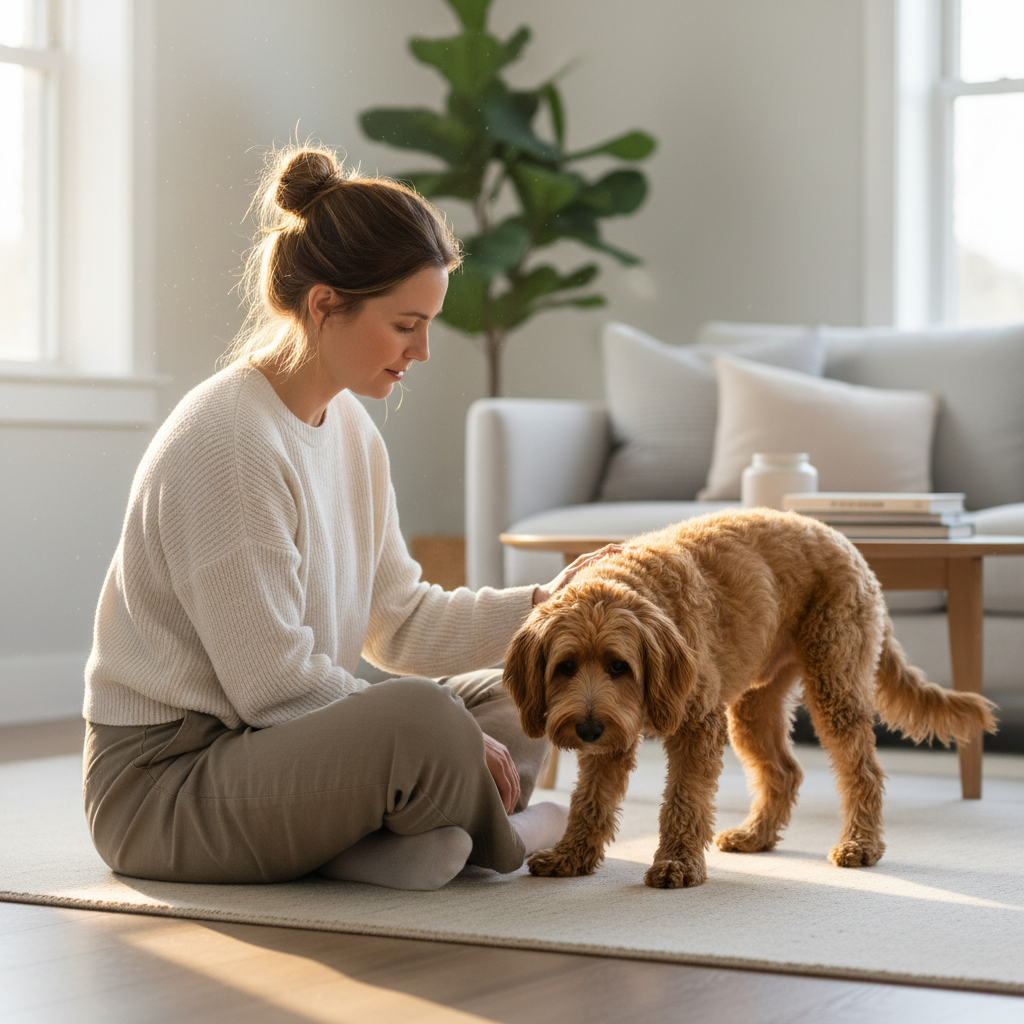
Comforting a scared dog does not “reward fear” in the way people worry about. If your dog seeks you, you can be calm, steady, and quiet. What usually backfires is frantic reassurance, hovering, or physically restraining a dog who wants space.
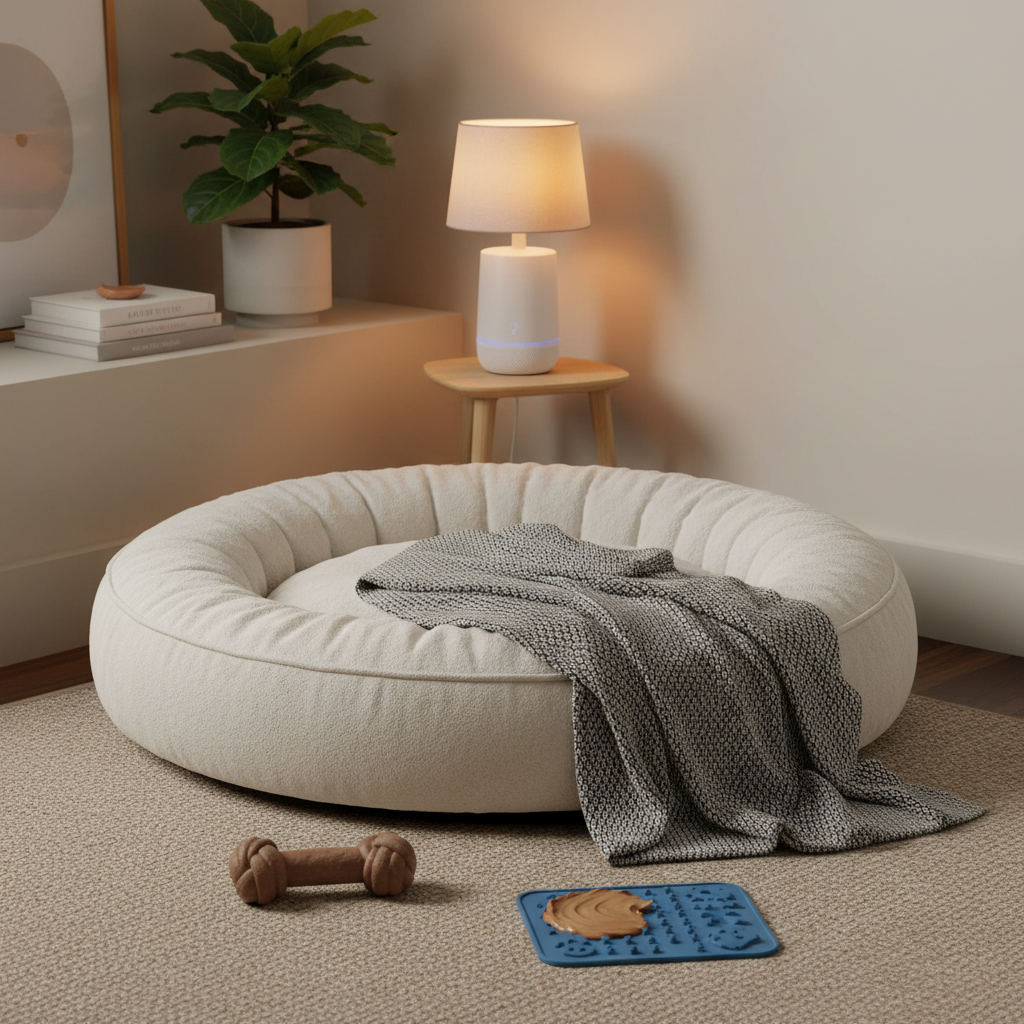
- Speak softly, keep movements slow, and offer a bed or crate with the door open.
- If touch helps, use long, gentle strokes on the chest or shoulders, stop if your dog turns away.
- Avoid punishment, shouting, or “flooding” the dog by forcing them to face the trigger.
Natural, daily strategies that reduce anxiety over time
If you’re serious about how to calm a anxious dog, the real wins come from what you do on ordinary days, not just during storms or departures.
Build a predictable rhythm
- Feed, walk, and rest on a consistent schedule most days.
- Add short decompression walks, slower pace, more sniffing, fewer “busy” routes.
- Protect naps, many anxious dogs run on low sleep without anyone noticing.
Train calm, not just commands
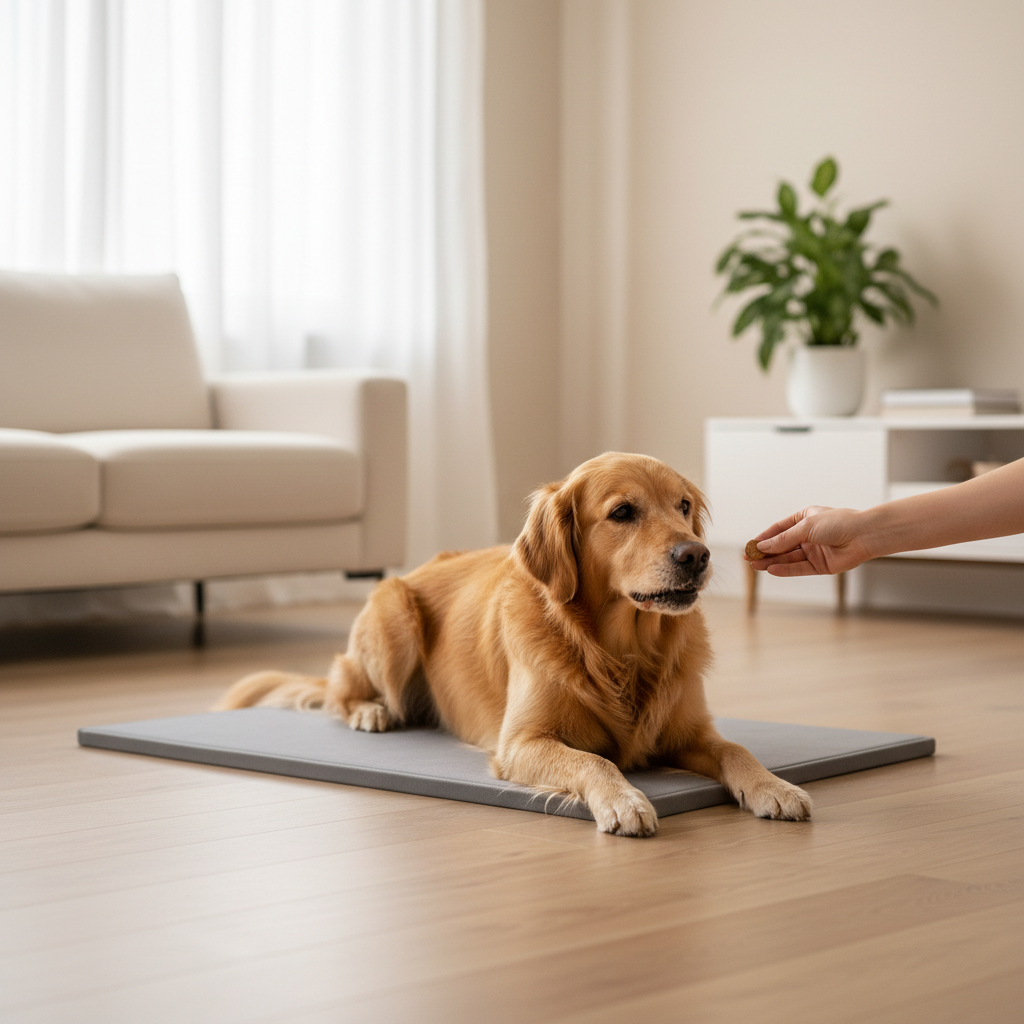
- Mat/settle practice: reward the dog for relaxing on a bed for 10–30 seconds, gradually extend.
- Capturing calm: when you notice relaxed breathing or a hip shift into rest, quietly drop a treat.
- Easy reps: keep sessions short, end before your dog gets frustrated.
Desensitization and counterconditioning (the safe way)
This is the long-game approach: very small exposure to the trigger, paired with something good, before the dog panics. According to the American College of Veterinary Behaviorists (ACVB), behavior modification plans often rely on desensitization and counterconditioning to change the emotional response, not just suppress behavior.
- Storm/noise dogs: play a recording at very low volume while feeding treats, stop before stress signs.
- Departure anxiety: practice “fake departures” that last 5–30 seconds, come back before the dog spirals.
- Visitor anxiety: start with distance, reward calm observation, don’t force greetings.
What to try first: a simple 7-day plan
People get stuck because they change five things at once, then can’t tell what helped. This plan keeps it clean and trackable.
- Day 1–2: Set up a quiet safe zone, add white noise, add one daily sniff walk.
- Day 3–4: Start mat training for 2–3 minutes, twice a day, keep it easy.
- Day 5: Introduce one enrichment tool (lick mat or food puzzle) in the safe zone.
- Day 6: Practice the top trigger at “tiny” intensity (keys touch, door open, 5 seconds).
- Day 7: Review notes, what triggers remain, what shortened recovery time, what escalated.
Write down two things: the trigger, and how long it takes your dog to return to normal behavior. Recovery time is a surprisingly honest metric.
Natural tools: what helps, what’s hype, what needs vet input
“Natural” can mean environmental changes, training, enrichment, or calming aids. Some are low-risk, others still require professional guidance.
A practical comparison table
| Tool | Best for | Pros | Watch-outs |
|---|---|---|---|
| White noise / fan | Noise sensitivity, sleep disruption | Easy, low cost, immediate effect for many | Not enough alone for severe panic |
| Safe zone (crate/room) | Storms, visitors, overwhelm | Gives control and predictability | Don’t shut the dog in if it increases panic |
| Food enrichment (lick mat, frozen toy) | Mild to moderate anxiety | Supports sniffing/licking, often soothing | Avoid if dog is too stressed to eat or may guard food |
| Pressure wraps | Some noise and general anxiety cases | Non-drug option, can be helpful for some dogs | Fit matters, monitor for overheating or stress |
| Pheromone diffusers | General stress, transitions | Low risk, can layer with training | Results vary, give it time, don’t expect instant change |
| Supplements | Mild anxiety, long-term support | May help some dogs as part of a plan | Ask your vet, quality and interactions vary |
Key takeaways on “natural calming”
- Stacking helps: safe space + noise control + training usually beats any single product.
- Timing matters: many aids work better before the trigger, not at peak panic.
- Monitor appetite and digestion: stress can mask GI issues, and new supplements can upset stomachs.
Mistakes that keep anxiety stuck (even with good intentions)
- Accidental flooding: “just let them hear the fireworks” often increases sensitivity, not resilience.
- Too much exercise as a fix: exhausting a dog can help some cases, but for others it builds a fitter, more frantic dog.
- Inconsistent boundaries: changing rules daily can make anxious dogs more vigilant.
- Waiting for a crisis: if you only practice when your dog is already panicking, progress stays slow.
If you’re trying to figure out how to calm a anxious dog and nothing seems to stick, it’s often because the dog never gets enough practice under threshold, meaning below the level where they lose the ability to learn.
When to get professional help (and what to ask for)
Natural approaches can be powerful, but severe anxiety is a welfare issue, not a willpower issue. Get support if you notice any of the following.
- Panic that causes self-injury or escape attempts.
- Sudden behavior changes, especially in adult or senior dogs.
- Guarding, snapping, or aggression connected to fear.
- Inability to eat, sleep, or settle during common triggers.
Start with your veterinarian to rule out pain or medical drivers. For training help, look for a credentialed professional who uses reward-based methods. According to the Certification Council for Professional Dog Trainers (CCPDT), credentials and continuing education help owners identify qualified training professionals.
Conclusion: calm is a skill you can build
how to calm a anxious dog naturally is less about finding one magic remedy and more about building a calm routine, lowering trigger intensity, and practicing tiny wins until your dog trusts the pattern.
Pick two changes you can sustain, a safe zone with sound buffering, and a short daily calm-training session tends to be a solid start. If your dog’s fear looks extreme or new, loop in your vet sooner rather than later, it saves time and stress for everyone.
FAQ
- How can I calm my anxious dog fast without medication?
Lower the trigger first: move to a quieter interior space, add white noise, dim lights, then offer a simple sniffing or licking activity. “Fast” usually means reducing intensity and giving the dog something regulating to do. - Is it okay to pet my dog when they’re scared?
Usually yes, if your dog seeks contact and your touch helps them settle. Keep it calm and predictable, and stop if your dog turns away or stiffens, some dogs prefer space when overwhelmed. - Why does my dog act anxious at night?
Night anxiety can be noise sensitivity, lack of daytime rest, digestive discomfort, or age-related changes. If it’s new or worsening, a vet visit is a smart first step to rule out pain or medical issues. - What are natural calming aids that actually help some dogs?
White noise, a safe retreat area, enrichment that encourages licking/sniffing, and structured relaxation training help many dogs. Pheromone products and pressure wraps can be worth a trial, but outcomes vary. - How long does desensitization training take for anxiety?
Often weeks to months, depending on severity and how consistent you can be. If you practice below threshold and track recovery time, you’ll usually see small improvements first, faster settling, fewer spikes. - My dog won’t take treats when anxious, what should I do?
That’s a sign the stress level is too high. Increase distance from the trigger, lower noise/light, and focus on creating safety rather than training in that moment. Once your dog can eat again, you’re back in a workable zone. - When is anxiety serious enough for a veterinarian or behaviorist?
If there’s self-injury risk, extreme panic, aggression linked to fear, or a sudden change in behavior, get professional input. Many dogs do best with a combined plan, training plus vet guidance, not one or the other.
If you’re trying to help a dog who panics during storms, struggles with alone time, or can’t settle at home, you might prefer a calmer, more structured plan rather than random tips, in that case, bringing your notes to a vet visit or a reward-based trainer consult can make the next steps feel much more doable.