
how to train a dog not to bark starts with a simple shift: you’re not “stopping noise,” you’re teaching an alternative behavior that works better for your dog than barking does.
If you live in an apartment, work from home, or share walls with neighbors, excessive barking stops being “just annoying” and turns into stress, conflict, and sometimes even housing risk. The good news is most barking patterns are trainable, but the approach depends on why it happens.
This guide focuses on humane, practical steps you can use at home, plus clear checkpoints so you know when you’re making progress and when it’s time to get professional help.

Why dogs bark excessively (and why “shushing” rarely works)
Barking is normal communication. Excessive barking usually means the dog has learned that barking works in a specific situation, or the dog feels overwhelmed and can’t regulate.
- Alert/territorial barking: door knocks, hallway sounds, people at the window. The bark says “go away,” and when the person leaves, the dog feels rewarded.
- Demand barking: food, play, attention. Many dogs get accidentally trained when barking makes the human respond.
- Fear or anxiety: sudden noises, strangers, separation-related distress. The bark is more emotional than intentional.
- Boredom and under-exercise: a dog with extra energy will invent a job, and barking often becomes that job.
- Frustration: barrier reactivity at windows, fences, or on leash. The dog wants access and barks because access is blocked.
- Medical or age-related changes: pain, sensory loss, or canine cognitive decline can increase vocalization. If barking changes suddenly, consider a vet check.
According to the American Veterinary Medical Association (AVMA), behavior problems can have medical contributors, so it’s smart to rule out pain or illness when a behavior is new, intense, or escalating.
A quick self-check: what type of barking are you dealing with?
Before you pick a training plan, figure out what your dog is “saying.” This takes five minutes and saves weeks of random trial-and-error.
Trigger checklist
- When does it happen? alone time, evenings, doorbell, walks, backyard, meal prep
- What happens right before barking? footsteps in hallway, phone ping, another dog, you standing up
- What makes it stop? you speak, you approach, you open the door, you give food, the trigger leaves
- Body language: loose and bouncy (often demand/play), stiff and forward (often alert), tucked or pacing (often fear/anxiety)
Red flags that should change your plan
- Barking paired with lunging, snapping, or attempts to bite
- Destruction, drooling, escape behavior during alone time
- Sudden increase in barking in a senior dog
Those cases can still improve, but they often need a safer, more tailored approach than basic “quiet” cues.
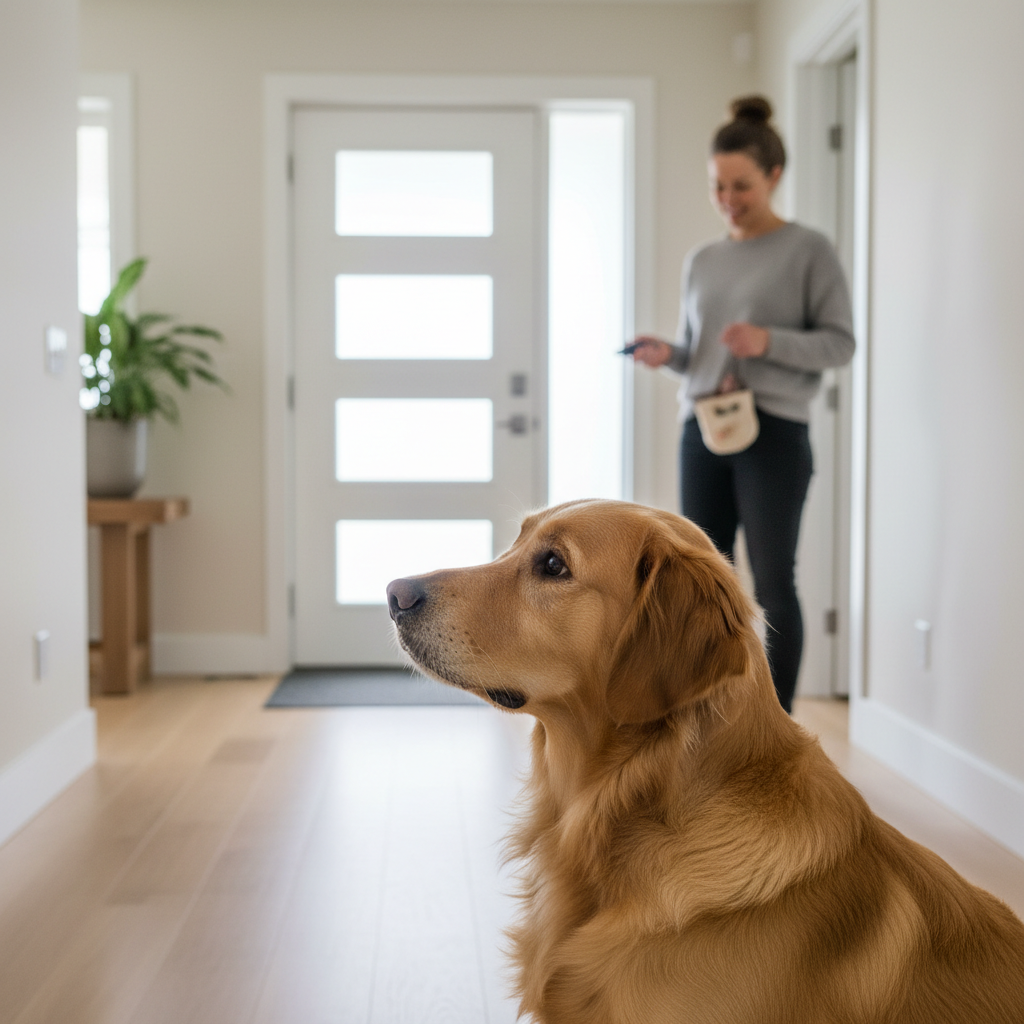
Fix the environment first: reduce practice, reduce barking
If your dog rehearses barking 30 times a day, training feels like trying to bail out a boat while the leak stays open. Management isn’t “giving up,” it’s how you buy quiet time to teach new habits.
- Block visual triggers: frosted window film, curtains, baby gates to keep distance from front windows.
- Control door chaos: keep a leash by the door, use a white noise machine, add a doorbell cover or switch to a different chime temporarily.
- Provide a default spot: a mat or bed away from windows, paired with calm rewards.
- Meet baseline needs: sniff walk, food puzzle, short training session. A tired brain barks less than a bored brain.
Key point: management should make barking episodes less frequent and less intense, not necessarily perfect. You’re aiming for “trainable.”
Teach “Quiet” the way dogs actually learn it
Many people try to teach quiet by repeating “quiet, quiet, QUIET.” Dogs often hear that as background noise. A better method: mark and pay the moment your dog stops vocalizing, even if it’s just half a second.
Step-by-step “Quiet” training (reward-based)
- Set up a low-level trigger (someone softly knocks, you play a door sound quietly on your phone).
- Let your dog bark once or twice, then wait for a tiny pause to breathe or look at you.
- The instant the pause happens, say “Quiet”, then immediately reward (treat or scatter a few kibble pieces).
- Repeat until your dog starts offering that pause faster, then gradually ask for 1–2 seconds of quiet before rewarding.
- When it’s improving, practice in new rooms, then with slightly more realistic triggers.
This works because your dog learns a clear pattern: quiet makes good things happen. Over time, the cue becomes meaningful.
If your dog can’t pause, don’t force it
When barking is driven by panic or intense reactivity, waiting for a pause can take forever. In that case, you’ll get more traction by increasing distance from the trigger, blocking access to windows, or switching to a decompression activity, then returning to training at an easier level.
Replace barking with a job: “go to mat,” “touch,” and check-ins
When people ask how to train a dog not to bark, they often overlook the missing piece: you need a replacement behavior your dog can do while excited. “Don’t bark” is vague. “Go to mat and chew” is clear.
Three replacements that translate to real life
- Go to mat: teach your dog to run to a bed and lie down for rewards. This is gold for doorbells and guests.
- Hand target (touch): your dog boops your hand on cue, redirecting away from windows or hallway sounds.
- Automatic check-in: reward your dog for looking at you when something interesting happens, before barking starts.
Where most people slip
They practice only when barking is already exploding. Train these skills when your dog is calm, then bring them into mildly triggering moments. Think “warm-up reps,” not emergency braking.
Scenario playbook: what to do in the moment
Real life is messy, so here’s a practical menu. Pick the section that matches your most common barking situation and keep it simple for two weeks.
Doorbell or knocking
- Before answering, toss a treat scatter away from the door to create space.
- Cue “go to mat,” then reward calm staying.
- If needed, use a leash to prevent rushing the door while you build the habit.
Window barking
- Block the view during retraining hours (especially busy times of day).
- When your dog notices a trigger but stays quiet, reward immediately.
- For repeat offenders, teach “touch” to turn away from the window, then reward on the mat.
Barking for attention
- Stop paying the bark: no eye contact, no talking, no pushing away.
- Wait for 2–3 seconds of quiet, then reward with attention or a toy.
- Proactively schedule attention breaks so your dog doesn’t need to demand it.
Separation-related barking
When barking happens soon after you leave and escalates, it may involve separation anxiety, not “stubbornness.” According to the American Kennel Club (AKC), separation distress can show up as vocalizing, destruction, and attempts to escape.
- Start with very short departures your dog can handle, return before panic builds.
- Use food enrichment only if it truly keeps your dog relaxed, for some dogs it helps, for others it doesn’t.
- Consider working with a qualified trainer or veterinary behaviorist for a structured plan.
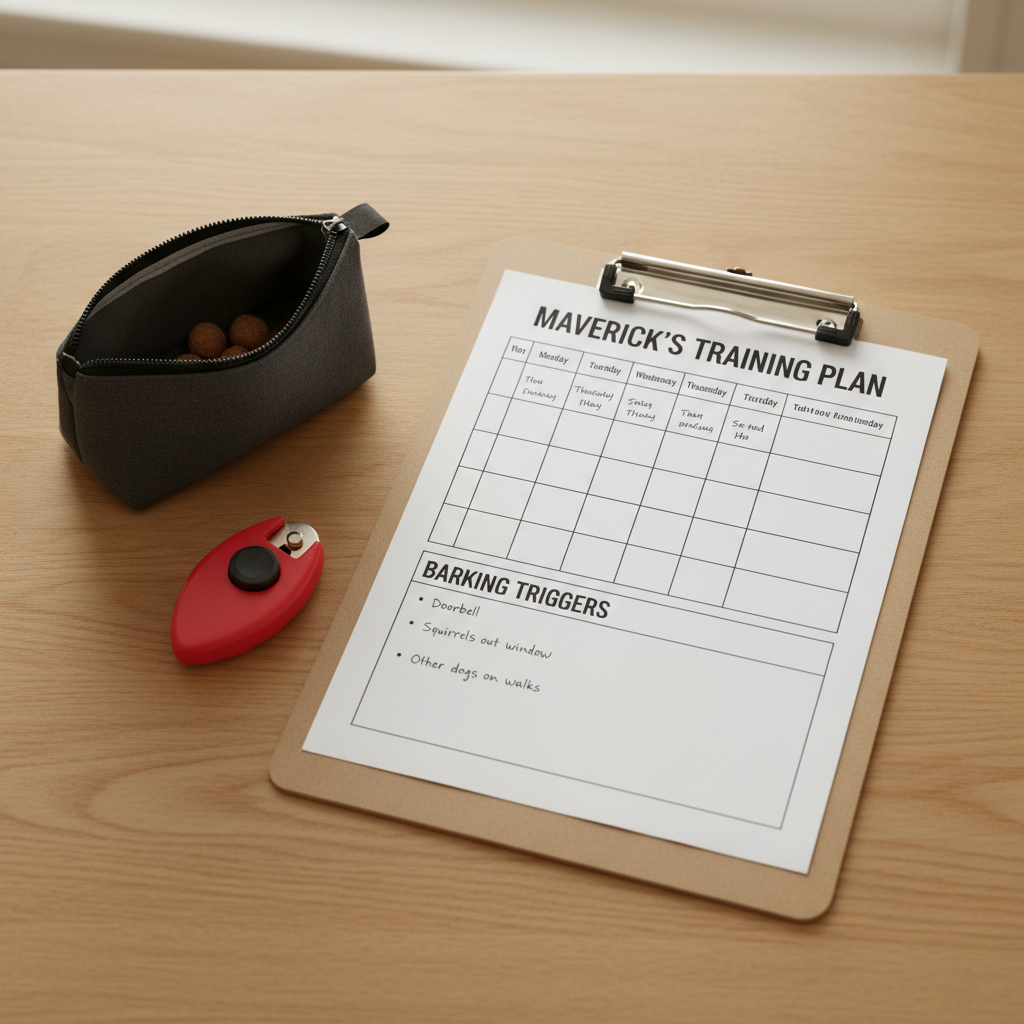
A simple 14-day plan (with a progress table)
If you want consistency without overthinking, follow this two-week structure. Keep sessions short, 3–7 minutes, and aim for calm repetition.
14-day plan overview
- Days 1–3: management upgrades + identify top two triggers
- Days 4–7: teach “quiet” at low intensity + start mat training daily
- Days 8–11: add real-life practice with easier versions of triggers
- Days 12–14: increase difficulty gradually, reduce treat frequency slowly
Progress table (fill it in once per day)
| What you track | What “better” looks like | What to adjust if not improving |
|---|---|---|
| Barking episodes per day | Fewer total episodes | Increase management, reduce trigger exposure |
| Intensity (1–5) | Lower intensity even if it still happens | Train at easier distance/volume |
| Recovery time | Quiets faster after a trigger | Add decompression, reward calm sooner |
| Response to cues | “Quiet” or “mat” works in more rooms | Practice more in calm contexts, then generalize |
Key point: progress often shows up as faster recovery before it shows up as silence. That still counts.
Common mistakes and humane tool notes
Some strategies look effective because they interrupt barking, but they can increase stress and make barking rebound later, especially for fearful dogs.
- Yelling “no”: many dogs interpret it as you joining the noise.
- Inconsistent rules: “quiet” only matters sometimes, so the dog keeps trying.
- Overcorrecting: harsh punishment can suppress warnings and increase anxiety. If safety is a concern, get professional help instead of escalating.
- Bark collars: results vary, and risk depends on the dog and collar type. If you’re considering one, it’s worth discussing with a veterinarian or credentialed trainer, especially for anxiety-driven barking.
According to the American Animal Hospital Association (AAHA), reward-based training supports behavior change while protecting the human-animal bond, which matters when you’re working on a daily-life problem like barking.
When to bring in a professional (and what to look for)
If your dog’s barking is paired with aggression, panic, or you’re getting complaints that could affect housing, outside help can save time and reduce risk.
- Veterinarian: rule out pain, endocrine issues, or age-related changes, and discuss whether medication might be appropriate for anxiety in some cases.
- Credentialed trainer: look for CPDT-KA, KPA, or similar credentials, and ask how they handle fear and reactivity.
- Veterinary behaviorist: for complex anxiety, bite history, or severe reactivity. These specialists can combine behavior plans with medical support.
When you talk to a pro, bring your trigger notes and a short video. It speeds up the plan and keeps the advice specific.
Conclusion: calm is trained, not demanded
How to train a dog not to bark comes down to three moves you can repeat: reduce trigger practice, teach a clear quiet cue, and give your dog a better job than barking. If you pick one main trigger and train it daily for two weeks, most households see the start of real change, even if it’s not perfect yet.
Choose your next step today: block one high-value trigger (like the front window), then run three short “quiet” reps at an easy level. Small reps, done often, beat big confrontations every time.