
how to get cat to sleep at night usually comes down to one thing: you’re trying to sleep on a human schedule, and your cat is following a perfectly normal cat schedule.
If you’re dealing with midnight zoomies, loud yowling, or pawing at the door, it’s not just “bad behavior.” In many homes, it’s a mix of daytime boredom, poorly timed meals, accidental reinforcement, and sometimes a health issue that gets missed because it looks like a routine problem.
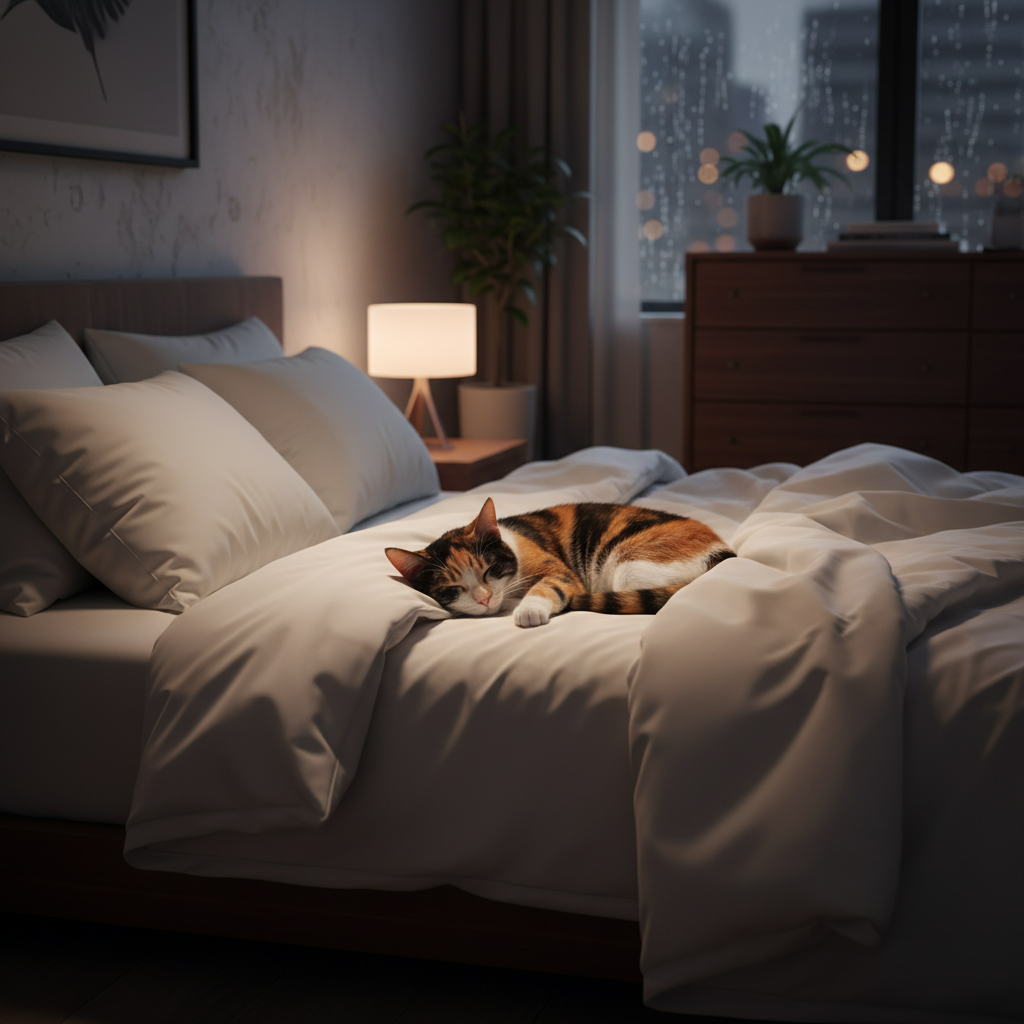
This guide helps you figure out what’s driving the night activity, then walks you through a practical routine that tends to work in real households. No gimmicks, just the habits that reduce nighttime chaos and keep your cat’s needs met.
Key takeaway: you’re not “forcing” sleep, you’re shifting energy use, food timing, and expectations so night becomes boring and predictable.
Why your cat won’t settle at night (what’s actually going on)
Cats are naturally crepuscular, meaning many cats feel most active around dawn and dusk. Add indoor life, naps all day, and attention at night, and the pattern locks in.
- Under-stimulation during the day: a cat who naps because there’s nothing to do often cashes in that energy when you finally lie down.
- Accidental training: if meowing gets food, play, or even a “shhh,” your cat learns nighttime is a great time to ask.
- Meal timing: long gaps between dinner and breakfast can trigger early-morning wake-ups.
- Environment triggers: hallway noises, outdoor cats at the window, or a warm laptop can turn into a nightly routine.
- Stress or change: new home, new pet, schedule change, even moving furniture can increase night vocalizing.
- Medical discomfort: itching, dental pain, arthritis, hyperthyroidism, urinary issues, or cognitive changes in seniors can show up as restlessness.
According to the American Veterinary Medical Association (AVMA), behavior changes can be a sign of underlying health problems, so it’s worth staying open to a medical explanation if the pattern is sudden or intense.
Quick self-check: which “night problem” do you have?
You’ll get better results if you match the fix to the pattern. Use this fast checklist to categorize what you’re seeing.
- Midnight zoomies: sprinting, jumping, play-attacking feet, then crashing.
- Early-morning alarm clock: wakes you 4–6 a.m., usually near the kitchen.
- Door drama: scratching, crying, rattling the handle, only when a door is closed.
- Window patrol: staring out, chirping, reacting to outdoor movement.
- Vocalizing + pacing: roaming and yowling without clear “wanting food” signals, especially in older cats.
If this started suddenly, if your cat strains in the litter box, drinks more than usual, loses weight, or seems painful when jumping, consider calling a veterinarian before assuming it’s just routine.
Build a night routine that actually sticks (play, feed, then sleep)
The most reliable approach for how to get cat to sleep at night is boringly consistent: active play in the evening, a satisfying meal, then a predictable wind-down. Many cats respond within 1–3 weeks, but consistency matters more than intensity.
Step 1: Schedule a real “hunt” play session
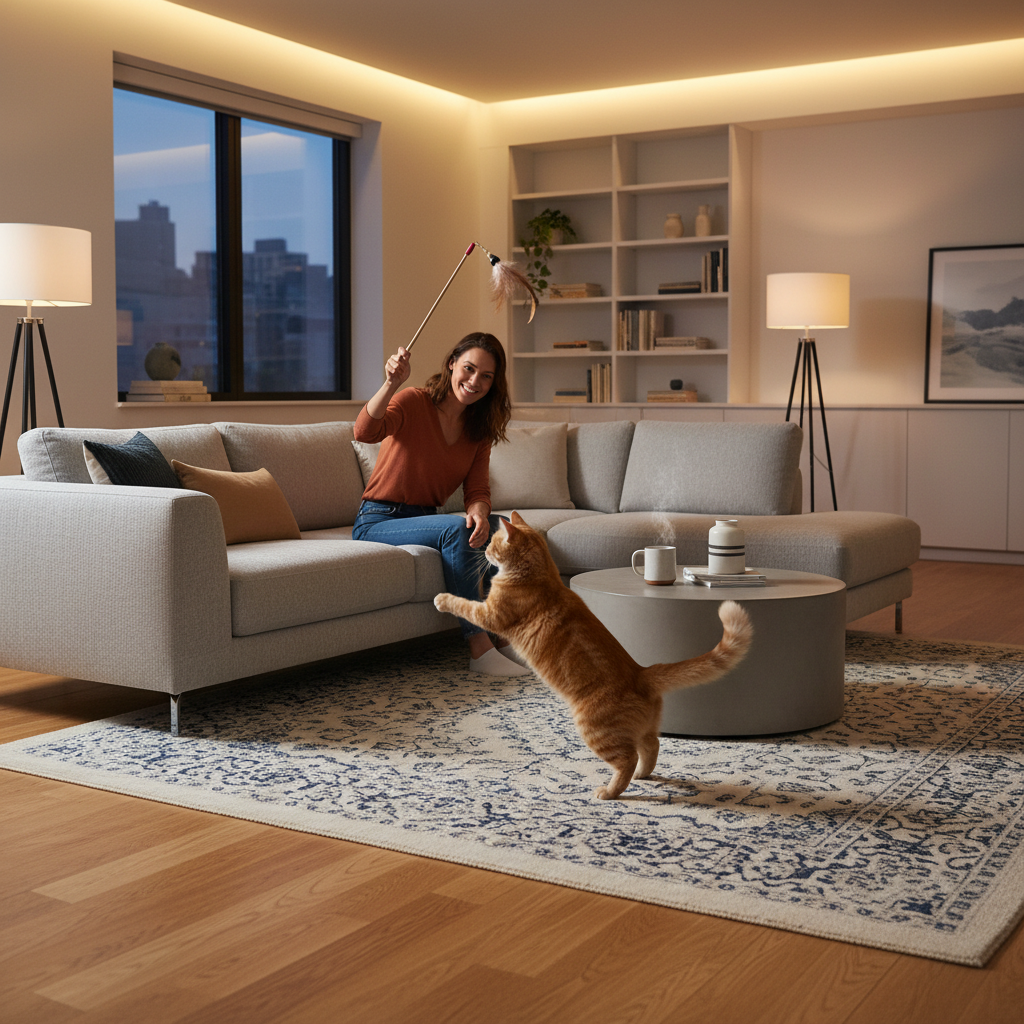
Aim for 10–20 minutes, 1–2 hours before you go to bed. Use wand toys, feathers, or anything that gets sprinting and pouncing.
- Keep the toy moving like prey: hide, dart, pause, then escape.
- Let your cat “win” at the end, then offer a small treat to finish the sequence.
- If your cat gets overstimulated, do shorter bursts with breaks.
Step 2: Feed the biggest meal after play
For many cats, a larger evening meal helps them settle. You’re leveraging the natural “hunt → eat → groom → sleep” rhythm. If your cat eats too fast, use a puzzle feeder or slow feeder to stretch the meal.
Step 3: Create a clear “lights out” signal
Pick a repeatable cue: dim lights, white noise, same bedtime phrase, then no engagement. The cue matters because it reduces negotiation.
- Offer a final bathroom break for cats who sleep in your room.
- Place a cozy bed near you if your cat wants proximity.
- Keep your response identical every night.
Fix the two biggest wake-up triggers: food and attention
Most households get stuck here: you can do great play sessions, but if your cat gets rewarded for waking you, the habit persists. The goal is to make night waking unprofitable while meeting needs earlier.
Use feeding strategy instead of willpower
- Timed feeder for early risers: a small pre-dawn meal can break the “wake human = breakfast” link.
- Split dinner: half after play, half right before bed if your cat begs later.
- Protein-forward, vet-appropriate diet: some cats stay satisfied longer, but diet changes should be discussed with a professional if your cat has medical conditions.
Stop reinforcing night noise (without turning your house into a war zone)
If you talk, pet, argue, or feed “just this once,” you may be teaching persistence. Extinction bursts happen too: the first few nights of ignoring can get louder before it improves.
- Do: use earplugs, white noise, and keep your body still and silent.
- Don’t: get up to “check” repeatedly unless you suspect a safety or health issue.
- Do: preempt needs earlier in the evening so you can ignore guilt-free.
According to the American Association of Feline Practitioners (AAFP), meeting environmental and behavioral needs is a core part of feline wellness, which is why enrichment and predictable routines often reduce problem behaviors.
Make your home more sleep-friendly (without overcomplicating it)
You don’t need a cat palace, but you do need the environment to stop “inviting” activity at 2 a.m. These are the changes that tend to pay off.
- Block night wildlife TV: close blinds, move the cat tree, or use frosted window film if outdoor cats trigger your cat.
- Night-safe enrichment: leave out a kicker toy, a quiet puzzle, or scatter a few treats in a snuffle mat earlier in the evening.
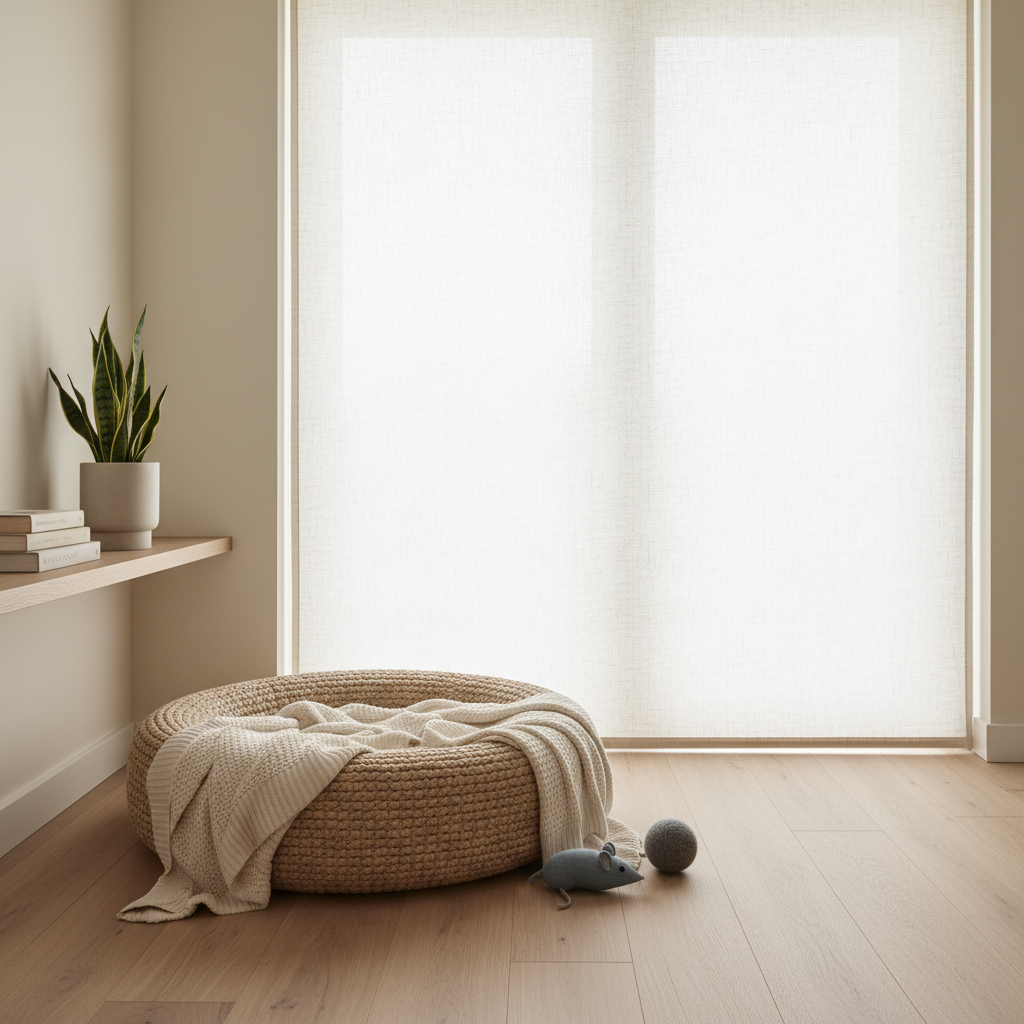
- Temperature and comfort: cats often choose warm spots; provide a heated cat bed on low (pet-safe) or a fleece blanket.
- Litter box access: if a door is closed, ensure the litter box remains reachable, otherwise scratching can be practical, not spiteful.
- Separate conflict: multi-cat homes may need more resources to reduce nighttime chasing.
What to do based on your situation (practical mini-plans)
If you want how to get cat to sleep at night to feel manageable, pick the plan that matches your pattern and run it for two weeks.
If you have “midnight zoomies”
- Evening play: 15 minutes, end with a small snack.
- Rotate toys every 3–4 days so novelty stays high.
- Add one daytime “micro-play” (5 minutes) to reduce pent-up energy.
If your cat wakes you for breakfast
- Use a timed feeder for a small early meal.
- Stop feeding immediately after you wake up; delay breakfast by 15–30 minutes so waking you isn’t the trigger.
- Shift calories: more at night, less in the morning, if appropriate.
If scratching or crying happens at closed doors
- Check basics: water, litter, safe resting spot, temperature.
- Use a door scratch guard or a mat, and ignore the scratching once needs are met.
- Provide an alternative “approved” spot near your bedroom, like a bed or perch.
If vocalizing is intense, especially in seniors
- Schedule a vet visit to rule out pain, hyperthyroidism, high blood pressure, or cognitive changes.
- Keep nightlights on low to reduce disorientation.
- Use a calmer evening routine, avoid rough play right before bed.
A simple tracking table (so you know what’s working)
Most people quit too early because they can’t see progress. Track for 10–14 days, you’re looking for fewer wake-ups and faster settling, not perfection.
| Issue | Most likely driver | What to try for 14 days | Sign it’s improving |
|---|---|---|---|
| Zoomies at 11 p.m.–2 a.m. | Unused energy, inconsistent play | Evening hunt-play + post-play meal | Shorter zoomies, settles within 10–20 min |
| Wake-ups for food | Meal timing, learned association | Timed feeder + delay human-fed breakfast | Meowing decreases, wake time shifts later |
| Door scratching | Access needs, separation stress, habit | Meet needs, protect door, no attention | Scratching shorter and less frequent |
| Pacing and yowling | Stress or medical discomfort | Vet check + calming routine | Calmer evenings, fewer long vocal spells |
Common mistakes that keep the problem alive
- Only trying to tire your cat out at bedtime: super-late play can wind some cats up instead of down.
- Changing tactics every two days: cats notice inconsistency; routines need time.
- Using punishment or spray bottles: it may increase anxiety, and anxious cats sleep worse.
- Ignoring daytime needs: a bored cat often becomes a creative nuisance at night.
- Assuming it’s “just behavior” forever: sudden changes can be medical, especially in older cats.
Quick reality check: if you’re trying how to get cat to sleep at night but you still respond sometimes, your cat may learn that louder or longer behavior works. That’s frustrating, but also fixable.
When to get professional help (and who to ask)
If your cat’s nighttime behavior is new, escalating, or paired with appetite, weight, litter box, or mobility changes, a veterinarian is the right first step. Many medical issues look like “restlessness.”
- Start with a vet exam if you suspect pain, urinary issues, increased thirst, or sudden vocalizing.
- Consider a feline behavior professional if anxiety, inter-cat conflict, or compulsive behaviors seem likely.
According to Cornell University College of Veterinary Medicine, behavior problems can have medical contributors, so ruling those out helps you avoid wasting time on the wrong fix.
Conclusion: make nights boring, meet needs earlier
how to get cat to sleep at night works best when you stop treating the night as the “battlefield” and start winning the day and evening instead: more meaningful play, smarter feeding, fewer accidental rewards, and an environment that doesn’t invite chaos.
Pick one mini-plan, track it for two weeks, and keep your response consistent. If something feels off or the behavior flips suddenly, loop in a veterinarian so you’re not guessing.
Next step: tonight, do one solid hunt-play session, feed the main meal after, then commit to a no-engagement lights-out routine for the rest of the night.