The best pet hair removers for cars aren’t the ones with the fanciest packaging, they’re the ones that match your upholstery, your pet’s coat type, and how often you actually clean.
If you’ve ever vacuumed for 20 minutes only to see hair still woven into carpet loops or stuck to seat fabric like Velcro, you already know the problem isn’t laziness, it’s friction, static, and the wrong tool for the surface.
This guide breaks down what works in real cars, what tends to disappoint, and how to build a quick routine so you’re not doing a full detail every weekend.
How pet hair behaves inside a car (and why it’s hard)
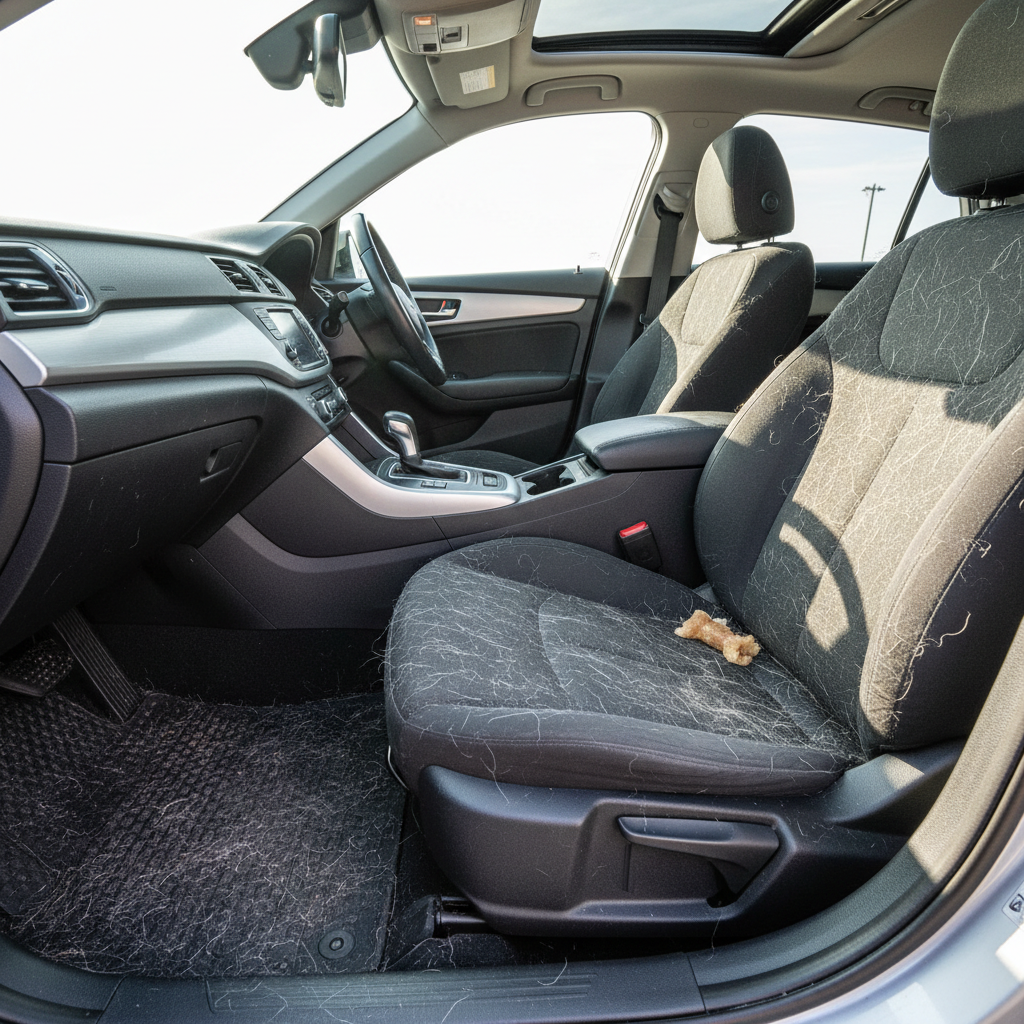
Pet hair is lightweight, slightly barbed, and it loves textured surfaces. Cloth seats, trunk liners, and carpeted floors give hair thousands of tiny “grab points,” while static electricity helps it cling even when you think you’ve loosened it.
Leather and vinyl are easier, but hair still hides in seams, around seat rails, and along the edge where carpet meets plastic trim.
- Cloth + loop carpet: most stubborn, usually needs a rake or rubber tool before vacuuming.
- Leather/vinyl: fastest cleanup, often a rubber brush or slightly damp microfiber works.
- Velour/alcantara-like materials: can be delicate, test tools gently to avoid fuzzing.
According to the American Kennel Club (AKC), shedding varies widely by breed, coat type, and season, which is why the “best” solution often depends on your dog or cat, not just your car.
Quick self-check: what you should buy based on your car
Before you click “add to cart,” take 60 seconds and be honest about your surfaces and habits. This tiny step saves money and frustration.
Pick your main surface
- Mostly carpet and cloth: prioritize a rubber rake/brush + crevice-capable vacuum.
- Mostly leather with a carpeted floor: rubber brush + lint roller for touch-ups works well.
- You carry pets in the trunk: get a tool that reaches corners and textured liners.
Pick your cleaning cadence
- Weekly: manual remover + quick vacuum is enough for many households.
- Monthly or less: you’ll want stronger mechanical help (rake + powerful vacuum).
Best pet hair removers for cars in 2026 (by tool type)
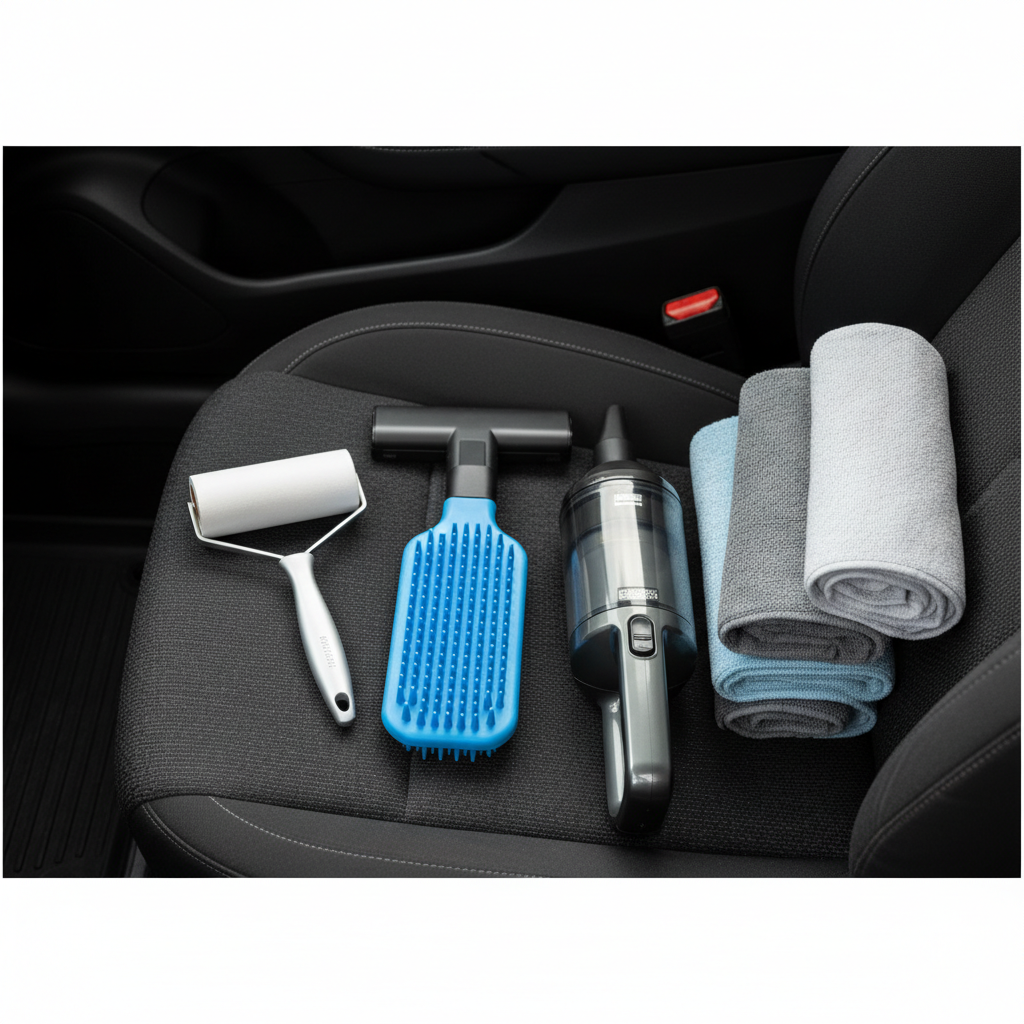
Rather than pretending there’s one winner, here’s what consistently performs by category. The smartest setup is usually a two-tool combo: loosen hair first, then vacuum or lift residue.
| Tool type | Best for | What to watch |
|---|---|---|
| Rubber brush / rubber rake | Carpet, cloth seats, trunk liners | Some rakes are too aggressive on delicate fabrics |
| Reusable pet hair roller | Seats, headliners, quick mid-week touch-ups | Struggles on deep carpet, needs emptying/cleaning |
| Sticky lint roller | Spot cleaning, finishing passes | Ongoing refill cost, weak on embedded hair |
| Pumice-style stone (auto-safe variant) | Some durable carpets and mats | Can scratch plastics or damage fragile fibers, test first |
| Vacuum with pet attachments | Final removal, crevices, seams | Without agitation, it can leave “woven-in” hair behind |
1) Rubber brush/rake: the workhorse for embedded hair
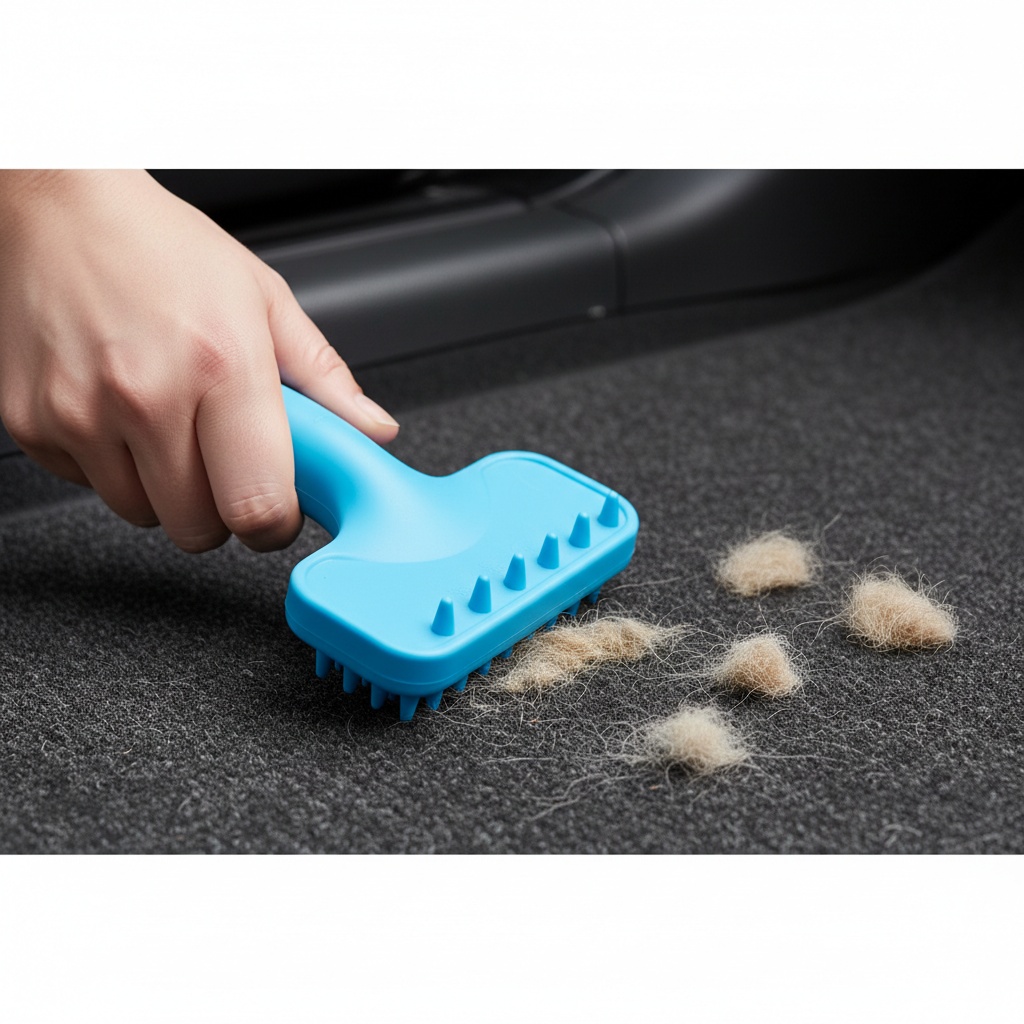
If you’re dealing with hair that looks “stitched” into carpet, rubber is usually your best starting point. The friction clumps hair into piles you can grab, then the vacuum finishes the job.
- Use short strokes in one direction, then cross-hatch lightly.
- Vacuum after you’ve made visible piles, not before.
- For cloth seats, use lighter pressure and avoid aggressive edges.
2) Reusable rollers: best for sanity-level maintenance
These are great when you want your car to look acceptable fast. They’re not magic on trunk carpet, but they shine on seats, seatbacks, and areas where pets sit most.
- Keep one in the door pocket for quick passes before guests ride.
- Empty it often, performance drops when the chamber fills.
3) Sticky lint rollers: the finishing tool, not the main tool
Sticky rollers are perfect for the last 10%. If you try to use them for the entire car, you’ll burn through sheets and still miss the embedded hair.
- Great on leather, great on clothing, decent on cloth seats.
- Not great on floor carpet unless hair is already loosened.
4) Vacuums: choose suction plus the right nozzle
For car use, attachments matter as much as suction. A crevice tool and a small brush head help you reach seams and rails where hair accumulates.
According to the U.S. Environmental Protection Agency (EPA), regular cleaning can help reduce dust and allergens indoors; in-car cleaning isn’t identical to home air quality, but many people notice less irritation when they keep upholstery and mats cleaner. If allergies or asthma are a concern, it’s sensible to take a cautious approach and consider asking a clinician for individualized advice.
A simple 15-minute routine that actually works
This is the sequence many people miss: if you vacuum first, you can waste time because the hair is still anchored. Loosen, gather, then vacuum.
Step-by-step
- Step 1: Pull out floor mats, shake them outside.
- Step 2: Use a rubber brush/rake on carpet and cloth areas until hair forms clumps.
- Step 3: Vacuum clumps and edges, then hit seams and rails with a crevice tool.
- Step 4: Finish with a reusable roller or sticky roller on seats and seatbacks.
- Step 5: Wipe hard plastics with a slightly damp microfiber to pick up strays.
Common mistakes that make pet hair removal harder
A lot of “pet hair remover doesn’t work” complaints come down to tool mismatch or the order of operations. A few traps show up over and over.
- Skipping agitation: vacuuming alone often leaves embedded hair behind.
- Using overly harsh tools on delicate fabric: pumice-style tools can be effective, but some interiors won’t tolerate them.
- Cleaning when everything is bone-dry and staticky: a slightly damp microfiber on leather/vinyl can help lift hair without smearing.
- Ignoring seams and rails: hair collects where seat tracks meet carpet, so plan for crevices.
- Expecting one tool to do 100%: the best pet hair removers for cars usually work as a combo.
When it’s worth stepping up to professional detailing
If your car has months of compacted hair in trunk carpet, or you’re dealing with odors and stains along with shedding, a pro detail can be the reset button. Many detailers use compressed air, specialized brushes, and extractors that are hard to replicate at home.
Also consider professional help if you suspect mold, persistent moisture under mats, or if cleaning triggers breathing issues. In those cases, it’s reasonable to be cautious and consult a professional detailer, and for health concerns, a qualified medical professional.
Key takeaways (so you can pick fast)
- Carpet and cloth: start with a rubber rake, then vacuum, then finish with a roller.
- Leather/vinyl: rubber brush plus microfiber works, rollers are great for quick touch-ups.
- Don’t overbuy: two solid tools beat a drawer full of gimmicks.
- Routine matters: 15 minutes weekly is easier than a 2-hour rescue clean.
Conclusion: what to buy first in 2026
If you’re building a starter kit, buy a rubber pet hair brush/rake and pair it with a vacuum that has a crevice tool, then add a reusable roller for quick maintenance. That combo covers most interiors without turning every cleanup into a project.
If you want one immediate action, do this: pull the mats, rake the carpet until you see piles, then vacuum. It’s the fastest way to see real progress and it makes every other tool work better.
FAQ
What are the best pet hair removers for cars with cloth seats?
A rubber brush or rake usually does the heavy lifting on cloth, then a vacuum and a roller finish. Cloth tends to trap hair, so agitation matters more than suction alone.
Do reusable pet hair rollers work on car carpet?
Sometimes, but they’re better on seats and flatter areas. On deep or looped carpet, they often glide over embedded hair unless you loosen it first.
Is a pumice stone safe for removing pet hair in a car?
It can work on some durable carpets, but it’s easy to scuff plastics or rough up delicate fibers. If you try one, test a hidden corner and use very light pressure.
What vacuum attachment helps most with pet hair in cars?
A crevice tool for rails and seams, plus a small brush head for agitation. The “right nozzle” is often the difference between a clean look and hair stuck in corners.
How do I get pet hair out of car seat seams?
Use a crevice tool slowly, then follow with a roller. For stubborn strands, a soft brush can help lift hair before vacuuming.
How often should I remove pet hair from my car?
Weekly light maintenance is easier than waiting a month. If your pet sheds heavily or rides daily, quick touch-ups mid-week keep it from getting embedded.
What’s the easiest way to prevent pet hair buildup in a car?
Use a washable seat cover or hammock where your pet sits most, and shake out mats regularly. Prevention won’t eliminate cleaning, but it reduces how deep hair works into fabric.
If you’re trying to choose between a few tools and want a setup that fits your exact interior, pet coat type, and cleaning tolerance, it may help to map your “hot zones” first, then build a small kit around those areas instead of chasing one miracle remover.