
cat self grooming wall brush sounds simple, but most “it didn’t work” complaints come down to two things: the wrong brush style for your cat’s coat, or the wrong placement in your home. When the setup fits your cat’s habits, it can help catch loose fur between full brushing sessions and give your cat a quick, low-effort massage.
If you’re dealing with tumbleweeds of hair, stressy grooming sessions, or a cat that bolts the moment a brush appears, a wall-mounted self-groomer is often worth a try. It doesn’t replace regular brushing for many coats, but it can reduce the day-to-day buildup and make grooming feel like the cat’s idea.
This guide breaks down what these brushes realistically do, how to tell whether your cat will use one, and what to adjust if your cat ignores it. I’ll also flag common safety issues, because “sticky tape + cat fur” is not the kind of experiment you want to run.
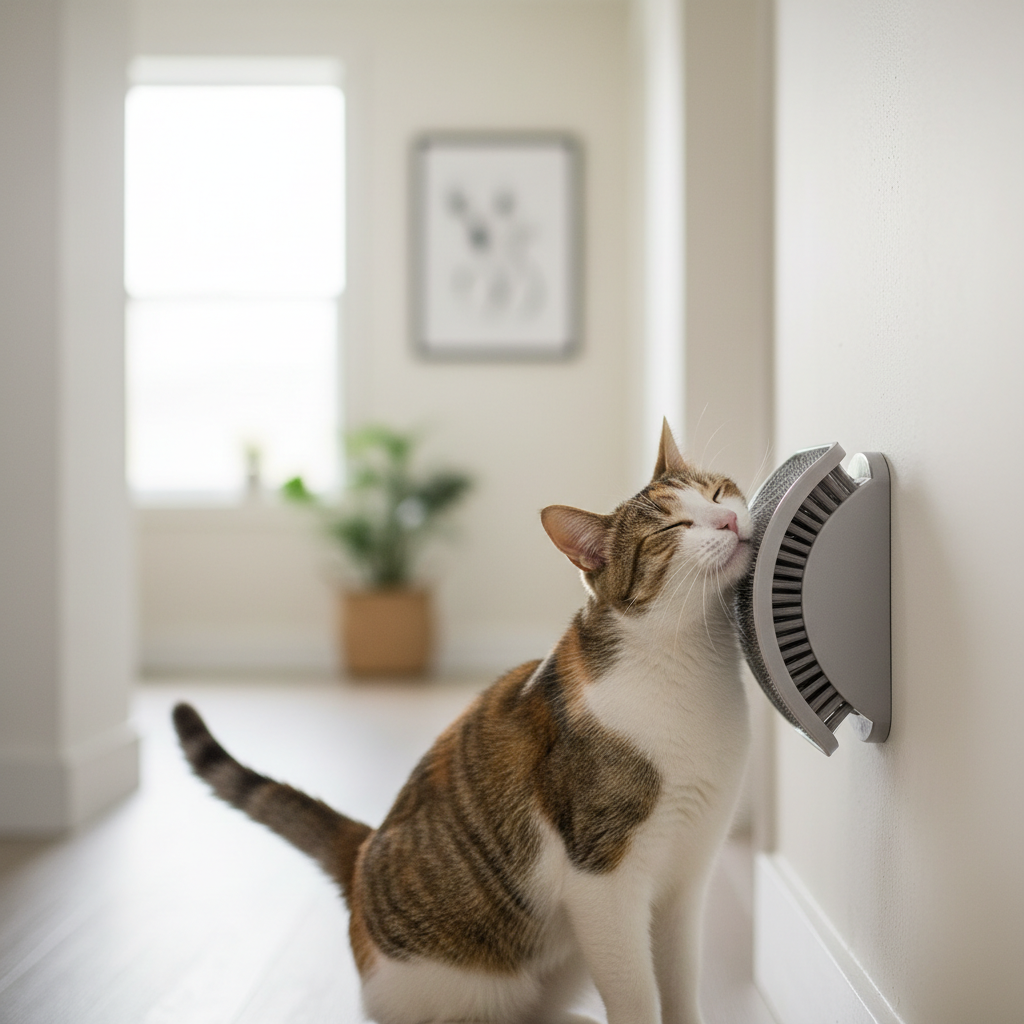
What a wall-mounted self-grooming brush actually does (and what it doesn’t)
A wall brush works best as a “micro-grooming station.” Your cat rubs cheeks, neck, shoulders, and sometimes flanks, the bristles grab loose hair, and the pressure can feel like a scratch in the exact spot they can’t reach easily.
What it usually does well:
- Catches loose topcoat from casual rubs, especially during seasonal shedding.
- Adds enrichment for cats that like face rubbing and scent-marking.
- Turns grooming into a routine if placed on a route your cat already uses.
What it often won’t do on its own:
- Fix heavy undercoat shedding (common in many double-coated cats) without additional brushing.
- Remove mats; if anything, it can snag on existing tangles.
- Replace vet care if shedding spikes suddenly, the coat looks dull, or skin seems irritated.
According to the American Veterinary Medical Association (AVMA), changes in coat condition or skin issues can be linked to underlying health problems, so if you see redness, bald patches, or intense itching, it’s smart to check in with a veterinarian rather than just swapping grooming tools.
Why cats love it—or ignore it: the real-world reasons
Cats are picky, and a cat self grooming wall brush gets judged in about three seconds. If it doesn’t “hit right,” they’ll walk away and never think about it again.
Common reasons it works
- It’s on a high-traffic path: near a doorway, hallway corner, or the edge of a favorite room.
- The bristles match the coat: not too stiff for short-haired cats, not too flimsy for thick coats.
- It’s positioned at the right height: cheek level and slightly below the neck for many cats.
Common reasons it fails
- Placed where the cat doesn’t linger, like behind furniture or in a noisy laundry area.
- Too much “new object” energy: strong plastic smell, wobbly mounting, or a sudden introduction.
- Bad first impression: bristles poke, tug fur, or catch whiskers when the cat turns.
One more thing people underestimate: some cats prefer grooming pressure on the cheeks and chin only. If your brush sits where they’d need to rub their side, they might never engage.
Quick self-check: is your cat a good candidate?
Before you buy (or before you blame the brush), use this quick checklist. If you hit several “yes” answers, odds are decent your cat will use it.
- My cat regularly rubs cheeks on furniture corners or door frames. (Yes/No)
- My cat sheds steadily, especially on neck/shoulder areas. (Yes/No)
- My cat tolerates touch around the face and neck. (Yes/No)
- I can mount something securely at cat height without it wobbling. (Yes/No)
- I’m willing to clean hair off the brush a few times per week. (Yes/No)
If your cat has mats, skin sensitivity, or reacts to touch with swats or flinching, you can still try a wall brush, but you’ll want a gentler bristle type and a slower intro. In some situations, it’s better to ask a groomer or veterinarian for guidance first.
Choosing the right wall brush: a practical comparison
Most options look similar online, but the small differences matter. Here’s a simple table you can use while shopping.
| Feature | Why it matters | What to look for |
|---|---|---|
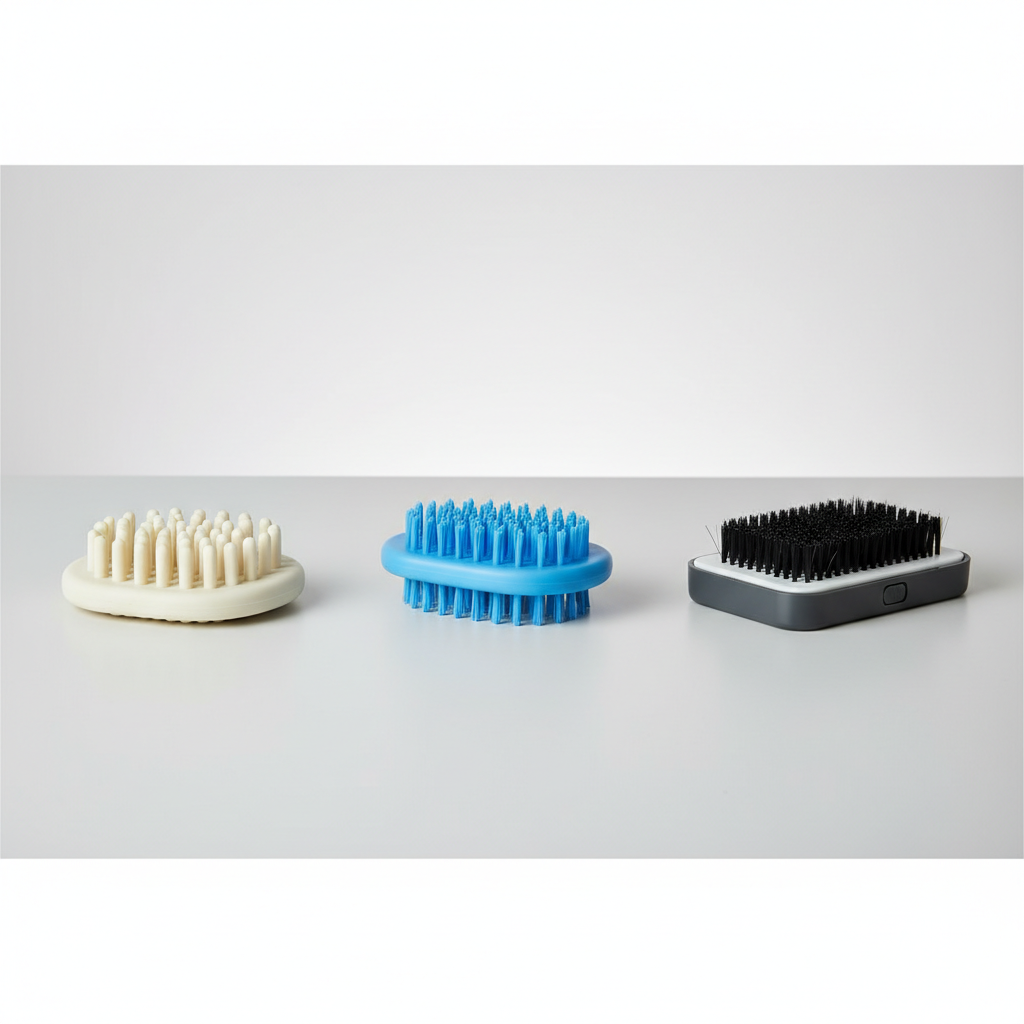
| Bristle material | Comfort + hair pickup | Soft silicone for sensitive cats, medium plastic for general shedding |
| Removable panel | Cleaning speed | Snap-off or slide-out insert you can rinse and dry |
| Mounting method | Stability + wall safety | Screws for long-term stability, strong adhesive for rentals (if truly secure) |
| Corner-friendly shape | Natural rubbing angles | Curved or L-shaped designs for door frames and corners |
| Size | Coverage | Wide enough for cheek/neck contact without forcing awkward posture |
If you already own a cat self grooming wall brush that feels “meh,” the easiest upgrade is often not a new product, it’s a different location and height. The second easiest is choosing a softer bristle insert if your cat seems hesitant.
Placement and setup that actually gets use
Placement is where most people win or lose. Put it where your cat already performs “drive-by rubs,” not where you wish they spent time.
High-success spots in many homes
- On the corner your cat rounds when entering a favorite room
- Near the side of a scratching post (not directly on it if it wobbles)
- Beside a food area, but not so close that hair can drop into bowls
- At the end of a hallway where cats naturally slow down
Height and angle tips
- Start at cheek level when your cat stands naturally.
- If your cat is long-bodied, mount slightly lower so the neck and shoulder can hit it without crouching.
- Keep it rock solid; any wobble can scare cautious cats off for weeks.
For rentals, adhesive mounting can be fine, but only if it truly holds. If you feel the brush shift when you press it, your cat will feel it too, and they typically won’t “practice” until it feels safe.
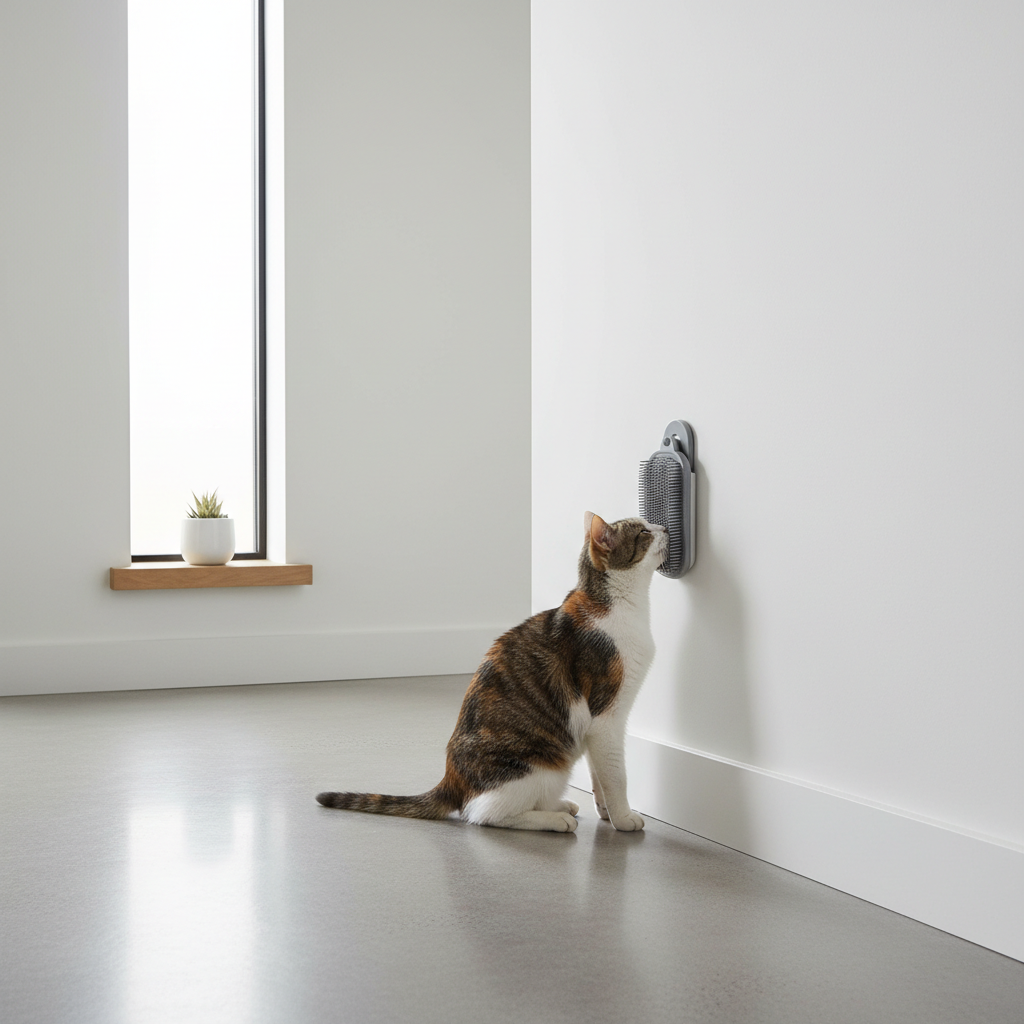
How to introduce it (without making your cat suspicious)
Some cats use it immediately. Many don’t. A low-pressure introduction usually beats “look, I bought you something!” energy.
- Let it sit for a day at floor level so it loses the new smell.
- Mount it securely, then walk away, don’t hover.
- Rub a tiny bit of your cat’s cheek scent on it using a soft cloth, or use a small amount of catnip if your cat responds to it.
- Reward the approach, not just rubbing: treat when they sniff it, then again when they brush against it.
If your cat seems wary, don’t push their face into the bristles. That single moment can turn the brush into “that weird thing humans do” instead of a self-service station.
Cleaning, maintenance, and safety (the unglamorous part)
A wall brush works because it collects hair. If you never clean it, it stops collecting, and some cats stop using it because the bristles feel clogged and greasy.
Basic cleaning routine
- Remove fur by hand every 1–3 days during heavy shedding, weekly when shedding is lighter.
- If the insert is washable, rinse with warm water and mild soap, then dry fully before reattaching.
- Wipe the wall around it occasionally; hair and dander can build up in corners.
Safety watch-outs
- Skin irritation: if you notice redness, scabs, or your cat avoids the area, stop use and consider asking a veterinarian.
- Overgrooming behaviors: excessive rubbing can sometimes signal itchiness from fleas, allergies, or dry skin, so treat the cause, not just the symptom.
- Loose adhesive: if it falls, some cats become fearful of that corner, and you’ll spend time rebuilding trust.
According to the American Society for the Prevention of Cruelty to Animals (ASPCA), skin problems and persistent itching can have multiple causes, so if your cat’s grooming seems frantic or out of character, professional input is often more helpful than adding more grooming tools.
Key takeaways and a simple action plan
If your main goal is less fur on the couch and fewer wrestling matches with a hand brush, a cat self grooming wall brush can be a practical add-on, not a miracle replacement. The “secret” is matching bristle feel to coat type, then mounting it where your cat already rubs.
- Pick comfort first: cats won’t use what feels pokey or unstable.
- Placement beats price: corners and paths win over hidden spots.
- Clean it often: a clogged brush becomes decoration.
Do this this week: choose one high-traffic corner, mount the brush at cheek height, and run a 7-day test with low-pressure rewards. If your cat ignores it after thoughtful placement changes, that’s not failure, it just means your cat prefers other grooming formats.
FAQ
Where should I place a self grooming wall brush for my cat?
Pick a corner your cat already rubs on, like a hallway turn or a door frame near a favorite room. A “perfect” spot on paper won’t beat a place your cat uses daily.
Will a wall brush reduce shedding in my house?
It can reduce loose fur that would otherwise drop onto floors and furniture, especially around the head and shoulders. For heavy undercoat shedding, you’ll likely still need regular brushing.
Is a cat self grooming wall brush safe for kittens?
Often yes if the bristles are soft and the mount is stable, but kittens can be clumsy and may chew or paw at new objects. If you see chewing or any irritation, pause use and consider a different style.
My cat ignores the wall brush—how long should I wait?
Give it about a week with a couple of placement adjustments and small rewards for investigation. If your cat is cautious by personality, it may take longer, but forcing interaction usually backfires.
Should I use catnip to get my cat to use it?
Catnip can help if your cat responds to it, but keep it light. Too much can make some cats overstimulated, and then the brush becomes a “zoomies trigger” instead of a calm grooming spot.
How do I clean a wall-mounted cat brush?
Pull off the collected fur regularly, then wash the removable insert if the product allows it. Make sure it dries fully; damp bristles can smell off and some cats will avoid it.
Can a wall brush cause hair loss or skin problems?
It shouldn’t in normal use, but if your cat has sensitive skin, allergies, fleas, or existing irritation, rubbing can worsen it. If you notice redness, sores, or intense itching, stopping use and consulting a veterinarian is a safer move.
If you’re trying to make grooming feel easier in a busy household, it helps to treat the wall brush like a “behavior + setup” project: pick a better corner, dial in height, and keep the surface clean so it stays inviting. If you want, share your cat’s coat type and where they already rub in your home, and I can suggest a placement plan that tends to work in similar setups.