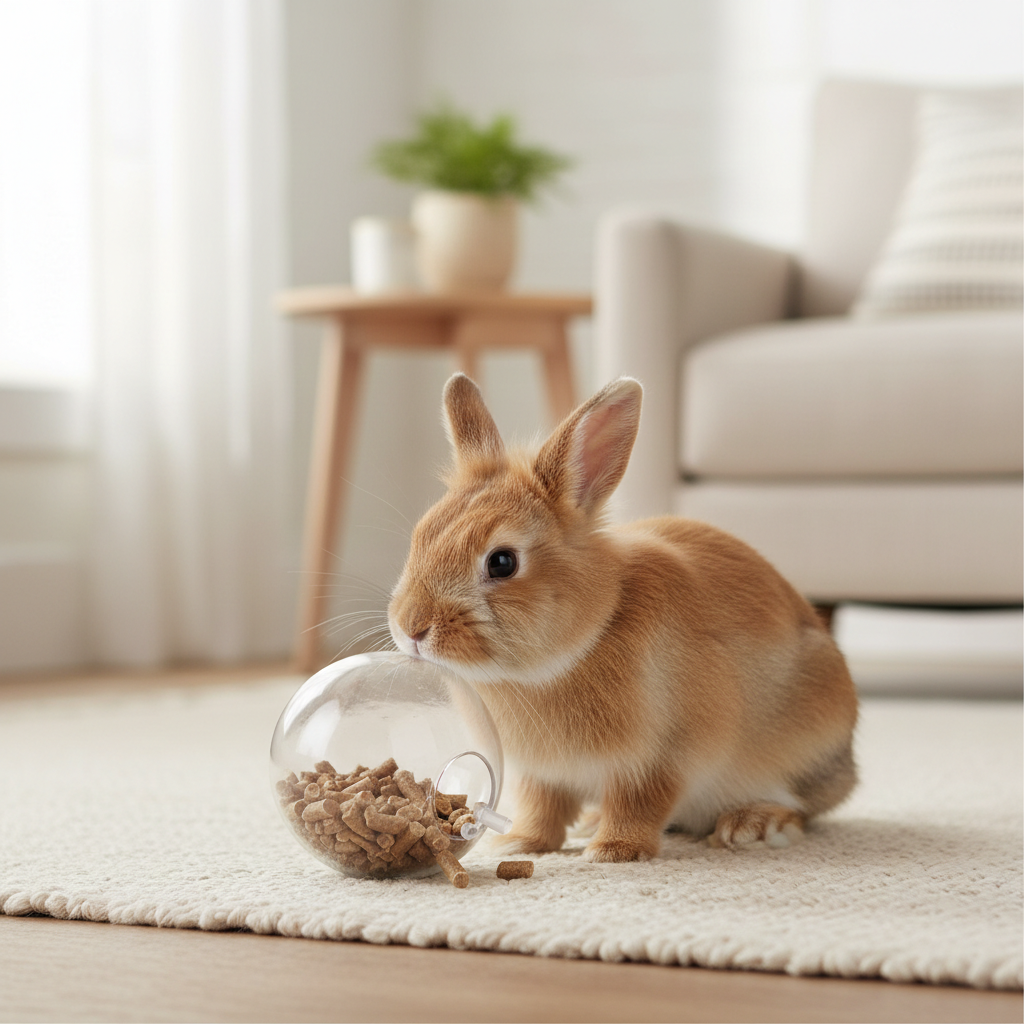
rabbit treat ball food dispensing toys can be a simple fix when your rabbit seems bored, begs for snacks all day, or finishes pellets in 30 seconds flat. Used well, they turn “eating” into “doing,” which is the whole point of enrichment.
What makes this worth your time is that many behavior issues people call “attitude” are really routine problems: not enough foraging, meals too easy, and too many calories arriving without effort. A treat ball won’t solve everything, but it often improves a rabbit’s day faster than adding yet another toy that gets ignored.
One common misconception: any ball + any food works. In reality, the wrong size holes, the wrong food, or the wrong surface can mean frustration, messy carpets, or a rabbit that gives up after two tries. This guide helps you pick a ball that fits your rabbit, set it up so they succeed, and keep it safe.
Why treat-ball feeding works for many rabbits
In the wild, rabbits spend a lot of time grazing and foraging. A bowl compresses that into a minute, then the rabbit has hours with nothing to “work on.” A dispensing ball recreates a tiny part of the foraging loop: sniff, push, search, repeat.
- Slows eating for rabbits that inhale pellets, which may help some rabbits avoid stomach upset, though health questions should go to a rabbit-savvy veterinarian.
- Reduces boredom in smaller spaces or during bad weather when free-roam time shrinks.
- Builds confidence for timid rabbits, because the toy provides a predictable “I did it” reward.
- Supports weight management when it replaces some hand-fed treats, not when it adds extra calories.
According to the AVMA (American Veterinary Medical Association), environmental enrichment supports animal welfare by encouraging species-typical behaviors. For rabbits, that usually means opportunities to forage and explore, not just new objects placed in the pen.
Choosing the right food-dispensing treat ball (what matters, what doesn’t)
Shopping for these toys can feel silly because they all look similar, but a few details decide whether your rabbit loves it or quits.
Key features to prioritize
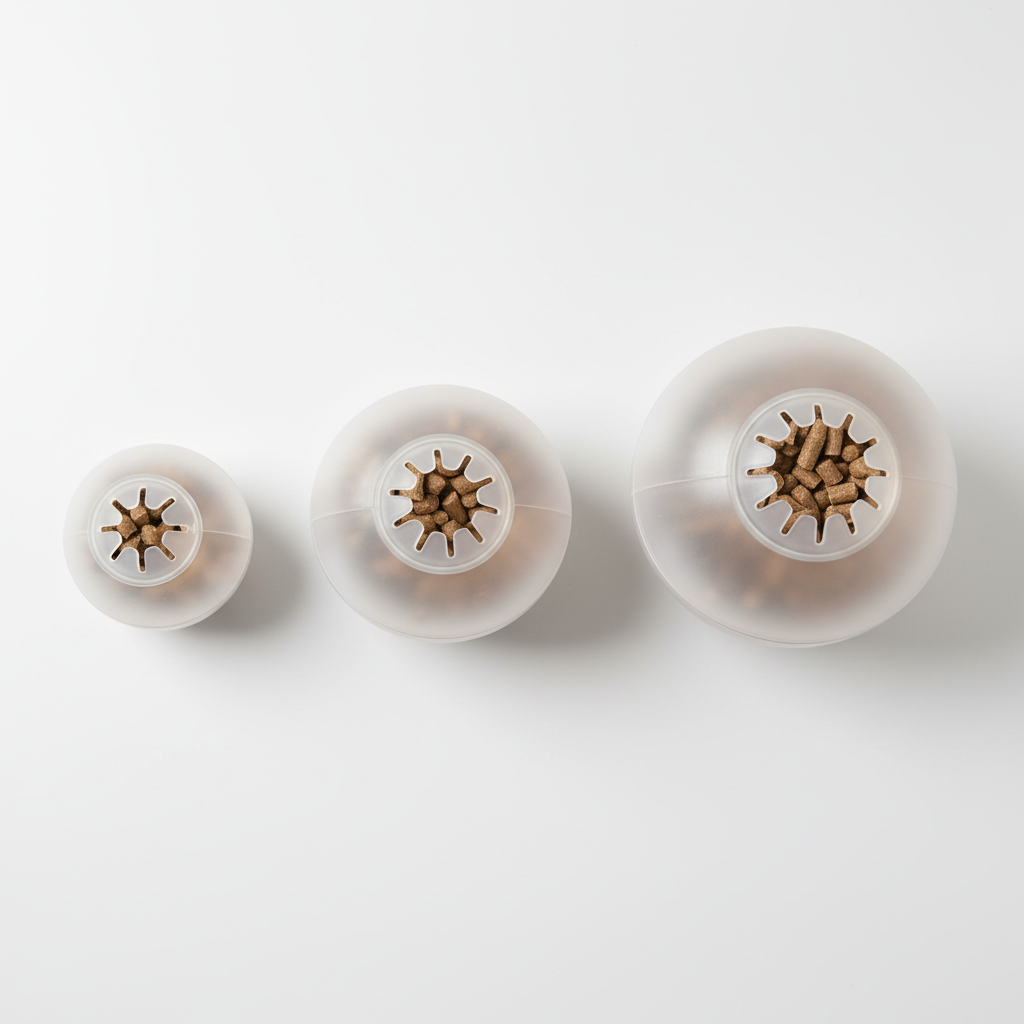
- Adjustable openings: lets you start easy, then tighten as your rabbit learns.
- Stable roll: some balls “skitter” and annoy rabbits, especially on slick floors.
- Easy to clean: pellets create dust; treat residue turns sticky fast.
- Material safety: avoid brittle plastics that crack into sharp edges; if your rabbit is a heavy chewer, choose tougher materials and supervise early use.
Size and weight, in plain terms
If the ball is too large, small rabbits can’t get leverage. Too light, and a strong rabbit can fling it, then you’re chasing pellets under furniture. As a quick rule, you want a ball your rabbit can move with a nudge, but not launch across the room.
Quick self-check: is a treat ball a good fit for your rabbit?
Some rabbits take to rabbit treat ball food dispensing toys immediately, others need a gentler on-ramp, and a few won’t enjoy them at all. This checklist keeps expectations realistic.
- Good candidate: curious, pushes objects, steals cardboard tubes, “helps” you clean by nosing everything.
- May need training: timid, freezes with new items, easily startled by rolling sounds.
- Proceed carefully: extreme food guarding, history of anxiety, dental pain signs (drooling, selective eating) or digestive issues—consider vet guidance before changing feeding style.
If your rabbit already ignores most toys, don’t write them off. Many rabbits ignore toys that don’t “do” anything. A dispenser has a job and a payoff, which often changes the game.
Setup that actually works: step-by-step (with fewer messes)
The biggest failure mode is making it too hard on day one. A rabbit tries twice, nothing comes out, and the toy becomes furniture.
Step 1: pick the right “food” for the ball
- Best starter: your rabbit’s regular pellets (measured), because you can control calories.
- Occasional add-in: a few dried herbs or tiny treat bits, only if your rabbit tolerates them well.
- Usually avoid: sticky foods, yogurt drops, large chunks that jam openings, anything crumbly that turns to paste.
Step 2: start on an easy surface
Use a rug, foam mat, or a low-pile runner so the ball grips and doesn’t roll like it’s on ice. Tile can work, but it’s louder and may spook sensitive rabbits.
Step 3: make it “too easy” for the first session
Open the dispenser wide enough that pellets drop with gentle nudges. For the first 5–10 minutes, stay nearby, quiet, and let your rabbit figure it out without you “teaching” with your hands.
Step 4: increase difficulty slowly
Once your rabbit reliably pushes and follows the ball, tighten the opening one notch. If success drops and frustration rises, back off. This should feel like a puzzle, not a dead end.
How much to feed: practical portioning (so “enrichment” doesn’t become overeating)
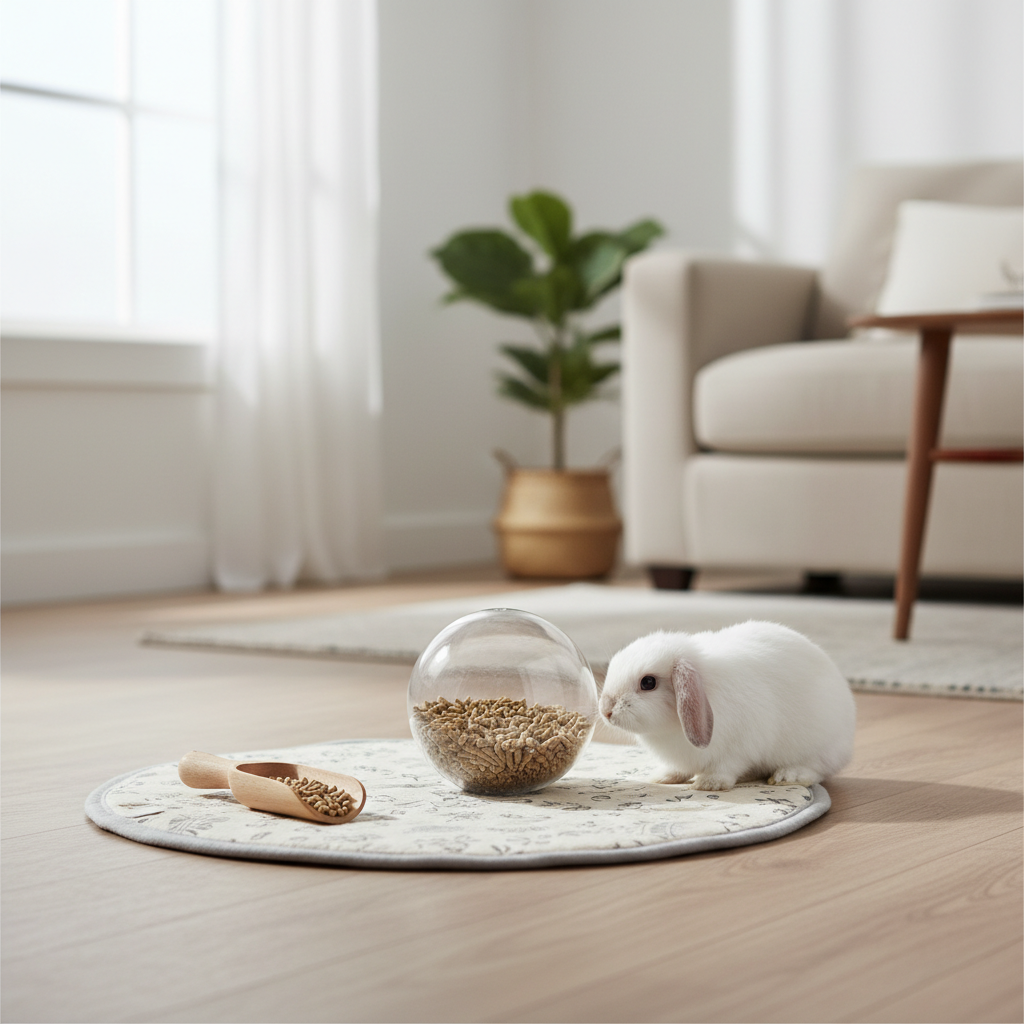
Dispensing toys are still food. The cleanest approach is to move part of the normal pellet ration into the ball, not add extra on top of the day. If your rabbit doesn’t eat pellets, you can use small, rabbit-safe reward pieces, but it’s easier to overdo calories that way.
Simple portioning table (starting point)
These ranges are intentionally conservative because needs vary by age, weight, activity, and health. For personalized guidance, a rabbit-savvy veterinarian is the safest source.
| Rabbit type | Start with treat ball portion | Frequency | What to watch |
|---|---|---|---|
| Adult on measured pellets | 10–30% of daily pellets | Once daily | Stool changes, frustration, weight trend |
| Young/growing (vet guidance matters) | Small portion only | Few times/week | Energy level, appetite consistency |
| Overweight or very food-motivated | Use measured pellets only | Daily, short sessions | Begging intensity, speed, weight checks |
| Senior or dental concerns suspected | Only if chewing seems comfortable | Occasional | Dropping food, picky eating, discomfort |
Key point: hay remains the foundation for most rabbits. Treat balls are usually a pellet or treat strategy, not a hay replacement.
Common mistakes (and how to fix them without buying a new toy)
- “My rabbit ignores it.” Put 3–5 pellets just outside the ball, then 3–5 inside with a wide opening. You’re creating a short success path.
- “My rabbit gets mad and flips it.” The puzzle is too hard or the ball is too light. Widen the opening, reduce fill level, or use a slightly heavier model.
- “Pellets end up under the couch.” Block off furniture for sessions, or use a pen panel to create a foraging lane.
- “It’s loud at night.” Use it earlier in the day, or place a mat down to dampen sound.
- “My rabbit chews the plastic.” Supervise, remove if chunks come off, and consider a more durable design. Chewing can also signal boredom, so add other enrichment too.
According to the House Rabbit Society, rabbits need daily enrichment and space to exercise, and they emphasize chewing and foraging outlets. A ball helps, but it’s one tool in a larger routine.
When to stop and ask a professional
A rabbit treat ball food dispensing routine should look like focused curiosity, not frantic behavior. Pause the toy and consider veterinary input if you see repeated signs of discomfort or health changes.
- Decreased appetite, very small stools, or no stools
- Drooling, wet chin, tooth grinding, pawing at the mouth
- Sudden aggression around food or intense guarding that escalates
- Rapid weight loss or gain
If you’re unsure whether it’s a behavior issue or a health issue, it’s usually safer to rule out pain first with a rabbit-experienced veterinarian, then fine-tune enrichment.
Practical takeaways and a simple 7-day plan
If you want this to stick, think in small reps. Five minutes of successful foraging beats a 30-minute battle with a jammed dispenser.
- Day 1–2: Wide opening, 10% of daily pellets, easy surface.
- Day 3–4: Same portion, slightly narrower opening if success stays high.
- Day 5–7: Rotate locations, add a short “scatter feed” after the ball to keep foraging interesting.
Bottom line: pick an adjustable ball, measure what goes inside, and make early sessions easy enough that your rabbit feels clever. That’s when enrichment becomes a habit instead of a gimmick.
FAQ
- How do I clean a rabbit treat dispensing ball?
Warm water and mild dish soap usually work. Rinse thoroughly and dry fully so pellet dust doesn’t turn into paste inside the seams. - Can I put hay in a treat ball?
Most balls aren’t designed for hay strands, so they jam. A better option is a hay rack plus a separate foraging mat for pellets or dried herbs. - My rabbit eats too fast—will a dispensing toy help?
Often it helps by adding effort between bites, but speed can be habit or stress too. If fast eating comes with digestive trouble, a vet check is sensible. - What if my rabbit is scared of the rolling sound?
Start on a soft mat, use fewer pellets so it rattles less, and let the ball sit nearby (no movement) for a day so it becomes “normal” before you expect interaction. - Is rabbit treat ball food dispensing safe for bonded pairs?
Sometimes, but watch for competition. Many pairs do better with two balls, more space, and short supervised sessions to prevent squabbles. - How long should a session last?
For many rabbits, 5–15 minutes is plenty. Stop while they’re still engaged so the toy keeps its value. - What pellets work best inside these balls?
Uniform, small pellets typically dispense more smoothly than mixed shapes. If your pellets are large, you may need a ball with a bigger adjustable opening.
If you’re trying to build a calmer daily routine, or you want enrichment that doesn’t require constant supervision, start by measuring one meal’s pellets and using that as your dispenser session for a week, then adjust based on your rabbit’s interest and body condition.