Dog boot socks for indoor floors are one of the simplest ways to reduce slipping on hardwood while also lowering the chance of nail marks and frantic “scrabble runs” across the living room.
If you’ve watched your dog lose traction on smooth flooring, you already know it’s not just annoying, it can be stressful for them, especially for seniors, post-surgery dogs, or pups that panic when their feet slide out.
This guide breaks down what actually matters when buying indoor boot socks, how to tell whether your dog needs them, and how to make them stay on without turning every walk to the water bowl into a wrestling match.
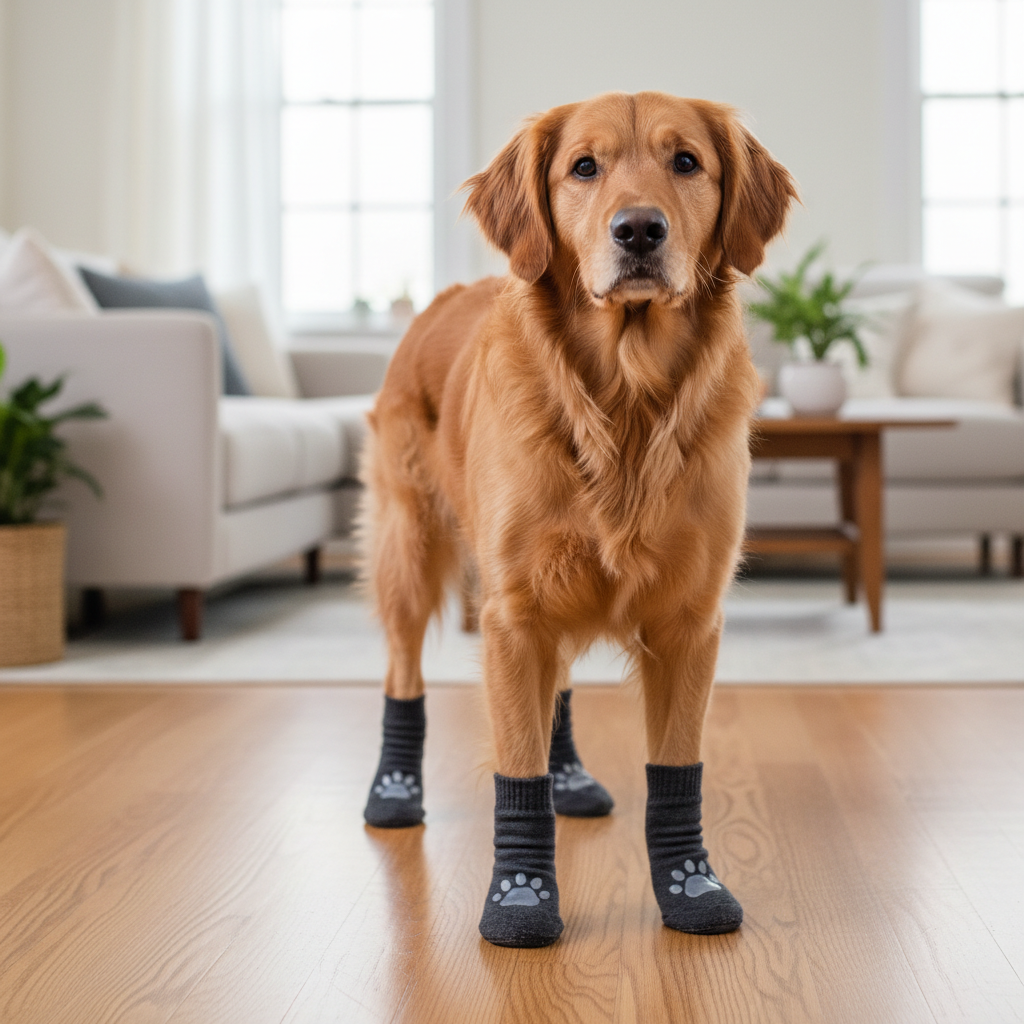
Why dogs slip on hardwood (and why socks often work)
Hardwood, laminate, and polished tile look great, but they can be unforgiving under paws. Most dogs get traction from a mix of paw pad texture, nail contact, and micro-grip from the surface. When that balance fails, you see sliding, splaying toes, or a hesitant “tiptoe” gait.
Common real-world reasons include:
- Smooth finish + dust: even clean floors can act like a low-friction surface.
- Hair between paw pads: fur can behave like little rollers if it grows long.
- Overgrown nails: nails push pads off the floor, reducing natural grip.
- Age, arthritis, or weakness: dogs may compensate, then slip more.
- High-speed turning: zoomies on hardwood are basically drift racing.
Boot socks help because they add a grippy layer (usually silicone or rubberized tread) and can stabilize the paw slightly. They’re not magic, but for many homes they’re a very practical middle ground between “do nothing” and covering your house in rugs.
According to the American Kennel Club (AKC), nail and paw care are important parts of preventing discomfort and mobility issues, and traction on slick surfaces can be a factor for some dogs.
Quick self-check: does your dog actually need indoor boot socks?
Some dogs slip once in a while and move on. Others start avoiding rooms, which becomes a quality-of-life problem. Use this quick check to decide whether dog boot socks for indoor floors are worth trying.
Signs socks may help
- Your dog slides when standing up or sitting down on hardwood.
- They hesitate at the doorway to a slick room.
- You hear nails “clicking” and see small skid marks on turns.
- They scramble on stairs or at the top/bottom landing.
- They recently had an injury or surgery and seem unstable.
Signs you may need a different solution
- Your dog won’t tolerate anything on paws after multiple calm attempts.
- They have open sores, swelling, or broken nails (socks can rub).
- They knuckle over, drag paws, or show new weakness (talk to a vet).
When slipping looks sudden or severe, don’t chalk it up to “clumsiness.” It can be pain, neurological changes, or strength loss. A professional opinion is the right next step in a lot of those cases.
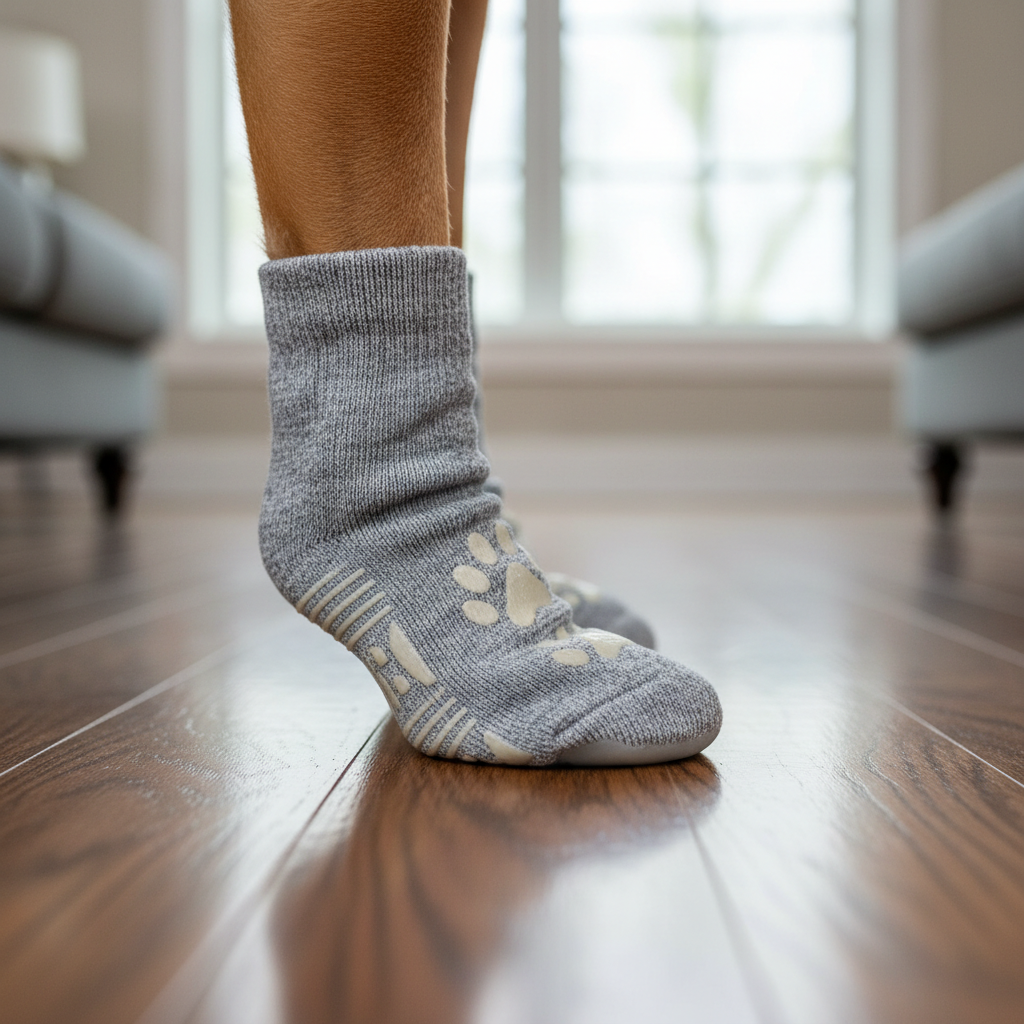
How to choose dog boot socks for indoor floors (what matters most)
Most product pages talk about “anti-slip” like it’s one feature. In practice, traction depends on grip design, fit, and how your dog moves.
1) Grip pattern and coverage
Look for grips that cover a meaningful portion of the bottom, not just a small logo patch. For hardwood, wider silicone coverage often holds up better when the dog pivots or pushes off.
- Full-sole grips: better for dogs that slip during turns.
- Dot grips: can work, but may wear faster on active dogs.
- Dual-side grips: useful if socks rotate (common issue).
2) Fit and staying power
Fit is the whole game. Too loose and they spin. Too tight and they cut circulation or irritate dewclaws.
- Measure paw width while your dog stands (pads spread under weight).
- If your dog sits a lot, check for bunching at the ankle.
- Prefer socks with adjustable straps if your dog has narrow ankles.
3) Fabric choice for indoor use
For indoor hardwood, you usually want comfort and breathability over heavy protection.
- Cotton blend: comfortable, easier on sensitive skin, may stretch over time.
- Polyester blend: often more durable and holds shape better.
- Thicker knit: warmer, sometimes more stable, can overheat some dogs.
4) Nail-friendly design
If nails are long, they’ll press through fabric, changing traction and increasing tearing. Even the best dog boot socks for indoor floors struggle when nails act like tiny stilts, so treat nail trimming as part of the “product.”
Comparison table: socks vs. other traction options
Boot socks are not the only path. Here’s how they compare to common alternatives in real homes.
| Option | Best for | Pros | Watch-outs |
|---|---|---|---|
| Grip boot socks | General indoor traction on hardwood | Easy to try, less bulky than boots, can protect floors from nails | May twist/fall off, some dogs dislike paw coverings |
| Area rugs/runners | High-traffic paths, senior dogs | Works for most dogs, no “wearing” required | Cleaning, tripping edges, may not cover whole room |
| Paw pad traction wax | Light slipping, occasional use | No clothing, fast application | Can track residue, varies by floor finish |
| Toe grips (rubber rings) | Some seniors, dogs tolerant of handling | No sock bulk, consistent contact | Fitting can be fiddly, may not suit all nail shapes |
| Indoor dog boots | Needing more structure/support | More stable, more protective | Bulkier, higher cost, harder to size |
Getting socks on (and keeping them on): a practical routine
The mistake most people make is trying socks for the first time right before a busy morning. Dogs pick up on that urgency and resist more. Give it a calm, low-stakes setup.
Step-by-step
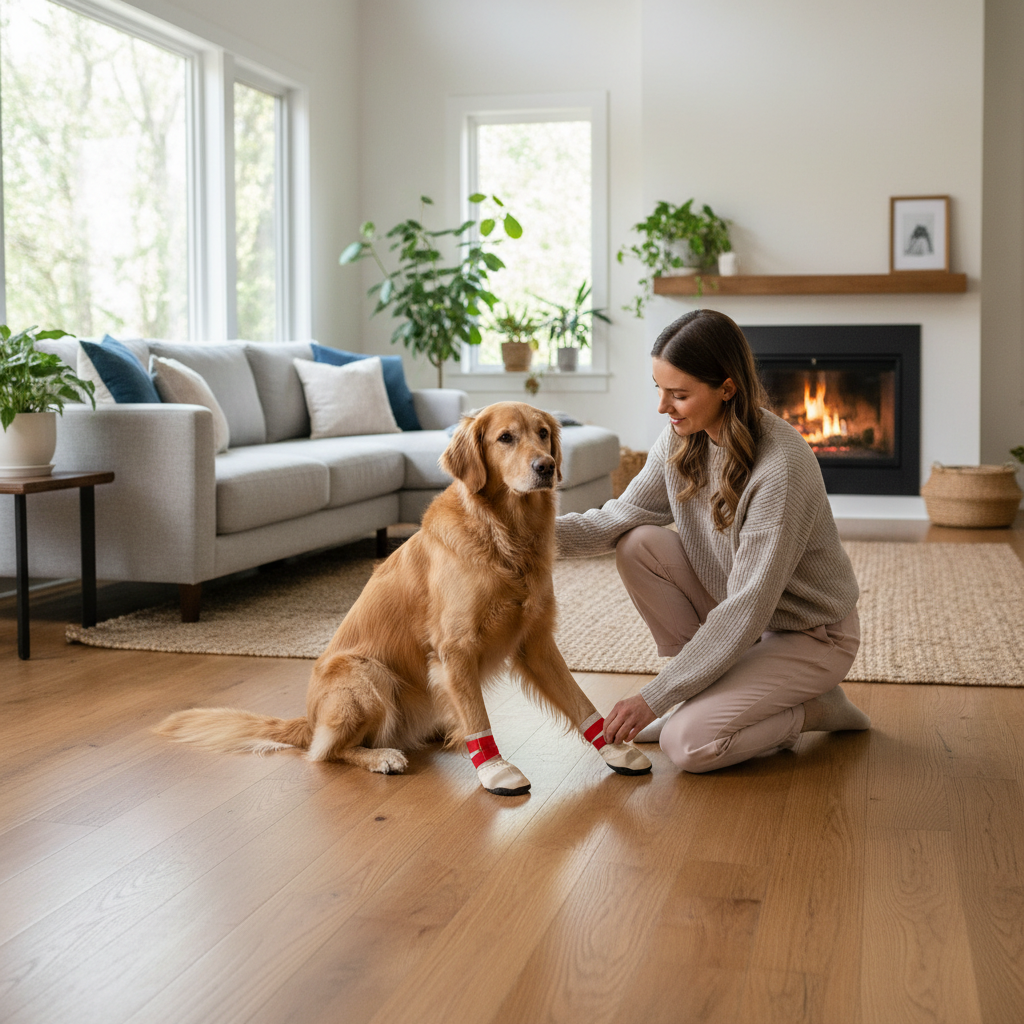
- Prep the paw: trim nails as needed, lightly tidy hair between pads if it’s long. If you’re unsure, a groomer can help.
- Test one sock: put on a front paw first, let your dog walk a minute, reward calm behavior.
- Use the strap correctly: snug, not tight, you should still fit a fingertip under it.
- Check rotation: after 1–2 minutes, look at the grip. If it’s sliding to the side, size or shape may be off.
- Short sessions: build tolerance over a few days before expecting all-day wear.
Key point: if socks come off repeatedly, it’s usually not “bad socks,” it’s fit plus the dog’s leg shape. Dogs with skinny ankles or fluffy feathering often need strap-style socks or a slightly different cut.
Common mistakes (and how to avoid wasting money)
People tend to blame the product when the real issue is the setup. A few missteps show up over and over.
- Buying based on weight only: paw width matters more than pounds, especially across breeds.
- Ignoring dewclaws: straps can rub, and some sock cuts sit right on that area.
- Expecting instant “normal walking”: some dogs do the high-step dance at first, give them time.
- Using socks to compensate for long nails: nails can puncture fabric and reduce grip, trim first if possible.
- Leaving socks on too long: moisture and friction can irritate skin, especially in warm homes.
Also, consider your floor finish. Some silicone grips work well on sealed hardwood but feel less stable on certain glossy laminates. If your dog still slips, try a different tread style, not necessarily a thicker sock.
Safety notes: when to stop and when to ask a professional
Most dogs tolerate indoor grip socks fine, but you should keep an eye out during the first week.
- If you see redness, swelling, limping, or your dog obsessively licking the feet, pause use and check fit.
- If your dog has allergies or sensitive skin, a softer fabric and shorter wear sessions often help, but a vet may have better guidance.
- If slipping appears suddenly, worsens quickly, or comes with weakness, pain, or stumbling, it’s smart to consult a veterinarian. According to the American Veterinary Medical Association (AVMA), mobility changes can signal underlying health issues that deserve evaluation.
And one more thing people forget: socks can make some dogs feel “too confident.” If your dog starts sprinting because traction improves, you may still want rugs in high-speed zones to reduce wipeouts into furniture.
Conclusion: a simple upgrade that works best with the right fit
Dog boot socks for indoor floors tend to work when you treat them like a traction system: correct sizing, trimmed nails, and a grip pattern that matches your dog’s movement. They’re especially helpful for seniors, nervous walkers, and homes with lots of open hardwood.
If you want the most practical next step, measure paw width while your dog stands, choose a sock with generous grips and an adjustable strap, then test in short sessions for a few days. If slipping still looks concerning, it’s worth getting a professional opinion rather than assuming it’s just the floor.
FAQ
Do dog boot socks actually prevent slipping on hardwood?
Often, yes, especially when the grips cover most of the sole and the sock fits snugly. If the sock twists, traction drops fast, so fit matters as much as tread.
How do I measure my dog for indoor grip socks?
Measure paw width with your dog standing, because pads spread under weight. Compare that measurement to the brand’s size chart, and when you’re between sizes, many dogs do better with the smaller option plus a strap.
Why do my dog’s socks keep falling off?
The usual reasons are narrow ankles, long leg fur that reduces friction, or a sock cut that sits too low. Look for adjustable straps and consider dual-side grips if rotation keeps happening.
Can dog boot socks damage hardwood floors?
Most indoor grip socks are designed to be floor-friendly, but aggressive silicone patterns can sometimes leave scuff-like marks on certain finishes. Testing one sock in a small area is a safe habit, especially on glossy surfaces.
Are socks safe for senior dogs with arthritis?
They can help with confidence and stability, but seniors may also have joint pain or weakness that needs broader management. If your older dog slips frequently, discussing mobility support with a veterinarian is a good idea.
How long can my dog wear grip socks indoors?
It depends on skin sensitivity and activity level. Many owners use them for high-risk times (morning zoomies, stairs, post-walk excitement) rather than all day, and they check paws for rubbing.
Should I choose socks or toe grips for traction?
Socks are easier for many people to put on and take off, while toe grips can feel more “natural” once fitted correctly. If your dog hates fabric on paws, toe grips may be worth trying, but sizing can be finicky.
What if my dog walks weird in socks?
A stiff, high-step walk is common at first. If it fades after short practice sessions, that’s normal adjustment; if it continues or your dog seems uncomfortable, recheck sizing and strap pressure.
If you’re trying to make hardwood safer without covering every room in rugs, start with one set of well-fitting grip socks and treat the first week like a trial, small sessions, quick fit checks, and adjust from what your dog tells you.