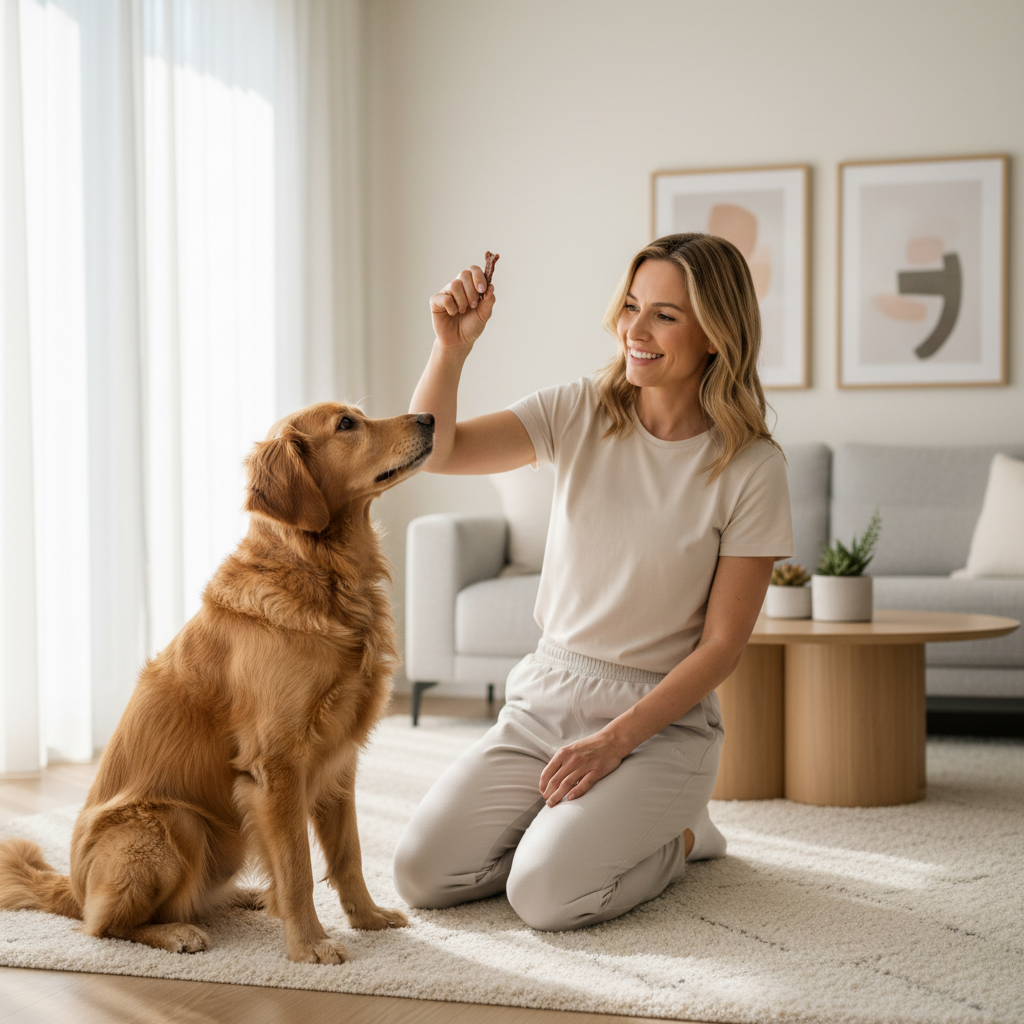
How to teach a dog to sit comes down to one simple idea, reward the position you want, then fade the help fast so your dog can repeat it on cue.
If you have five minutes, you can usually get a recognizable “sit” started, especially with a food-motivated dog in a low-distraction room. The part most people miss is not the first sit, it’s making the sit reliable when your hand is empty and the kitchen is not perfectly quiet.
Below is a practical, friendly approach that works for many puppies and adult dogs, plus a quick checklist for common roadblocks like jumping, mouthing treats, or sitting only when you “wave the snack around.”
What “Sit in 5 Minutes” Really Means
In five minutes, your goal is usually one clear rep your dog understands, not a perfect sit in every room with strangers watching. Think of it as building the first version, then polishing it over a few short sessions.
- Minute 1-2: find the right reward and the right spot
- Minute 3-4: capture or lure a few successful sits
- Minute 5: add the cue and start reducing the “help”
According to the American Veterinary Society of Animal Behavior (AVSAB), reward-based training supports learning while reducing the risk of fear or aggression compared with aversive methods, which is why the steps below stay firmly on the positive-reinforcement side.
Set Up for Fast Success (This Matters More Than People Think)
If your dog “knows sit” sometimes but ignores you other times, the setup is often the difference. Give yourself an unfair advantage.
Pick the right environment
- Start indoors, low distractions, non-slip floor if possible
- Keep other pets and kids out of the first session if you can
- Stand still, face your dog, keep your movements small
Choose rewards that actually work today
Dogs have opinions. If your dog just ate dinner, kibble might not move the needle. If your dog is anxious, food may not land at all. Test quickly.
- High-value treats: tiny bits of chicken, cheese, or store treats
- Low-calorie options: freeze-dried single-ingredient treats (often easy to portion)
- Non-food rewards: quick tug, a squeaky toy, or “go sniff” permission
The 5-Minute “Sit” Method (Lure → Mark → Reward)
This is the fastest path for many dogs. You’ll use a lure (treat in hand) briefly, then phase it out so your dog responds to the cue, not the snack.
Step-by-step
- 1) Start with your dog standing. Hold a treat at your dog’s nose level, close enough to smell but not steal.
- 2) Move the treat up and slightly back. Think “nose to the sky,” not “push backward.” Many dogs will naturally rock into a sit.
- 3) The instant the butt hits the floor, mark it. Say “Yes” or click (if you clicker train), then give the treat.
- 4) Reset calmly. Toss one treat a step away so your dog stands up again, then repeat.
- 5) Add the cue once the motion is predictable. When you’re confident your dog will sit on the lure, say “Sit” one second before you lure, mark, reward.
Key point: Your timing teaches the behavior. Mark the sit the moment it happens, not after your dog stands up, looks away, or barks.
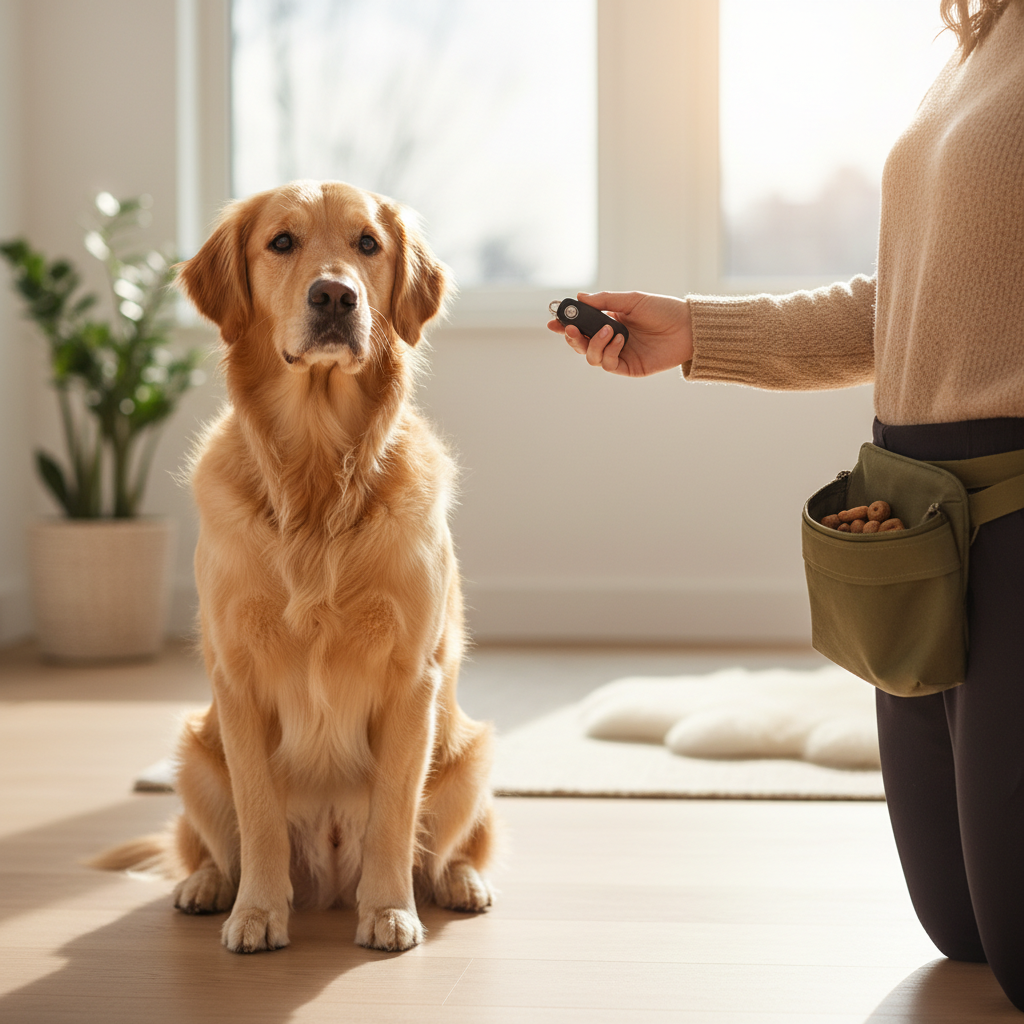
Once you see 3–5 smooth reps, stop. Ending early usually keeps motivation high, and you can do another tiny session later.
Quick Self-Check: Which “Sit Problem” Do You Have?
If you’re stuck, don’t grind through it. Diagnose first, then fix the specific issue.
- My dog jumps at the treat: reward calm, keep treat closer to your body, use a closed fist until four paws stay down.
- My dog backs up instead of sitting: you’re likely moving the lure too far back, try more “up” and less “back.”
- My dog sits only when I show food: you faded the lure too slowly, or you never taught a clear hand signal/cue separate from the treat.
- My dog won’t sit at all: could be confusion, low motivation, slippery flooring, or discomfort; try a softer surface and consider a vet check if sitting seems painful.
- My dog offers sit nonstop: not a bad problem, but add a release word and reward other behaviors too.
Make It Reliable: A Simple Progression Table
Getting the first sit is easy, getting a sit when it counts is the real win. Use this progression across a week, in tiny sessions.
| Stage | What you do | What you reward | Common mistake |
|---|---|---|---|
| 1. Lure | Treat guides nose up | Butt hits floor | Moving too fast, dog jumps |
| 2. Cue + hand signal | Say “Sit,” then same hand motion | Fast response | Saying cue repeatedly |
| 3. Fade the lure | Empty hand does the motion | Sit without seeing food | Hiding food too late |
| 4. Add duration | Pause 1–3 seconds before reward | Staying seated | Increasing time too quickly |
| 5. Add distractions | New rooms, yard, leash, visitors | Sit with one cue | Jumping to hard places too soon |
Practical Tips That Make Training Feel Easier
These are small changes, but they save a lot of frustration, especially if you’re trying to teach a dog to sit in a busy household.
- Use a release word. “Okay” or “Free” tells your dog when the sit ends, otherwise some dogs pop up and you end up rewarding the stand.
- Keep treats tiny. Pea-sized is enough, your dog cares about frequency more than volume.
- Train when it matters to your dog. Before meals, before walks, before you toss a toy, make sit the “please” behavior.
- Reward position, not perfection. Early on, slightly crooked sits still count, you can straighten later.
- Use a non-slip surface. Many dogs avoid sitting on slick floors, it feels unstable.
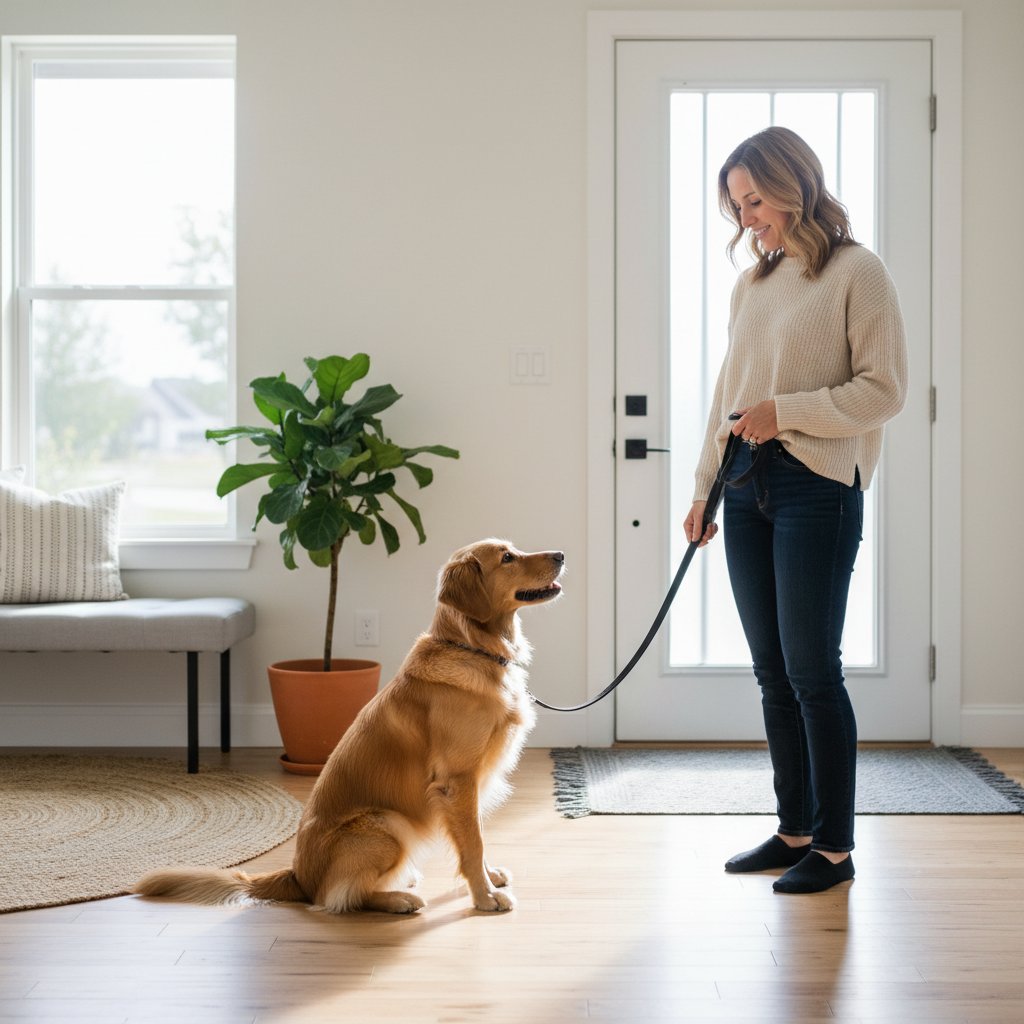
Key takeaway: A reliable sit is less about one long session, more about short reps in real life, paired with rewards your dog values.
Common Mistakes (And What to Do Instead)
Most sit training fails for predictable reasons. Fixing one of these often makes the behavior “click” fast.
- Repeating “Sit, sit, sit.” Say it once, then help with your hand signal, if you repeat the cue, your dog learns to wait you out.
- Pushing the dog’s hips down. Many dogs dislike being handled that way, and it can create avoidance; lure or capture instead.
- Rewarding too late. If your dog sits then stands, and you reward the stand, you trained standing.
- Jumping to distractions too soon. If sit works in the kitchen but not outside, that’s normal; lower the difficulty outdoors and pay better.
- Training when your dog is stressed. Heavy panting, tucked tail, scanning the room, or refusing treats suggests you should back off and make it easier.
According to the American Kennel Club (AKC), keeping sessions short and upbeat helps dogs learn faster and prevents frustration, which matches what most trainers see in everyday practice.
When to Get Extra Help
If your dog seems physically uncomfortable when sitting, avoids the position, yelps, or sits “sideways” suddenly, it may be worth talking with a veterinarian to rule out pain. Training can’t outwork discomfort.
If you’re seeing growling, snapping, or intense guarding around treats, working with a qualified positive-reinforcement trainer can keep everyone safer. According to ASPCA, reward-based methods are recommended, and for behavior concerns, professional guidance can be important.
Conclusion: Your Next 10 Minutes
If you want to know how to teach a dog to sit and keep it useful, run one five-minute session today, then repeat another five-minute session later in a slightly different spot. Aim for clean timing, tiny rewards, and one cue.
Do that for a few days and you usually stop “begging” for a sit, your dog starts offering it like a polite habit, which is exactly what most people want.
Action steps: pick your marker word, prep 20 tiny treats, and practice 5 reps before your next walk.