How to help a dog with arthritis usually comes down to two things: reducing pain and protecting the joints so flare-ups happen less often. If your dog seems stiff after naps, hesitates on stairs, or walks like “something feels off,” you’re not overthinking it, arthritis discomfort can look subtle until it suddenly doesn’t.
This topic matters because arthritis is typically progressive, but your daily choices can meaningfully change your dog’s comfort. The goal isn’t to “push through” pain, it’s to keep movement safe, maintain muscle, and use the right tools (including meds when appropriate) so your dog can still enjoy normal life.

One common mistake is trying random supplements or exercise routines without checking what kind of arthritis pattern your dog has, hip vs elbow vs spine can change what helps. This guide focuses on practical steps you can start at home, plus clear moments when a vet should be in the loop.
What arthritis pain looks like in real life (and why it happens)
Arthritis, often called osteoarthritis or degenerative joint disease, involves cartilage wear, inflammation, and changes to bone around the joint. Pain can come from inflammation, reduced joint lubrication, and muscle tension from “guarding” a sore limb.
Many dogs don’t yelp. They adjust. Look for day-to-day behavior shifts rather than dramatic symptoms.
- Stiffness after rest, especially mornings or after long naps
- Limping that warms up after a few minutes, then returns later
- Reluctance to jump, climb stairs, get into the car, or play
- Shorter walks or frequent stopping and sitting
- Changes in mood, irritability when touched, less interest in being handled
- Muscle loss in one leg from underuse
According to the American Veterinary Medical Association (AVMA), arthritis is a common cause of chronic pain in dogs and should be evaluated by a veterinarian to build a safe management plan, especially when long-term medications are involved.
Quick self-check: is this mild soreness or a pain problem?
If you’re deciding how to help a dog with arthritis, a simple weekly check can keep you from guessing. You’re looking for patterns: what triggers pain, how long it lasts, and whether it’s changing.
Use this at-home checklist
- Stiffness lasts more than 5–10 minutes after resting
- Limping appears several days per week, even if it comes and goes
- Dog avoids one activity they used to do easily (stairs, couch, car)
- Noticeable weight gain, or you can’t easily feel ribs
- Dog slips on floors more often
- Sleep disrupted, restless shifting at night
If you check 3 or more, it’s usually time to talk with your vet. Not because everything is urgent, but because early plans often work better than late-stage scrambling.
Pain relief options: what to discuss with your veterinarian
There isn’t one “best” approach. Many dogs do well with a layered plan: medication plus weight management, plus targeted movement. The safest pain relief choices depend on age, kidney/liver health, other meds, and whether your dog has had prior GI upset.

Common medical tools (vet-guided)
- NSAIDs (non-steroidal anti-inflammatory drugs): Often the mainstay for canine arthritis pain, but require vet dosing and monitoring.
- Adjunct pain meds: Some dogs need additional analgesics, especially during flare-ups. Your vet chooses based on safety and interactions.
- Joint injections or other procedures: Used in select cases, often when a specific joint is the main driver.
- Physical rehab referrals: Particularly helpful when gait is changing or muscle loss shows up.
According to the American Animal Hospital Association (AAHA), managing canine osteoarthritis pain commonly involves multimodal therapy, combining medications with weight control and physical rehabilitation for better function and comfort.
Important safety note
Never give human pain relievers unless a veterinarian explicitly instructs you to. Some common OTC products can be toxic to dogs, even at “small” doses.
Home setup changes that reduce pain fast
For a lot of households, the biggest “aha” is that the house itself is the problem. Slippery floors, steep stairs, and repeated jumping turn mild arthritis into constant irritation.
High-impact fixes that usually pay off
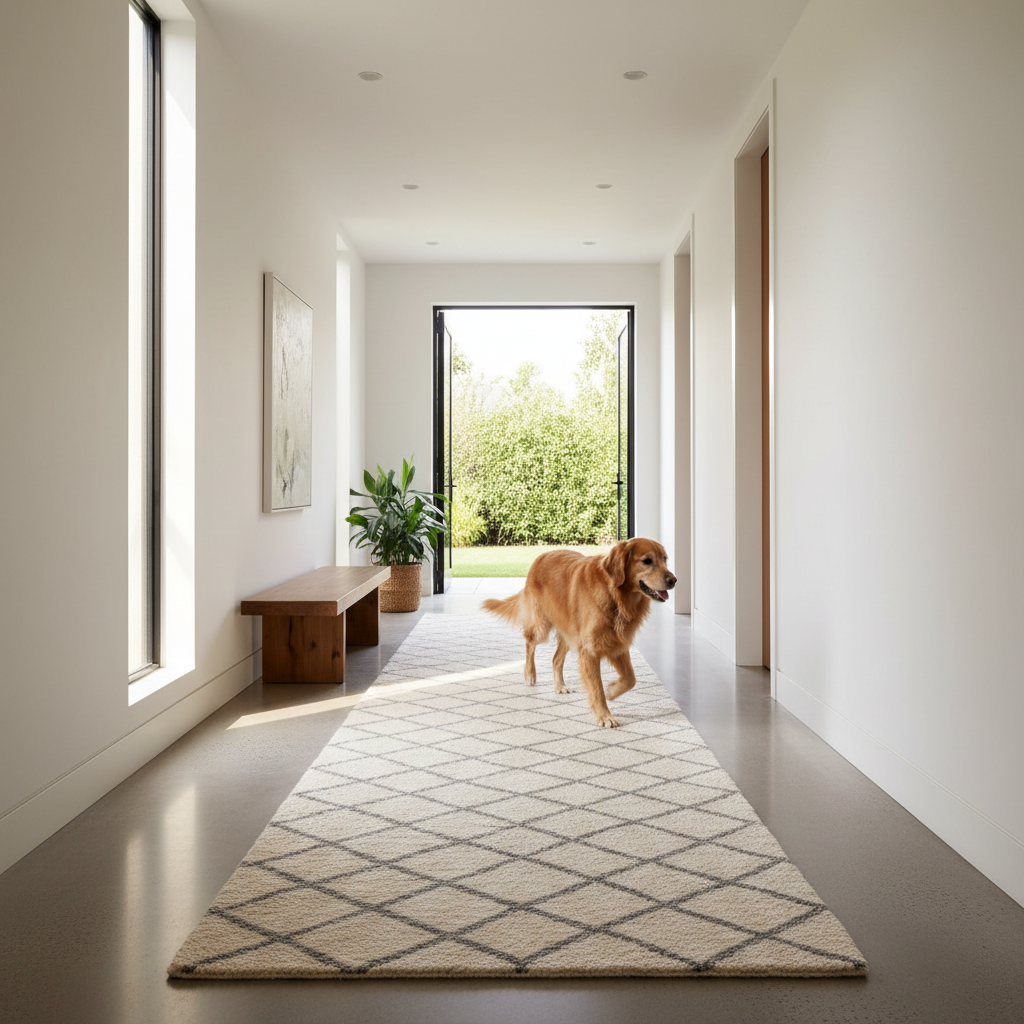
- Traction: Add runners or non-slip rugs in the paths your dog uses most.
- Ramps or steps: Couch, bed, car, anywhere your dog jumps down.
- Orthopedic bed: Put one where your dog already prefers to rest, not where you wish they’d rest.
- Elevated food/water: Helps some dogs with neck/back discomfort, not all, so watch posture.
- Nail and paw care: Short nails and trimmed paw fur improve grip.
Small change, big difference: if your dog slips once a day, they often tense up anticipating it, which can make arthritis pain feel worse.
Movement that helps, without overdoing it
It’s normal to worry that exercise will “wear out” the joints. Usually the bigger risk is too little movement, muscles weaken, joints get less stable, and pain increases. The trick is controlled, consistent activity.
Gentle exercise guidelines
- Short, frequent walks beat one long walk, aim for steady pace, minimal pulling.
- Warm-up with 3–5 minutes of slow walking before normal pace.
- Choose forgiving surfaces, grass or packed dirt often feels better than concrete.
- Skip the explosive stuff, hard fetch, jump-heavy play, sprinting with sudden stops.
Signs you did too much
- Limping increases later the same day or next morning
- Dog struggles to get up after resting
- Less interest in walks for the next 24–48 hours
If that happens, reduce duration, not necessarily frequency. Many dogs tolerate daily movement when intensity stays modest.
Weight, nutrition, and supplements: what matters most
If you want the most leverage at home, weight is near the top. Even small weight changes can alter joint load. You don’t need perfection, you need direction.
Practical nutrition moves
- Measure meals for a few weeks, eyeballing often drifts upward.
- Rebalance treats: keep treats, just subtract from meals or use lower-calorie options.
- Ask about joint-support diets: Some veterinary diets are formulated for mobility support.
Supplements, realistic expectations
Some dogs seem to benefit from joint supplements like omega-3 fatty acids or glucosamine/chondroitin, but responses vary and quality differs by brand. If you’re combining products, check with your vet to avoid doubling ingredients or interfering with medications. According to the U.S. Food & Drug Administration (FDA), pet supplements aren’t evaluated the same way as drugs, so it’s worth being picky and vet-guided.
A simple arthritis plan you can start this week
If you’re overwhelmed, use a short plan and adjust after you see how your dog responds. This is often how to help a dog with arthritis without turning your life into a full-time project.
7-day starter routine
- Day 1: Take two 20-second videos of your dog walking (side + front). This becomes your baseline.
- Day 2: Add traction rugs in one main hallway or living area path.
- Day 3: Switch to 2–3 shorter walks, avoid stairs where you can.
- Day 4: Measure meals, adjust treats, and note current weight if you have it.
- Day 5: Add a ramp/steps for the most frequent jump (often couch or car).
- Day 6: Try gentle heat before activity if your dog likes it, warm towel, not hot, and stop if they resist.
- Day 7: Re-film the same walk, compare to Day 1, then decide if it’s time for a vet visit or a plan update.
Key point: if changes help a little, that’s a signal you’re on the right track, arthritis management often builds in layers rather than flipping a switch.
What helps most, by situation (quick reference table)
Different dogs get stuck at different points. This table gives you a realistic “start here” map.
| Situation you see | Likely driver | What to try first | When to call the vet |
|---|---|---|---|
| Stiff only after naps | Early inflammation, reduced mobility | Short frequent walks, warm-up, bedding upgrade | If stiffness worsens over 2–4 weeks |
| Slips on floors, hesitant gait | Poor traction, muscle weakness | Rugs/runners, nail trims, controlled walking | If falling, yelping, or rapid decline |
| Limping flares after play | Overdoing intensity | Swap fetch for sniff walks, reduce jump/sprints | If limping lasts >48 hours |
| Won’t do stairs or jump at all | Higher pain level or joint instability | Ramps, limit stairs, discuss pain control | Promptly, especially if new behavior |
| Restless at night | Chronic discomfort | Better bedding, evening walk, vet pain plan | If sleep disruption persists a week+ |
Common mistakes that slow progress
- Stopping all activity: rest feels logical, but deconditioning can increase pain over time.
- “Weekend warrior” exercise: one long outing can trigger a two-day flare.
- Mixing supplements and meds blindly: more isn’t always safer, especially with older dogs.
- Waiting for obvious pain: dogs compensate early, by the time they cry out, the issue may be advanced.
- Ignoring dental or other pain: sometimes “arthritis mood” is actually another discomfort stacking on top.
When you should seek professional help sooner
Some arthritis situations need faster evaluation because the risk isn’t just discomfort, it can be injury, neurologic issues, or a different diagnosis entirely.
- Sudden inability to bear weight, or severe limping
- Crying out, trembling, or obvious distress
- Dragging paws, knuckling, or loss of coordination
- Appetite loss, vomiting, diarrhea, especially if already on pain meds
- Rapid change over days rather than months
If you’re unsure, a quick call to your clinic often clarifies whether it can wait or should be seen. Video of your dog walking helps vets triage more accurately than descriptions alone.
Conclusion: keep it simple, then build
How to help a dog with arthritis often starts with the unglamorous basics, traction, controlled movement, and a realistic pain plan with your veterinarian. Once your dog moves a bit easier, everything else gets simpler, from weight control to better sleep.
If you do one thing today, take a short walking video and make one home change that prevents slipping. If you do a second thing this week, schedule a vet conversation about long-term comfort, especially if limping shows up regularly.
FAQ
- How can I tell if my dog’s limp is arthritis or an injury?
Arthritis often looks like stiffness that improves as they warm up, while injuries may cause sudden severe limping or pain with touch. Because overlap is common, a vet exam is the safest way to sort it out. - What is the safest pain relief for dogs with arthritis?
Safety depends on your dog’s health history. Many dogs use prescription NSAIDs under veterinary guidance, sometimes with monitoring labs, while others need different options due to kidney, liver, or GI risks. - Do ramps really help dogs with arthritis?
Usually yes, especially for getting in and out of cars or off furniture. Reducing repeated jumping can lower day-to-day irritation, but dogs may need a little training and a stable, non-slip surface. - Should I stop walking my dog if they have arthritis?
In many cases, no. Controlled, regular walking helps keep muscles strong and joints supported. The better move is adjusting duration, surface, and intensity, then watching for next-day soreness. - What supplements help canine arthritis the most?
Omega-3s are commonly discussed, and some dogs seem to do well with joint-support supplements, but results vary by dog and product. Bring the label to your vet so dosing and interactions are considered. - How long does it take to see improvement?
Home changes like rugs and ramps can help immediately, while weight loss and rehab-style conditioning take weeks. Medication response timing varies, and your vet may adjust the plan after observing function. - Is arthritis worse in cold weather?
Many owners notice stiffness increases in cold or damp conditions, though it varies. Warm bedding, gentle warm-up walks, and consistent activity often help reduce weather-related flare-ups.
If you’re trying to help your dog move more comfortably but you’re not sure which changes matter most, consider writing down your dog’s top three “hard moments” each day, getting up, stairs, bedtime restlessness, and share that with your vet or a canine rehab professional so the plan matches your real life.