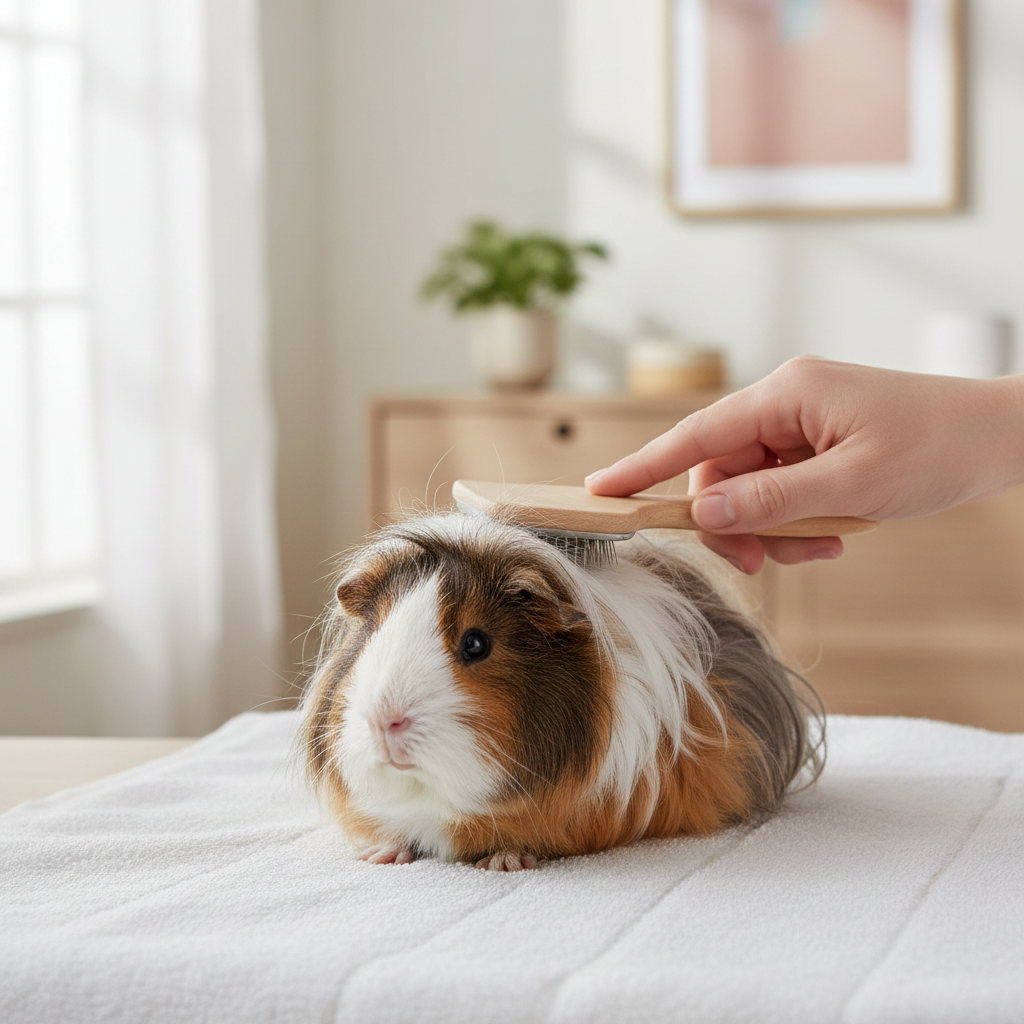
A guinea pig hair brush for long hair can be the difference between a calm 3-minute grooming session and a stressful fight with mats that keep coming back.
If you share your home with a Peruvian, Silkie, Texel, or any long-coated mix, you already know the truth: long hair looks adorable, but it tangles fast, holds bedding, and can pull at skin if you use the wrong tool or the wrong technique.
This guide breaks down which brush types actually work, how to pick the right one for your coat texture, and a simple routine you can stick with, even if your guinea pig dislikes handling. I’ll also call out the mistakes that quietly make matting worse.
Why long-haired guinea pigs mat so easily (and why brushing feels “hard”)
Matting usually starts as a tiny snarl near friction points, then it tightens. Long coats on guinea pigs tend to be fine, soft, and prone to static, which means tangles form from normal movement, not just “neglect.”
- Friction zones: behind ears, under the chin, armpits, belly, and around the rump where they sit in bedding.
- Moisture + debris: water bottle drips, pee, and hay dust can make hair clump and twist.
- Coat type differences: Silkies often have straight “sheet” hair, while Texels have curls that hide knots until they’re already tight.
- Handling stress: if your guinea pig squirms, you may brush too fast or skip the underside, and that’s where mats build.
According to the American Veterinary Medical Association (AVMA), regular grooming helps support skin and coat health, and it’s also a practical moment to notice issues early, like external parasites, sores, or sensitivity that may need veterinary attention.
Brush types that work for long hair breeds (and what to avoid)
Not every “small pet brush” earns its space in your drawer. For long coats, you usually need a tool that can separate hair gently, plus something that helps you finish and smooth.
Quick tool comparison
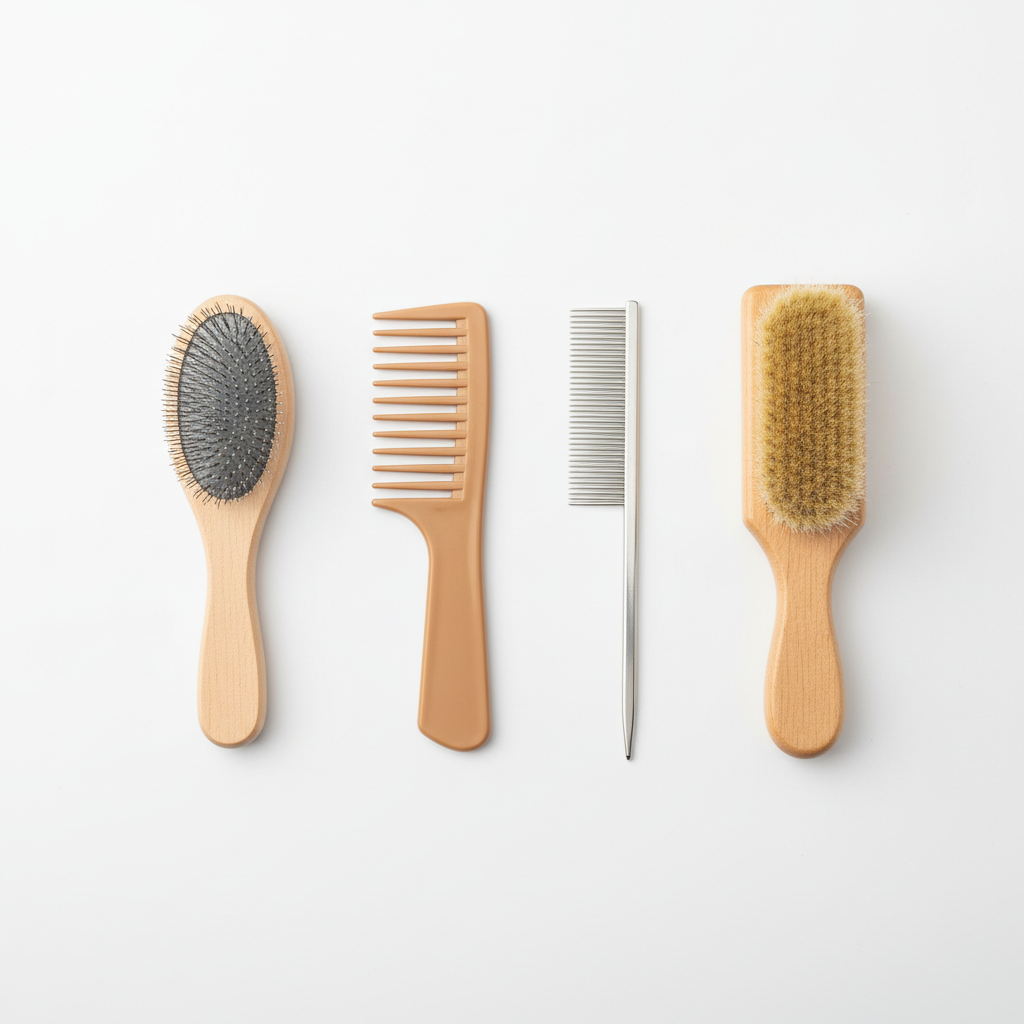
| Tool | Best for | Watch-outs |
|---|---|---|
| Soft slicker brush (small) | Everyday detangling on straight or wavy coats | Choose soft pins; press too hard and you can scratch skin |
| Wide-tooth comb | Checking for hidden knots near the skin, especially on curls | Don’t yank; use it as a “detector,” not a bulldozer |
| Metal greyhound comb (coarse + fine) | Finishing work and line-checking after brushing | Fine side can snag if you rush |
| Soft bristle brush | Surface smoothing, distributing natural oils | Won’t break up mats; it can glide over problems |
| Mat splitter / de-matting rake | Generally not recommended for guinea pigs | Higher risk of cutting skin, especially on thin guinea pig skin |
For most homes, a practical pairing is a small soft slicker plus a wide-tooth comb. If you want one “do-it-all” choice, pick the slicker, but keep a comb around to verify you’re reaching the base of the hair.
Self-check: which “long hair problem” do you actually have?
Before you buy a new tool, it helps to name the issue. Most people assume it’s “just tangles,” but the fix changes depending on whether you’re dealing with static, compacted mats, or coat contamination.
- Light tangles: hair separates with fingers, no tight pulling at the skin.
- Early matting: small clumps near the base, feels like “Velcro” when you try to part the coat.
- Compacted mats: dense, flat clumps that don’t open with a comb, often near rump or underarms.
- Dirty/sticky coat: hair clumps from urine, bedding dust, or water drips.
- Handling resistance: the coat might be brushable, but your guinea pig won’t tolerate long sessions.
If you suspect skin irritation, scabs, hair loss, or your guinea pig reacts sharply to touch, pause the grooming plan and consider a vet consult. Pain changes the whole situation.
How to brush long hair without pulling: a simple routine
Good brushing is less about “force” and more about control. The goal is to detangle in layers so you never rip through the base of the coat.
Step-by-step (5–10 minutes)
- Set up traction: use a towel or fleece so your guinea pig feels stable, slipping makes them panic.
- Start with fingers: gently separate obvious snags first, especially around the butt and belly.
- Hold the hair at the base: pinch near the skin with two fingers, then brush the ends first. This “anchors” the coat so you don’t tug skin.
- Use short strokes: long strokes tempt you to power through knots.
- Line check with a comb: part the coat and slide the wide-tooth comb close to the base. If it stops, that area needs more gentle work.
- Finish lightly: a soft bristle brush can smooth the top layer and remove loose bits of hay.
If your guinea pig hates brushing, keep sessions shorter and more frequent. A guinea pig hair brush for long hair still won’t help if you turn grooming into one long wrestling match.
Dealing with mats: when to brush out vs. when to trim
This is where many owners get stuck. Brushing out a tight mat can take forever and may hurt, even if you’re careful. In a lot of real-life cases, strategic trimming is the kinder option.
Brush it out if…
- the mat is small, loose, and you can open it with fingers
- you can separate hair into little sections without skin pulling
- your guinea pig stays calm with breaks
Consider trimming if…
- the mat is flat and tight against skin
- the area is sensitive, like armpits, belly, or around genitals
- there’s moisture, odor, or debris stuck in the mat
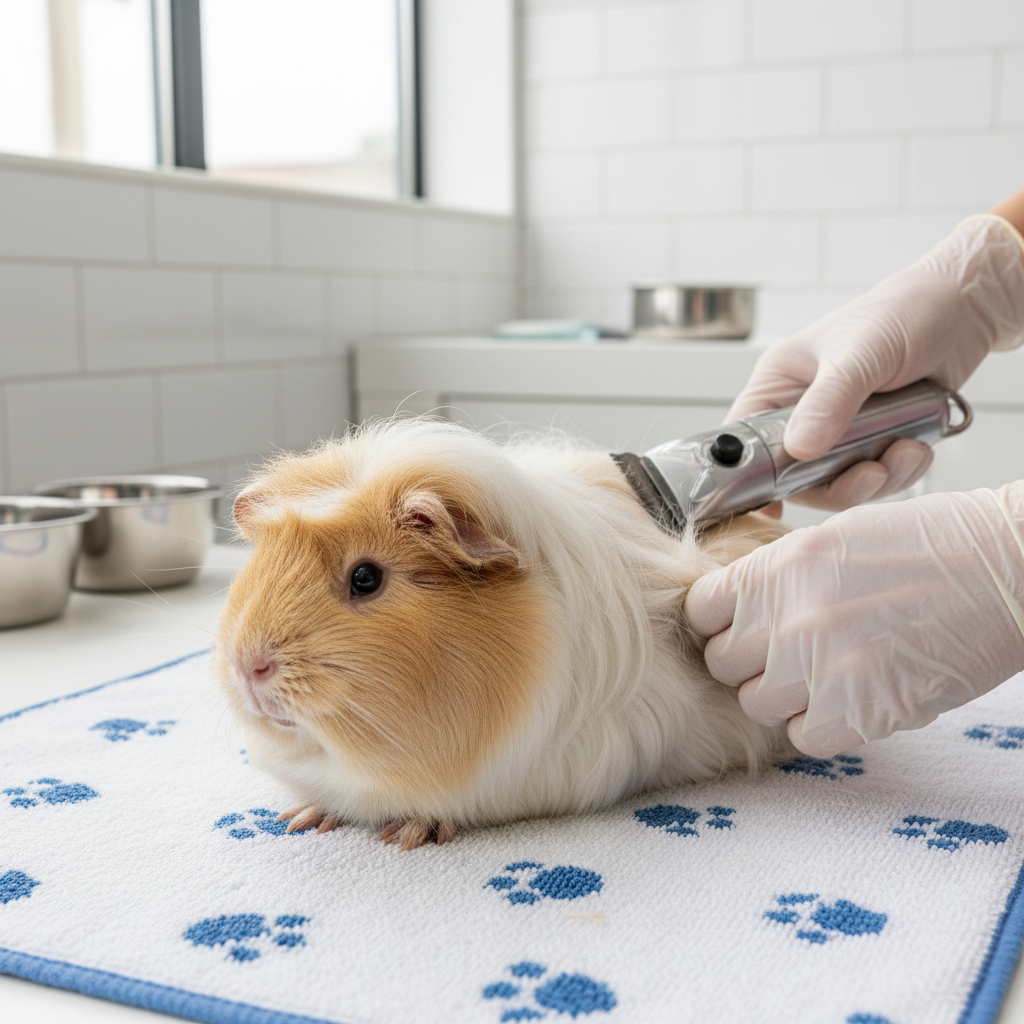
Safety note: scissors near skin can be risky because guinea pig skin can be thin and mobile. Many owners prefer pet clippers with a guard for controlled trimming, but if you’re unsure, a groomer experienced with small animals or an exotics vet team is usually the safer route. According to the American Animal Hospital Association (AAHA), when home care risks injury or stress, getting professional guidance is a reasonable choice, especially for animals that mask discomfort.
Practical schedule: how often to brush, bathe, and trim
There isn’t one schedule that fits every household, but these ranges work for many long-haired guinea pigs, especially in typical US indoor setups with fleece or paper bedding.
- Brushing: light brushing most days, deeper detangling 2–3 times per week.
- Spot cleaning: as needed, especially around the rear if hair collects urine or poop.
- Trimming: every few weeks for “floor-length” coats, or whenever hair drags in bedding.
- Bathing: occasional only, and usually for truly dirty coat situations. Frequent baths can dry skin and make flaking worse.
If you do bathe, keep water warm, dry thoroughly, and avoid drafts. When in doubt, ask an exotics vet what’s appropriate for your guinea pig’s skin and coat condition.
Common mistakes that sabotage grooming (even with a good brush)
- Brushing only the top layer: coats can look smooth while mats tighten underneath.
- Skipping “bathroom zones”: rear-end tangles become hygiene problems fast.
- Using human detanglers: many products aren’t designed for ingestion, and guinea pigs groom themselves.
- Over-brushing one spot: repeated friction can irritate skin, switch areas and come back later.
- Buying the harshest tool: stronger isn’t better, it often means more scratches and more avoidance next time.
Key takeaways + a simple next step
If long hair keeps matting, it’s rarely because you “missed a day,” it’s usually the combo of coat type, friction zones, and a tool that doesn’t reach the base gently. A soft slicker plus a wide-tooth comb covers most needs, and trimming at the right moments can be more humane than fighting tight mats.
Pick one action for this week: either upgrade to a gentler guinea pig hair brush for long hair that fits your guinea pig’s coat, or set a repeatable 5-minute routine on the days you already refresh hay and water. Consistency beats heroic grooming sessions.
FAQ
What is the best guinea pig hair brush for long hair breeds like Peruvian or Silkie?
In many homes, a small soft slicker brush works well for day-to-day tangles, paired with a wide-tooth comb to check near the skin. The “best” choice depends on coat texture and how tolerant your guinea pig is of handling.
Can I use a human hairbrush on my long-haired guinea pig?
Some human brushes are gentle enough for light smoothing, but many don’t separate tangles well and can pull. More importantly, you want a tool that lets you work in tiny sections without scraping skin.
How do I brush a Texel guinea pig with curly hair without making frizz?
Curly coats mat close to the base, so comb-checking matters. Work slowly, detangle in small sections, and avoid aggressive brushing that fluffs curls. Light misting with plain water can reduce static, but keep the coat from staying damp.
Should I cut out mats with scissors?
Many people try, but scissors can nick skin quickly because guinea pig skin can shift under a mat. If a mat is tight, clippers with a guard or professional help tends to be safer, especially in sensitive areas.
How often should I groom a long-haired guinea pig?
Usually, light brushing most days helps prevent knots from turning into mats, with deeper grooming a few times per week. If the coat drags on bedding, more frequent trimming can reduce daily tangling.
My guinea pig squeaks when I brush—does that mean it hurts?
Not always, some guinea pigs complain about restraint, but sharp squeaks or sudden jerks can mean pulling or tenderness. Try anchoring hair at the base, using shorter strokes, and checking for skin irritation or hidden mats.
Do I need grooming spray for guinea pigs?
Often you can manage without sprays. If you consider a product, choose something clearly labeled safe for small animals and ask an exotics vet if you’re unsure, since guinea pigs may lick residue from their coat.
When should I contact an exotics vet about coat issues?
If you see bald spots, scabs, strong odor, swollen skin, or your guinea pig reacts as if grooming causes pain, it’s a good time to ask for professional guidance. Skin problems and parasites can look like “just bad tangles” early on.
If you’re trying to build a calmer routine, it often helps to pick a brush that feels gentle in your hand, then set up a consistent grooming spot with a towel and a predictable reward like a small piece of bell pepper. If you want a more “set and forget” approach, consider keeping a simple two-tool kit and trimming just enough to keep hair from dragging in bedding.