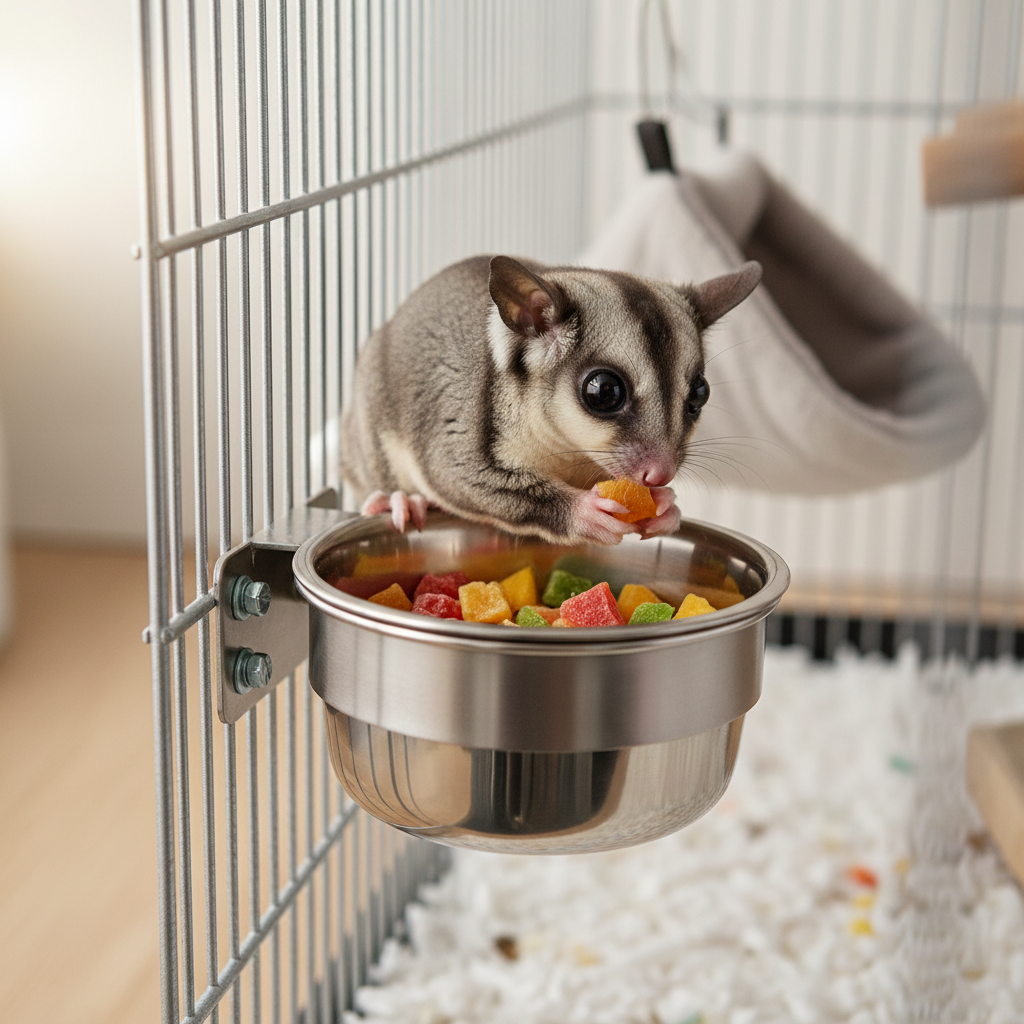
A sugar glider food bowl that tips is more than an annoyance, it can turn dinner into a sticky mess, waste pricey diet mixes, and sometimes nudge gliders into eating off questionable surfaces.
If you are trying to keep a clean cage and a consistent feeding routine, the “non tip” part matters just as much as what you put in the dish. The right bowl and setup usually lowers stress for you and your gliders, and it can make nightly prep feel less like a mini cleanup shift.
This guide breaks down why bowls flip, what “non-tip” actually means in real cages, how to choose materials and mounting styles, and a few setup tweaks that often solve the problem without buying five different bowls.
Why sugar glider bowls tip in the first place
Most “tipping” comes down to leverage and behavior. Sugar gliders are light, but they are persistent, and they tend to pull, perch, and launch off whatever is nearby.
- Perching on the rim: a wide rim becomes a tiny platform, gliders lean out, the bowl shifts, gravity takes over.
- Digging and scooping: soft diets, fruit, and nectar-style mixes invite pawing, the bowl slides or pivots.
- High center of gravity: tall dishes or bowls sitting on a stand tip easier than shallow, low-profile options.
- Lightweight materials: thin plastic moves easily, especially on smooth cage trays.
- Bad placement: corners and ledges help, open flat areas make sliding and flipping more likely.
One more thing people miss, some gliders treat bowls like toys. If yours “tests” everything at night, you may need a mounting system rather than a heavier dish.
What “non-tip” actually means (and what it does not)
“Non-tip” is often used loosely in product listings. In practice, it usually means one of three designs that resist movement, not a magic guarantee.
Common non-tip designs
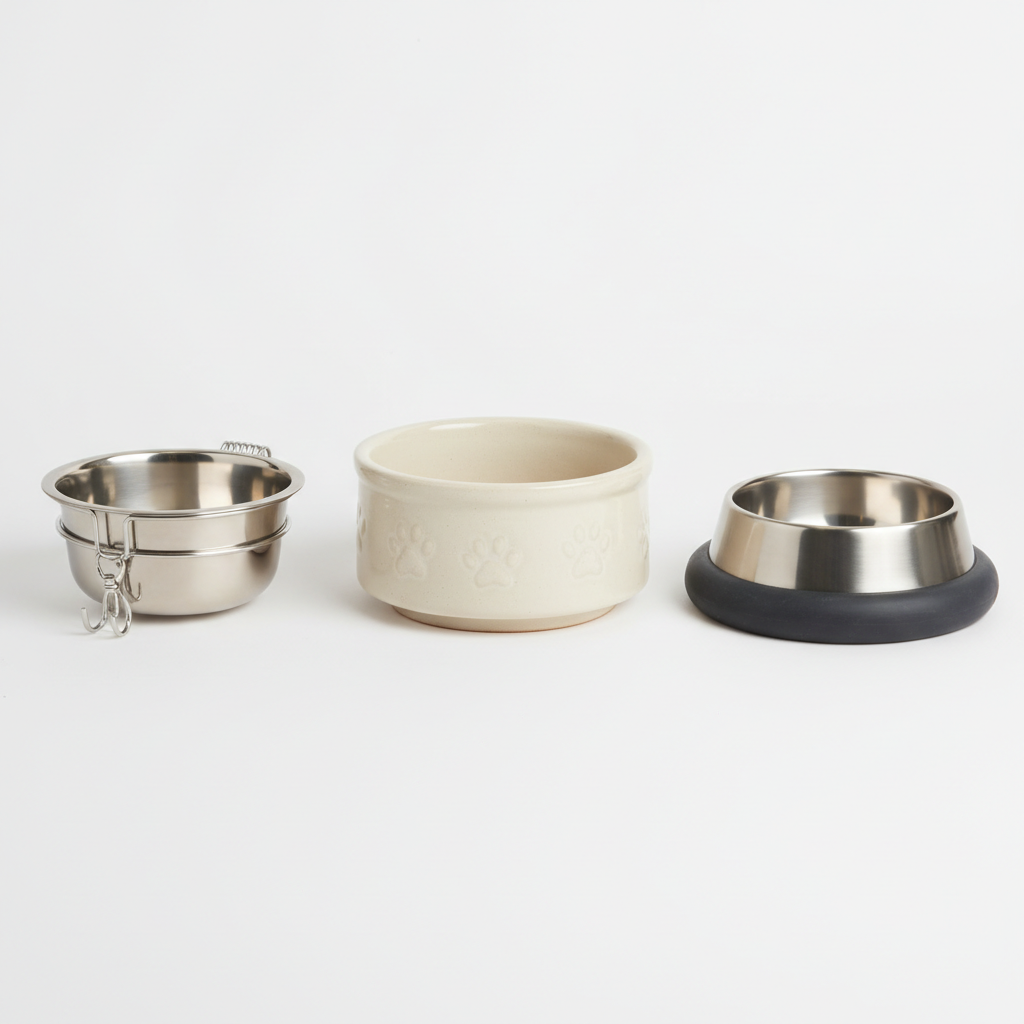
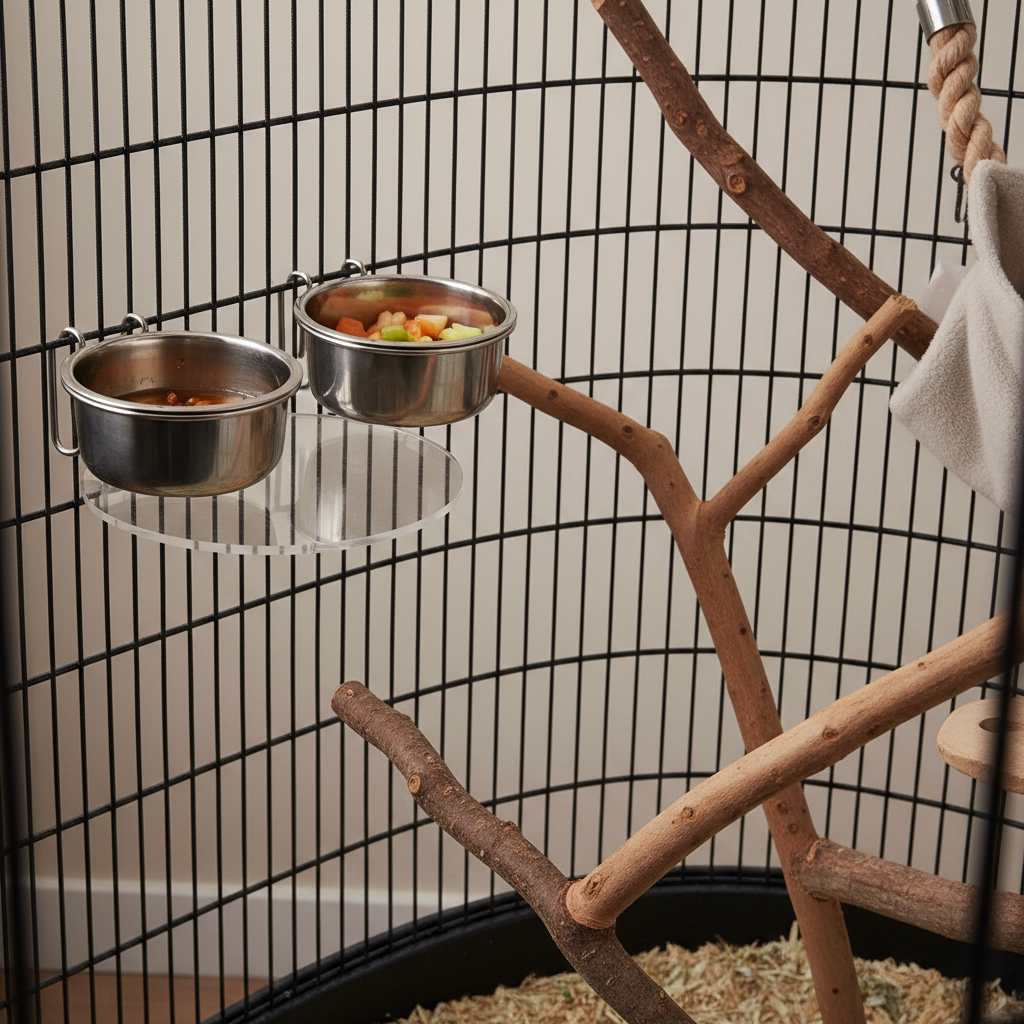
- Cage-mounted bowls: a bracket clips or screws to bars, the dish sits in a ring.
- Crock-style crocks: thicker ceramic with a wide base, heavy and low.
- Weighted base bowls: stainless dish with a rubber/weighted bottom, more stable on flat surfaces.
What “non-tip” does not fix
- Overfilling wet food so it sloshes out when your glider climbs in.
- Putting bowls directly under sleeping pouches where droppings and fleece lint can fall.
- Using a bowl shape that encourages “bowl wrestling,” like deep cups with tall sides.
According to the American Veterinary Medical Association (AVMA), basic cage hygiene and safe feeding practices matter for small pets, and keeping food off dirty surfaces is part of that bigger picture.
Quick self-check: which tipping situation are you dealing with?
Before swapping bowls, pin down the pattern. Different causes need different fixes, and you can usually tell in two nights.
- The bowl flips (ends upside down): often rim-perching, too-tall dish, or a glider climbing into it.
- The bowl slides (stays upright but travels): usually lightweight base on smooth plastic tray.
- The food gets dumped (bowl stays, food is out): pawing, digging, or overfilled soft food.
- Only one bowl tips: placement issue or one glider targets a specific spot.
- Only happens with fruit/nectar: moisture and stickiness add traction for paws, and gliders “work” the food more.
Also check your cage bars spacing and layout, some mounting brackets twist if the bars flex, especially on doors.
Choosing a sugar glider food bowl that stays put
For most homes, a cage-mounted setup works best because it removes the “push and slide” problem entirely. The tradeoff is you need a bracket that fits your bars and is easy to clean nightly.
Material and shape: what tends to work
- Stainless steel: easy to sanitize, resists odor, usually dishwasher friendly, look for a smooth rolled rim.
- Ceramic crocks: stable and heavy, but can chip if dropped, and you want a glaze that cleans easily.
- Avoid very light plastic for primary wet foods, it can hold smell over time and moves easily.
Mounting style: pick based on your cage and habits
- Ring-and-bowl bracket: the bracket stays in place, the bowl lifts out for washing, usually the easiest routine.
- Twist-lock crocks: secure, but some are slower to remove, fine if you do a thorough wash schedule.
- Suction cups: often disappoint inside wire cages, they can work on smooth acrylic walls but vary a lot.
Size guidelines (practical, not perfect)
Many owners do better with two smaller dishes instead of one large dish, one for staple diet, one for produce. Smaller bowls reduce “diving in” behavior and are easier to place in stable corners.
Setup steps that stop tipping (even with the right bowl)
The setup is where most people win or lose. A stable sugar glider food bowl can still be defeated by placement, height, and overfilled portions.
Step-by-step placement that usually works
- Mount or place in a corner: corners act like a brace and reduce sideways movement.
- Set at chest height relative to where your gliders travel, not at the highest “launch pad” level.
- Keep bowls off the floor when possible, it reduces contamination and makes monitoring intake easier.
- Leave a clear landing zone: if a branch ends right above the bowl, expect body-checks and spills.
Small tweaks that make a big difference
- Use a shallow dish for wet staples, less leverage, less slosh.
- Do not overfill, it sounds obvious, but it is the most common spill trigger with nectar-style mixes.
- Offer “busy” foods separately (like chunks they grip and drag) so they are not pawing through the staple bowl.
Non-tip bowl options compared (quick table)
If you want a fast way to choose, this table covers the tradeoffs most owners run into. Brands vary, so focus on the design features.
| Option | Best for | Pros | Watch-outs |
|---|---|---|---|
| Cage-mounted stainless bowl | Most cages, wet staples | Hard to tip, easy to sanitize, repeatable placement | Bracket must fit bars, can rattle if loose |
| Ceramic crock (wide base) | Calmer gliders, shelf setups | Heavy, low center of gravity, quiet | Breakable if dropped, may still slide on trays |
| Weighted-base stainless dish | Temporary setups, travel cages | More stable than plain bowls, portable | Still can be pushed, rubber bases wear out |
| Twist-lock crock system | Strong “bowl flippers” | Very secure, hard to remove by pets | Slower cleaning, some designs trap residue |
Mistakes that keep the mess going
People often blame the bowl when the routine causes the problem. A few habits are repeat offenders.
- Mounting on the cage door: doors flex, latches move, bowls wobble more than you think.
- Placing bowls under climbing highways: traffic overhead means bumps and drops.
- Using one deep cup for everything: it invites digging, and it hides how much staple diet was actually eaten.
- Ignoring wear: loose brackets, bent rings, or cracked crocks slowly turn “non tip” into “maybe tip.”
- Cleaning shortcuts: residue makes dishes sticky, gliders pull harder, spills get worse.
According to the U.S. Food & Drug Administration (FDA), proper cleaning and sanitation reduce contamination risk, and that same logic applies to pet feeding gear, especially with moist foods sitting overnight.
When tipping becomes a health or safety concern
A spill now and then is normal, but a pattern can hint at something else. If your glider suddenly starts dumping food nightly, or avoids the bowl entirely, it may be worth a closer look.
- Sudden appetite change: could be stress, diet dislike, or illness, a veterinarian who sees exotics can help you sort it out.
- Chewing plastic pieces: replace damaged plastic immediately, ingestion risk is not something to “wait and see.”
- Persistent diarrhea or dehydration signs: wet food mess plus health symptoms should prompt professional advice.
According to the Association of Exotic Mammal Veterinarians (AEMV), exotic pets benefit from species-appropriate veterinary care, and owners should consult qualified professionals when behavior or intake changes raise concerns.
Key takeaways and a simple plan for tonight
If your sugar glider food bowl keeps tipping, the quickest win is usually a cage-mounted stainless dish in a corner, placed away from jump points, filled shallow, with a second small bowl for produce. That combination removes sliding, reduces leverage, and makes cleanup predictable.
Try this: move the current bowl to a corner, lower the fill level, and adjust nearby branches to create a calmer landing zone. If it still flips after two nights, switch to a bracket-mounted option or a twist-lock system, depending on how determined your gliders act around food.
If you want, take a quick photo of your cage interior and bowl placement before you change anything, it becomes a simple “before/after” reference, and it makes troubleshooting much faster.
FAQ
What is the best non-tip bowl type for sugar gliders?
In many cages, a bracket-mounted stainless bowl holds up best because it removes the sliding problem. If your cage bars or layout make mounting awkward, a wide-base ceramic crock can still work, but placement becomes more important.
Can sugar gliders eat from the floor if the bowl spills?
They can, but it is not ideal. Cage floors collect waste and debris, so spilled food can raise hygiene concerns. If spills happen often, it is usually worth changing the bowl style or mounting position.
Should I use one bowl or multiple bowls?
Two smaller bowls often beat one large bowl, one for the staple diet and one for fruits and veggies. It reduces digging and helps you see what they actually ate, which matters when you are tracking intake.
Is plastic safe for a sugar glider food bowl?
Some plastics are commonly used, but they scratch and can hold odors over time, and chewers can damage them. For wet foods, many owners prefer stainless or glazed ceramic for easier sanitation.
Why does my sugar glider flip the bowl even when it is mounted?
If the bracket wobbles, the ring is bent, or the bowl is too tall, a glider can sometimes lever it up. Tighten the mount, switch to a deeper ring that “captures” the dish, or try a twist-lock style if your glider is especially persistent.
Where should I place bowls inside the cage?
Corner placement at a stable mid-level works well for many setups. Avoid mounting on doors and avoid placing dishes directly under favorite climbing routes where they get bumped during nightly activity.
How often should I wash sugar glider bowls?
For moist foods, daily washing is a common standard because residues build fast overnight. If you use multiple bowls, rotating clean sets can make the routine easier without cutting corners.
Do non-tip bowls prevent ants or pests?
Not by themselves. A stable dish reduces spills that attract pests, but you may still need broader steps like cleaning routines and safe barrier methods around the cage, depending on your home.
If you are trying to pick a non-tip setup and want the least trial-and-error, start by matching the bowl style to your cage bars and your gliders’ habits, then fine-tune placement and portion depth, it is usually the fastest path to a cleaner feeding station without overhauling your whole routine.