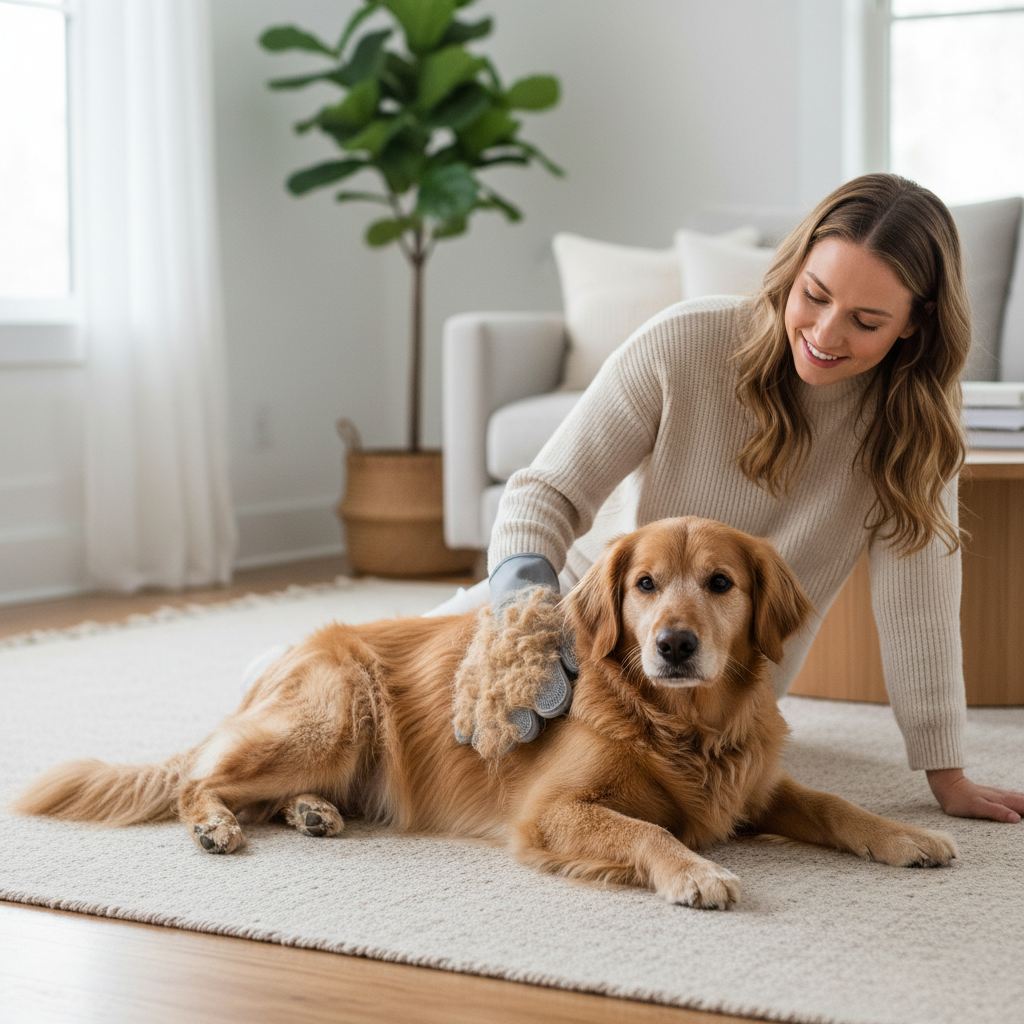
Pet hair remover glove is one of those tools that sounds almost too simple, until you use it and realize it turns “petting time” into quick grooming and easy cleanup.
If you live with a dog or cat that sheds, you already know the loop, hair on the sofa, hair on your hoodie, hair somehow in rooms your pet barely enters. The value of a glove-style remover is convenience: it can catch loose fur before it lands everywhere, and it can help you reach spots that brushes sometimes miss.
Still, not every glove works the same, and not every pet likes the same feel. This guide breaks down why these gloves work, how to tell if they fit your situation, and how to use one without turning grooming into a wrestling match.
Why a grooming glove works (and when it doesn’t)
A glove removes hair through a mix of friction and gentle “raking.” Most designs use silicone tips or rubber nubs that grab loose undercoat and surface hair as you stroke in the direction of the coat.
- It feels like petting, so many pets tolerate it better than a rigid brush.
- It’s fast for quick maintenance, especially for short- to medium-coat shedders.
- It helps you target tricky areas like legs, chest, and around the neck where combs can feel awkward.
But reality check: if your pet has heavy undercoat, mats, or long tangly fur, a glove might be a “between-baths” helper, not the only tool you own. You may still need an undercoat rake, slicker brush, or a comb for finish work.
Quick self-check: Is this the right tool for your pet and home?
If you’re debating whether to buy one, run through this short list. You’ll usually know in 30 seconds whether it’s a match.
- Your pet sheds daily and you want to reduce hair on furniture and clothing.
- Your pet dislikes brushes or gets nervous when you bring grooming tools out.
- You need a tool that’s easy to grab for 2–5 minutes at a time, not a full session.
- You have fabric surfaces (couches, car seats) where loose hair collects.
- You’re okay doing grooming more often, because a glove is about small, frequent wins.
It may be less ideal if your pet has painful skin issues, open sores, or severe matting. In those cases, gentle handling matters more than any gadget, and a veterinarian or professional groomer can help you choose a safe approach.
How to choose a pet hair remover glove (what actually matters)
There’s a lot of look-alike products online. A few details make the difference between “this is handy” and “this lives in a drawer.”
Material and “nubs” design
- Softer silicone tips tend to feel nicer on sensitive pets.
- Longer nubs can pull more undercoat, but may annoy cats or thin-coated dogs.
- Dense nub patterns often collect more hair, but can be harder to peel off in one sheet.
Fit and closure
- Look for an adjustable wrist strap; a loose glove twists and reduces contact.
- If you have small hands, check sizing notes, because “one size” varies a lot.
Right-hand vs. left-hand
Some sets include both hands, some don’t. If you plan to groom and simultaneously steady your pet, a two-glove set can be more comfortable.
Glove vs. brush vs. lint roller: a practical comparison
Different tools solve different parts of the hair problem. Here’s a simple way to think about it.
| Tool | Best for | Not great for | Typical effort |
|---|---|---|---|
| Grooming glove | Quick daily shedding control, nervous pets, legs/neck areas | Heavy matting, deep undercoat blowouts | Low |
| Slicker brush | Fluffing, removing loose hair on many coat types | Very sensitive skin, poor technique can scratch | Medium |
| Undercoat rake | Thick double coats during seasonal shedding | Short single coats, tangles near skin if used roughly | Medium |
| Lint roller | Clothes and spot cleanup on fabric | Large areas, recurring daily shedding | Low (but repetitive) |
| Rubber broom / fabric rake | Carpet and upholstery hair removal | Actual grooming on pets | Medium |
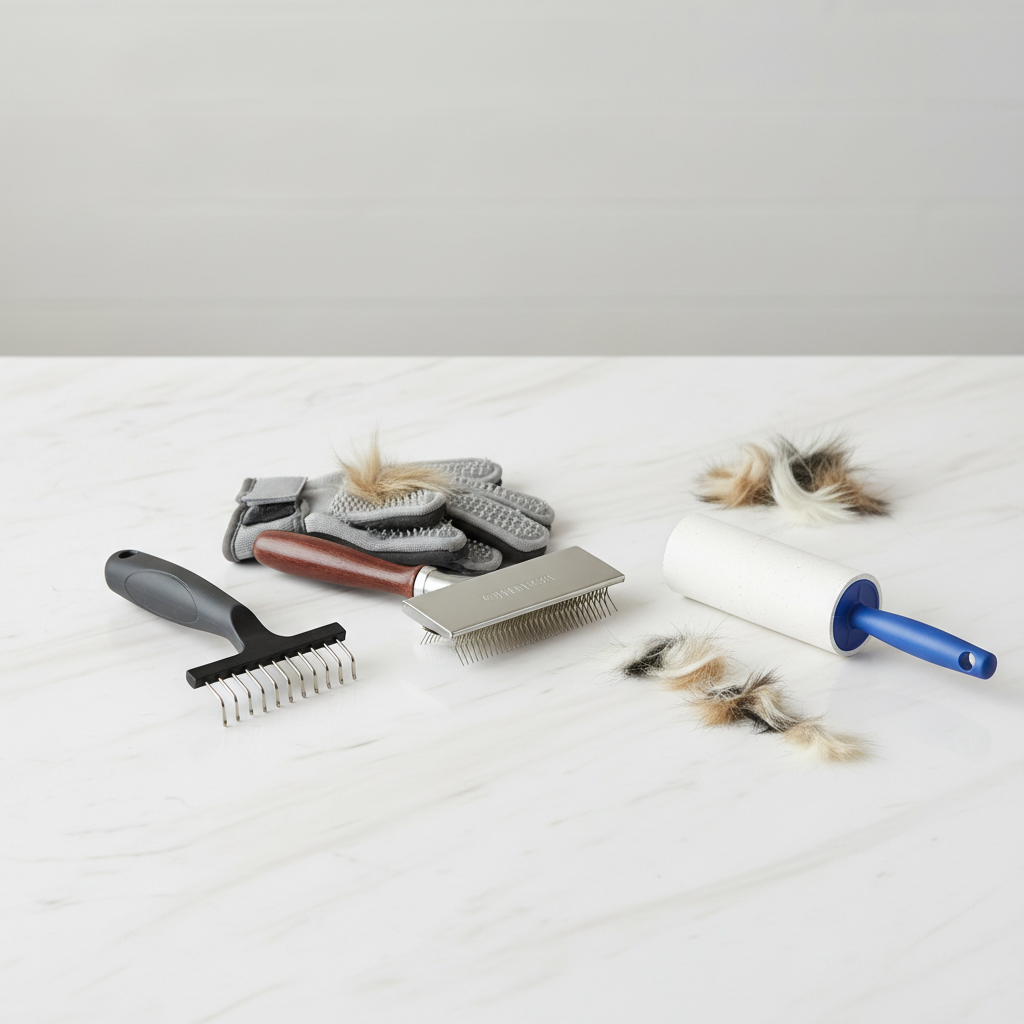
If your biggest pain is “hair everywhere,” a glove helps upstream. If your pain is “my golden retriever is blowing coat,” pair the glove with an undercoat tool and you’ll usually feel a bigger difference.
How to use it: massage, groom, then clean (step-by-step)
The easiest mistake is rushing, the glove works best with steady, consistent strokes and a little awareness of coat direction.
1) Start calm, keep it short
- Begin with 30–60 seconds on a favorite spot (shoulders or back).
- Use light pressure first; increase only if your pet stays relaxed.
- Stop while it’s still going well, especially for cats.
2) Stroke with the coat, then do a “reverse pass” only if tolerated
- Go with the grain to collect loose fur comfortably.
- On some dogs, a gentle short “against the grain” pass helps lift undercoat, but skip it if you see irritation or your pet stiffens.
3) Use edges for legs and tight areas
Turn your hand slightly so the glove’s fingertips do the work around legs, chest, and behind ears. This is where glove grooming feels more natural than a brush.
4) Peel hair off often
Don’t wait until the glove is packed. Pull the collected fur off every minute or so and toss it, it keeps traction consistent and makes cleanup less gross.
5) Finish with a quick wipe-down
Many gloves rinse easily, but they can hold oils and dander. Wash with mild soap and air dry. According to the American Kennel Club (AKC), regular grooming can help remove loose hair and keep the coat and skin in better condition, which is part of why small, frequent sessions tend to work well.
Using the glove for furniture and car seats (without smearing hair around)
A pet hair remover glove can double as a surface tool, but technique matters. If you just wipe randomly, you often create little felted hair pills that are harder to remove.
- Lightly dampen the glove for upholstery; moisture helps hair clump.
- Wipe in one direction across cushions, then collect the clump at the seam.
- For car seats, work from top to bottom so hair doesn’t drift back onto cleaned areas.
If you have tightly woven fabrics that trap hair, you may still need a fabric rake or rubber brush for the “stuck” stuff, then the glove for finishing passes.
Common mistakes and safety notes (worth reading)
Most glove issues come down to pressure, timing, or skin sensitivity.
- Pressing too hard can irritate skin, especially on thin-coated dogs and senior pets.
- Over-grooming one spot can cause redness; rotate areas and keep sessions short.
- Ignoring mats makes tangles worse; don’t try to “scrub” them out with a glove.
- Grooming right after bathing can be uncomfortable if the coat tangles as it dries; many pets do better when fully dry.
If you notice hot spots, flaking that worsens, or your pet reacts as if in pain, pause grooming and consider asking a veterinarian or a professional groomer. Skin issues can have many causes, and pushing through discomfort rarely ends well.
Key takeaways (so you know what to do next)
- A pet hair remover glove shines when you want quick, frequent grooming that feels like petting.
- Match the glove to coat type; heavy undercoat often needs a second tool.
- Short sessions, steady strokes, and frequent hair peeling usually beat longer “marathon” grooming.
- For furniture, a slightly damp glove and one-direction passes reduce hair smearing.
My practical suggestion: try a 3-minute routine, three times a week, and track whether you’re vacuuming less. If you see a dent in shedding but still get clumps during seasonal coat changes, add an undercoat tool rather than blaming the glove.
FAQ
Do pet hair remover gloves work on cats?
They often do, especially for short-haired cats that tolerate touch well. The big variable is sensitivity, if your cat dislikes texture or pressure, use lighter strokes and keep sessions brief.
Can I use a grooming glove on a wet coat?
Usually it’s better on dry fur. Wet hair can clump and tug, which may feel uncomfortable. If your pet is damp from rain, gentle, low-pressure passes can be okay, but stop if you see pulling.
How do I clean the glove after grooming?
Peel off fur into the trash, then rinse with warm water and mild soap. Let it air dry fully so it doesn’t hold odor or residue.
Why does the hair not peel off in one sheet?
That’s common with very fine fur or dense nub patterns. Peeling more often helps, and a slightly damp glove can make hair clump together more cleanly.
Is a glove enough for double-coated dogs?
In many cases, it helps for maintenance, but during shedding season you may want an undercoat rake or deshedding tool for deeper hair. The glove can still be your “daily driver” between heavier sessions.
Can I use the glove to remove hair from my couch?
Yes, especially on microfiber and some woven fabrics. Use one-direction strokes and gather hair at seams; for stubborn embedded hair, pair it with a rubber brush or fabric rake.
My dog hates grooming tools, how do I introduce a glove?
Let your dog sniff it, then start by petting areas they already like, shoulder and back usually work. Keep it short, stop before they get annoyed, and build time gradually.
If you’re trying to cut down shedding without turning grooming into a whole project, a glove is a pretty low-friction place to start. If you’d rather have a more “set-and-forget” routine, pairing the glove with a coat-appropriate brush and a simple weekly schedule usually makes cleanup feel less constant.