
aquarium air pump quiet is usually what people type right after they realize the “tiny” pump they bought still buzzes like a phone on a nightstand.
If your tank sits in a bedroom, office, or living room, the sound isn’t a small annoyance, it slowly turns into “I can’t un-hear it.” The good news is that quieting an air pump is often more about fit and setup than paying for the most expensive model.
This guide breaks down where the noise actually comes from, how to pick a small pump that won’t struggle, and a few practical tricks that make a bigger difference than most product listings admit.
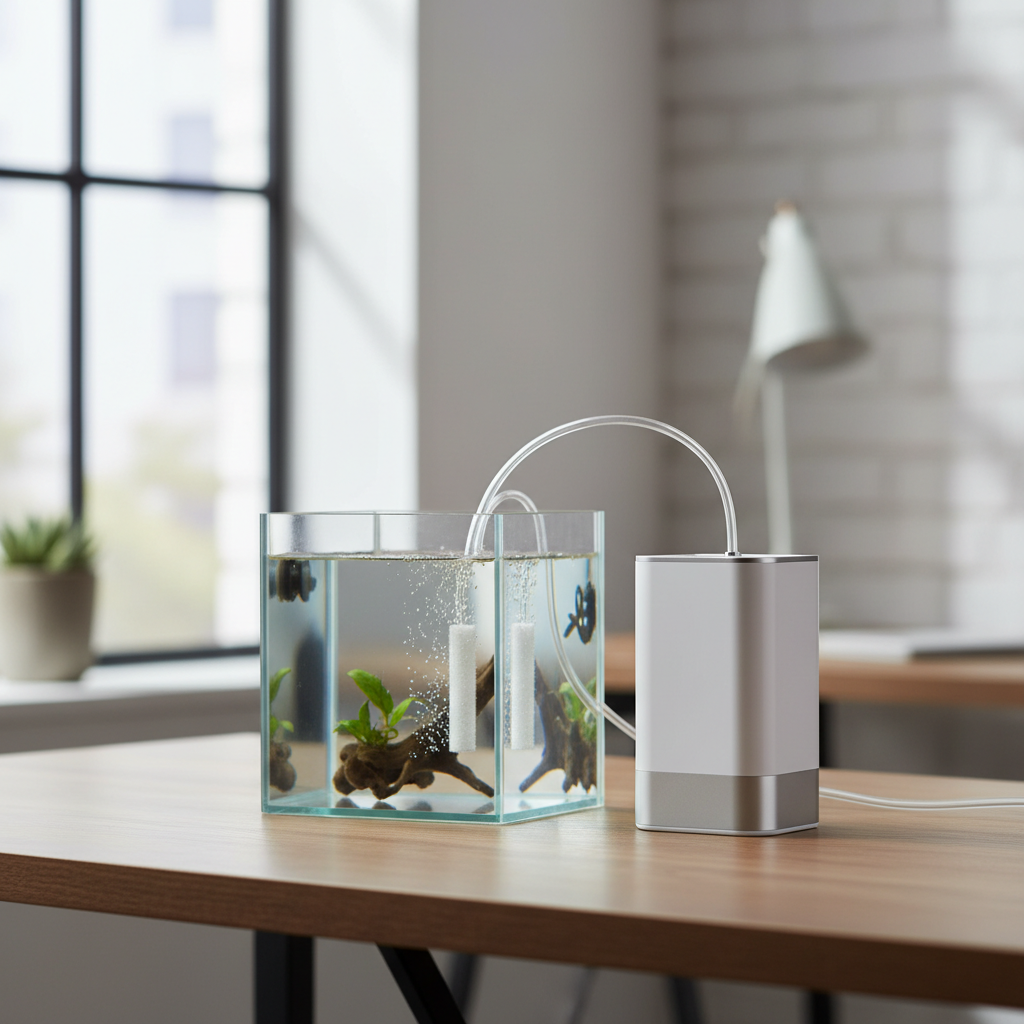
Why “quiet” aquarium air pumps still make noise
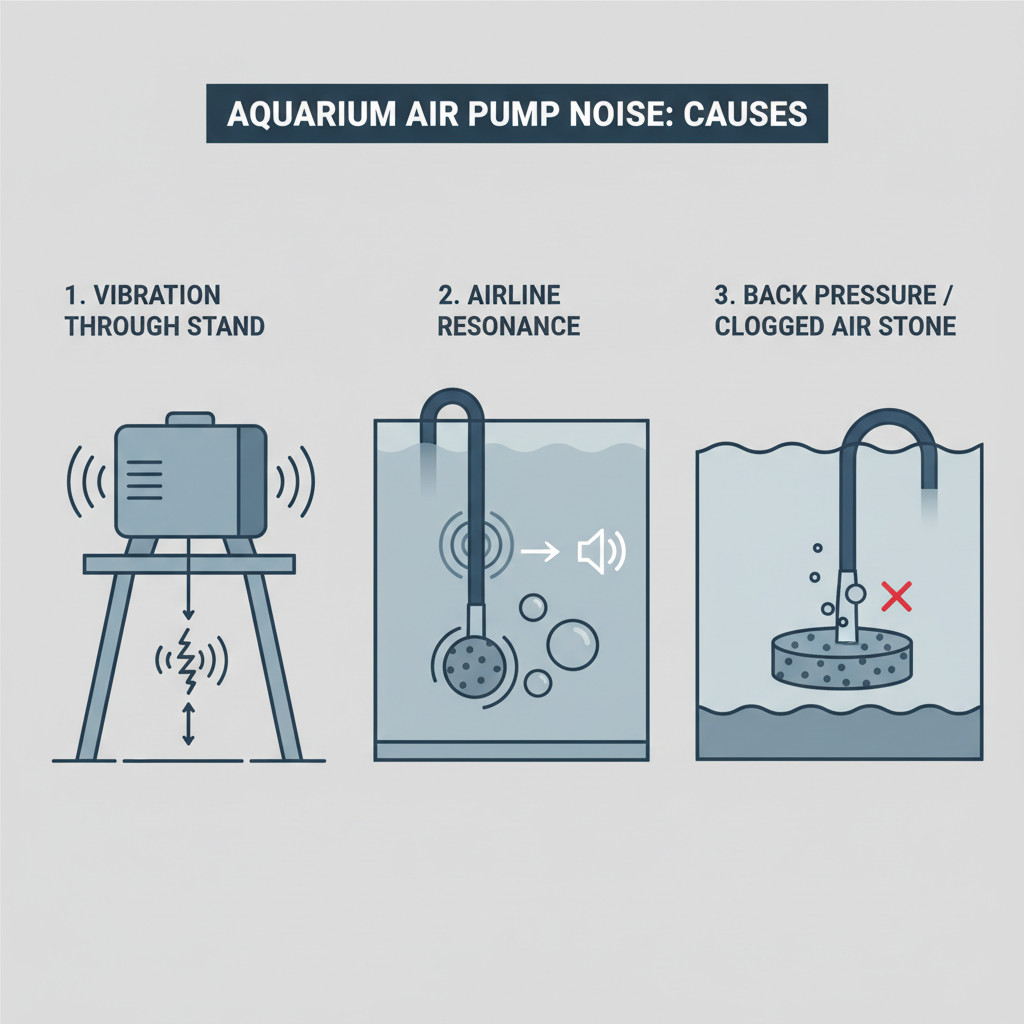
Most aquarium air pump noise comes from two places: vibration and airflow. Motor hum is real, but the “extra loud” part usually happens when that vibration gets amplified by a hard surface, a cabinet, or even the tank stand.
- Vibration transfer: the pump body shakes, the table/stand acts like a speaker.
- Diaphragm pulsing: many small pumps use a diaphragm that flexes rapidly, creating a rhythmic buzz.
- Airline resonance: rigid tubing routes can carry vibration, especially when the line touches glass or a stand.
- Back pressure: deeper tanks, clogged air stones, or multiple devices can make the pump work harder and get louder.
Here’s the part many people miss: “quiet” on the box often assumes ideal conditions. Put the same pump on a hollow shelf or pinch the airline, it can sound like a different product.
Quick self-check: are you choosing the wrong pump or setting it up wrong?
Before shopping again, take two minutes and check what’s actually happening. This saves money and, honestly, a lot of frustration.
- If the noise drops when you hold the pump in your hand: it’s mainly vibration transfer, not the motor.
- If the sound gets worse over weeks: the air stone may be clogging, increasing back pressure.
- If it’s quiet on the counter but loud inside a cabinet: the cabinet is amplifying vibration and echo.
- If bubbles are weak and sound is harsh: the pump may be undersized for depth or accessories.
- If there’s a rattling click: check valves, suction cups, or pump feet might be loose or worn.
According to the U.S. Food & Drug Administration (FDA), many aquarium air pumps are used alongside airstones and tubing in home aquariums, and safe operation generally involves keeping electrical devices dry and properly positioned to reduce risk. If your setup runs in a splash-prone spot, prioritize safe placement over micro-optimizing noise.
How to choose a small quiet air pump (what matters more than marketing)
When you want a small footprint, it’s tempting to buy the weakest pump available. But an undersized unit can run “strained,” which often sounds worse than a slightly stronger model running comfortably.
Key buying factors that affect noise
- Adjustable airflow: lets you run lower output without choking the line (choking adds back pressure).
- Rated depth/head height: deeper tanks need more push; a pump near its limit tends to be louder.
- Rubber feet or isolation base: reduces vibration transfer to furniture.
- Single vs. dual outlet: dual outlets add flexibility, but can be noisier if one side is capped incorrectly.
- Power type: AC pumps are common; USB pumps can be convenient for nanos but quality varies a lot.
Practical rule: if your tank is small but tall, don’t shop “nano-only” automatically. Height creates resistance, and resistance is where noise creeps in.
Match the pump to your tank: a practical sizing table
Manufacturers use different specs, so this is a common-sense matching guide, not a promise. The goal is to avoid a pump that struggles.
| Tank situation | What you’re likely running | What to prioritize for quiet | Common mistake |
|---|---|---|---|
| 2–5 gallon nano | 1 air stone or sponge filter | Adjustable flow + soft feet | Overpowering bubbles, then crimping the line |
| 5–10 gallon | Sponge filter, gentle aeration | Stable low setting, vibration isolation | Placing pump on bare wood shelf |
| 10–20 gallon (standard height) | 1–2 devices on air | Enough headroom in output, not maxed out | Using tiny “silent” pump that runs at its limit |
| Tall tank / deep water | Air stone near bottom | Higher head rating, quality check valve | Weak pump plus clogged stone (constant strain) |
| Bedroom/office tank | Any of the above | Isolation pad, cabinet echo control | Hiding pump in cabinet without padding |
If you want an aquarium air pump quiet enough for sleep, a mid-output pump run gently is often calmer than a tiny pump run wide open.
Setup steps that make a quiet pump noticeably quieter
These steps are boring, but they work. Most noise complaints trace back to one of them.
1) Isolate vibration the easy way
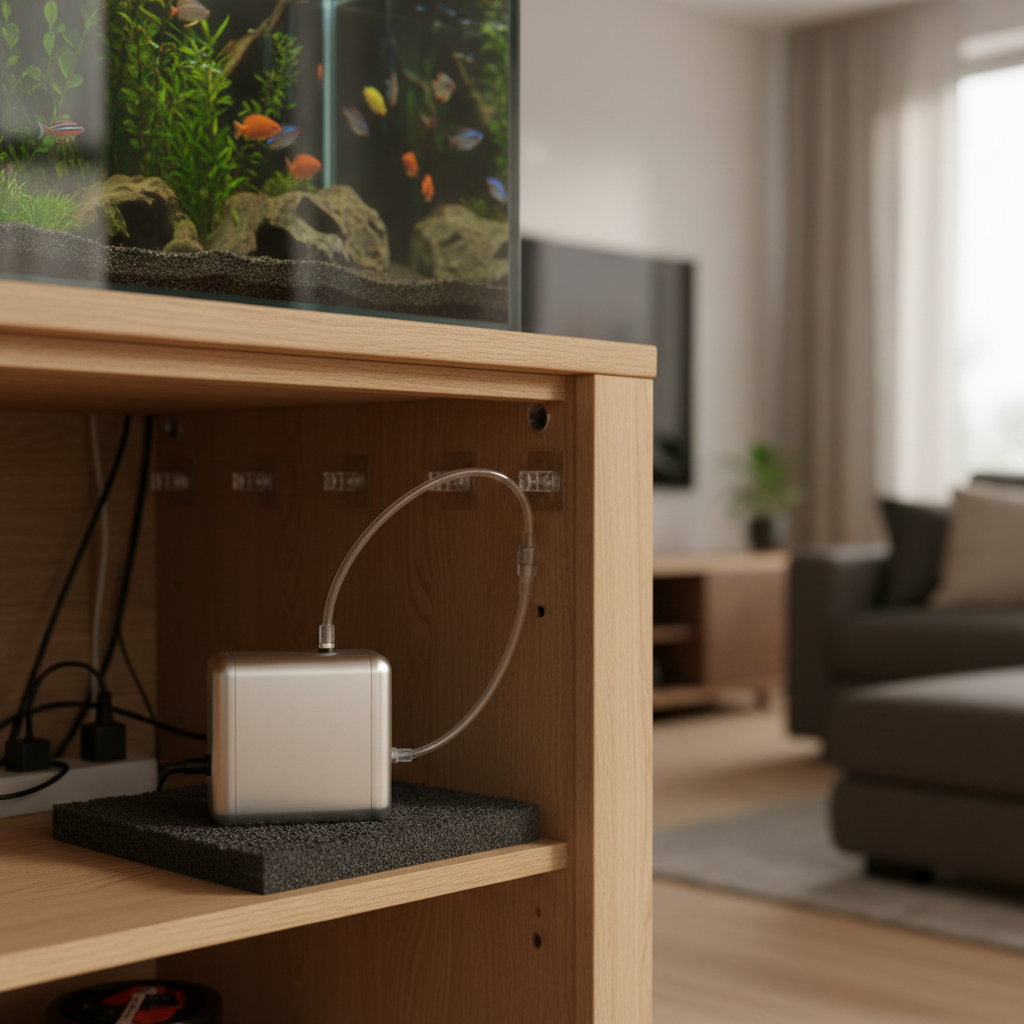
- Set the pump on a thick foam pad, mouse pad, or folded microfiber towel.
- Keep it off hollow shelves when possible; solid surfaces transmit less “drum” effect.
- Make sure pump feet sit flat, no wobble.
2) Route the airline so it doesn’t “sing”
- Avoid tight bends and avoid letting tubing rest against the tank glass.
- Use a small adhesive clip to keep the line from tapping the stand.
- If you use rigid airline, consider swapping to soft silicone to reduce vibration transfer.
3) Don’t create back pressure by accident
- Replace air stones when bubble output drops; clogged pores force the pump to push harder.
- If you need fewer bubbles, lower the pump output or use a proper valve, not a kinked tube.
- Splitters should be adjusted evenly; dead-ending one outlet can increase noise on some pumps.
Common mistakes and “quiet hacks” that backfire
Some tricks look smart in forums, then cause more noise or new problems a week later. A few to watch for:
- Burying the pump in towels inside a closed cabinet: it can reduce noise, but it may trap heat and increase wear. Keep airflow around the unit.
- Cranking down a cheap plastic valve until it squeals: the whistling is your clue you’re creating turbulence and back pressure.
- Skipping the check valve when the pump sits below the waterline: this is a safety issue more than a noise issue, but it matters. If you’re unsure, ask a local fish store for placement guidance.
- Assuming “more bubbles = more oxygen” in every case: oxygenation is about surface agitation and gas exchange, not just bubble size. Too much aeration can stress some fish.
According to the American Veterinary Medical Association (AVMA), animal care recommendations depend on species and environment, and stress reduction is part of good husbandry. If fish seem stressed after changes, dial back adjustments and consider species-specific guidance.
When you should upgrade (or ask for help) instead of tinkering
Sometimes the most “quiet” move is replacing the wrong tool. Consider an upgrade or a quick consult with a knowledgeable aquarium shop if any of these are true:
- The pump is undersized for tank depth or you run multiple air-driven devices.
- Noise includes grinding, inconsistent pulsing, or a sudden change in tone, which can suggest wear.
- You need a very low-noise setup for a bedroom and the pump must run 24/7.
- You’re managing sensitive livestock and aren’t sure whether increased aeration helps or harms.
Electrical safety also matters. If cords, plugs, or housings look damaged, replace the unit and consider having a qualified person advise on safe placement. Don’t try to “quiet” a pump by compromising basic safety.
Key takeaways (so you can act today)
- Most noise is vibration transfer, not the motor itself; isolation pads make a real difference.
- A small pump that runs near its limit often sounds worse than a slightly stronger one run gently.
- Air stones clog, back pressure rises, and the system gets louder over time, maintenance matters.
- If the tank sits in a bedroom, prioritize adjustable flow, stable feet, and smart placement.
If your current setup is driving you up the wall, do the quick self-check, add vibration isolation, and clean up airline routing before buying again. If it’s still not good enough, upgrade with sizing in mind rather than chasing “silent” claims.
If you want, keep a short note of your tank size, water depth, and what you’re running on air, then use that to compare models more realistically. It’s the fastest way to land on an aquarium air pump quiet enough for everyday life.
FAQ
- What is the quietest type of aquarium air pump for a small tank?
Many small tanks do well with an adjustable-output pump that has rubber isolation feet. “Quietest” varies by placement and load, so aim for a pump that won’t run at maximum output. - Why did my air pump get louder after a few weeks?
Clogged air stones and kinked tubing are common causes because they increase back pressure. Try replacing the stone and re-routing the airline before assuming the pump is failing. - Can I put an air pump inside a cabinet to reduce noise?
You can, but cabinets often amplify vibration and echo. If you do it, use a foam pad, keep tubing from touching walls, and leave enough airflow so the pump doesn’t overheat. - Does using a check valve make the pump quieter?
Usually it’s for preventing back-siphon when the pump sits below the waterline. A quality check valve can reduce rattles from inconsistent airflow, but it won’t fix vibration transfer by itself. - Is it okay to restrict airflow to make it quieter?
Reducing output can help, but avoid crimping the line, that tends to increase back pressure and noise. Use a proper airflow control valve or choose a pump with built-in adjustment. - How do I know if my pump is too small for my aquarium?
If bubbles weaken at normal depth, the pump runs hot, or sound becomes harsh when you connect your filter or stone, it may be underpowered. A slightly higher-capacity model run lower often feels calmer and steadier. - Do quieter pumps improve oxygen levels?
Noise and oxygenation aren’t directly linked. Oxygen exchange depends more on surface agitation and circulation; if you’re unsure what your fish need, a local aquarium store or aquatic professional can help you avoid overcorrecting.
If you’re trying to make a small tank livable in a quiet room, the “right” solution is usually a mix: a sensibly sized pump, vibration isolation, and cleaner tubing layout. If you share your tank size, depth, and whether you run a sponge filter or just an air stone, it’s much easier to narrow down options without guessing.